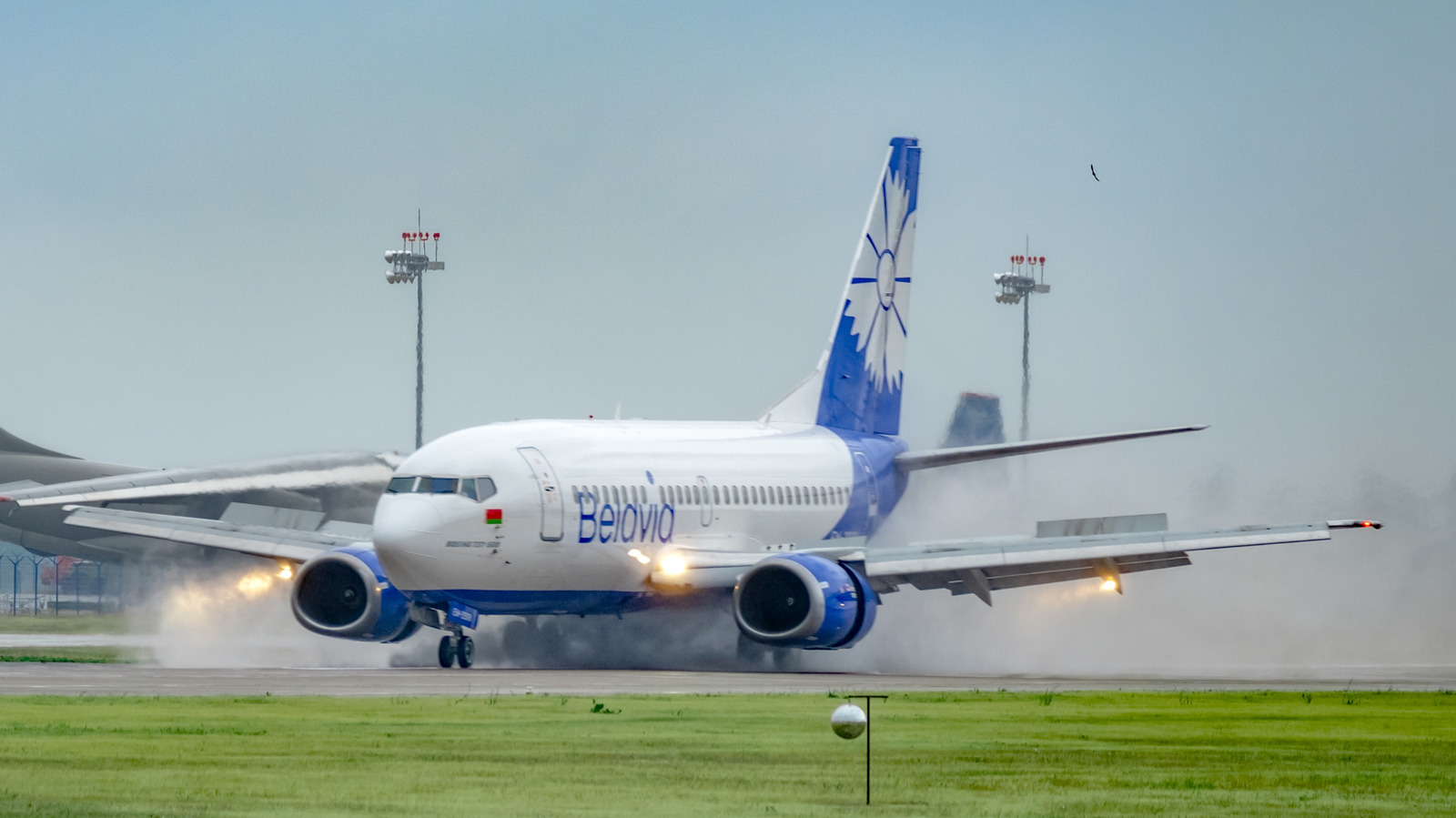
Aircraft landing gear operates under fundamentally different constraints than road vehicles, allowing safe landings even with deflated tires. When a plane experiences tire failure at altitude, pilots have options that ground drivers simply lack.
The physics work in planes' favor. Landing gear supports aircraft weight through multiple tires per wheel assembly, distributing load across redundant systems. A single flat tire on a multi-tire landing gear doesn't compromise the entire assembly. The wheel rim itself can contact the runway surface without catastrophic failure, though this creates friction and wear. Aircraft tires also run at extreme pressures, typically 200+ PSI depending on the aircraft type, so complete deflation takes time.
Pilots communicate tire problems to ground crews before landing. Air traffic control and maintenance teams prepare for the landing, positioning fire trucks and emergency vehicles on standby. The aircraft typically burns fuel to reduce weight, minimizing landing impact forces. Slowing approach speed further reduces stress on damaged gear.
Larger commercial aircraft have landing gear designed specifically for emergency operations. Boeing 747s and Airbus A380s distribute weight across four main landing gear assemblies with multiple wheels each. Losing one tire represents a minor fraction of total landing capacity. Smaller general aviation aircraft operate similarly, though with fewer redundancies.
The actual landing proceeds normally from a pilot's perspective. Modern aircraft have excellent directional control through differential braking and nosewheel steering. Ground effect and aerodynamic stability naturally guide the aircraft straight during approach and touchdown. The damaged wheel may generate smoke and sparks as the rim grinds the runway, but structural integrity remains intact for the short duration of landing roll.
This contrasts sharply with automobile tire failure at highway speeds, where a driver loses control authority and risks violent vehicle behavior. Aircraft design anticipates component failures through redundancy and testing. Flat tires rank among routine maintenance issues that flight crews train to manage. Emergency services