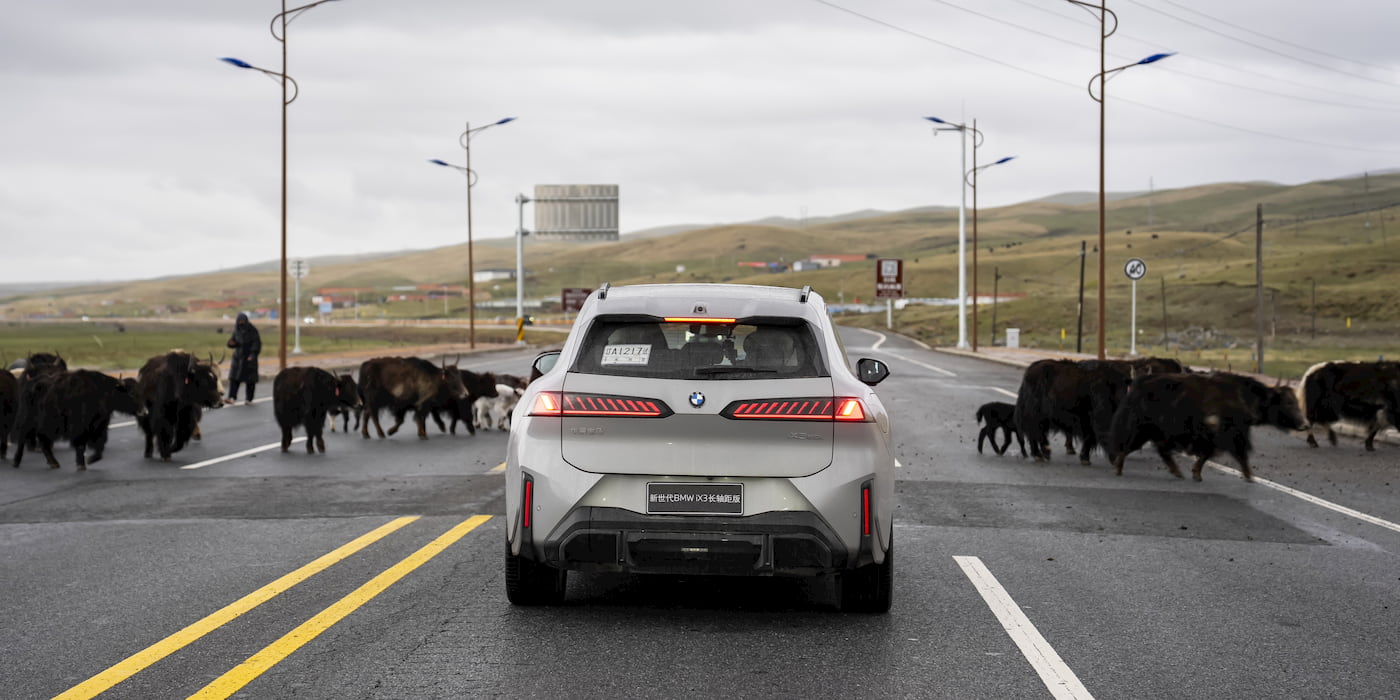
BMW's new iX3 completed a grueling 500-mile road test that included heavy rain, snow, and 6,500 feet of elevation gain on public roads without requiring a charge. The German automaker subjected the electric SUV to real-world driving conditions designed to stress its efficiency and battery performance.
This range achievement matters in the competitive EV market. Tesla's Model Y Long Range delivers comparable EPA-rated range around 330 miles, though real-world conditions vary dramatically. BMW's test demonstrates that the iX3 can deliver substantial distance under genuinely harsh circumstances. Heavy precipitation and cold temperatures typically drain EV batteries faster than standard testing cycles predict. Mountain driving adds continuous demand on the powertrain. That the iX3 maintained 500 miles under these combined stressors signals strong engineering.
BMW has refreshed the iX3 lineup with updated styling, improved battery efficiency, and refined powertrains. The automaker targets customers skeptical about EV practicality, especially those living in regions with challenging weather and mountainous terrain. Range anxiety remains a psychological barrier to EV adoption, even as charging infrastructure improves across North America and Europe.
The iX3 competes directly with Tesla's Model Y, Volkswagen's ID.4, and Audi's Q4 e-tron. All three offer strong range credentials and established dealer networks. BMW's luxury positioning and handling dynamics differentiate the iX3, but range claims now feel table stakes rather than competitive advantage.
The test result validates what customers increasingly expect from premium EVs. A 500-mile range under severe real-world conditions translates to a full day of driving across most regions without charging anxiety. That matches how traditional luxury SUV owners approach long-distance travel. BMW demonstrates the iX3 bridges gas-powered driving habits with zero-emission capability, a critical messaging point as