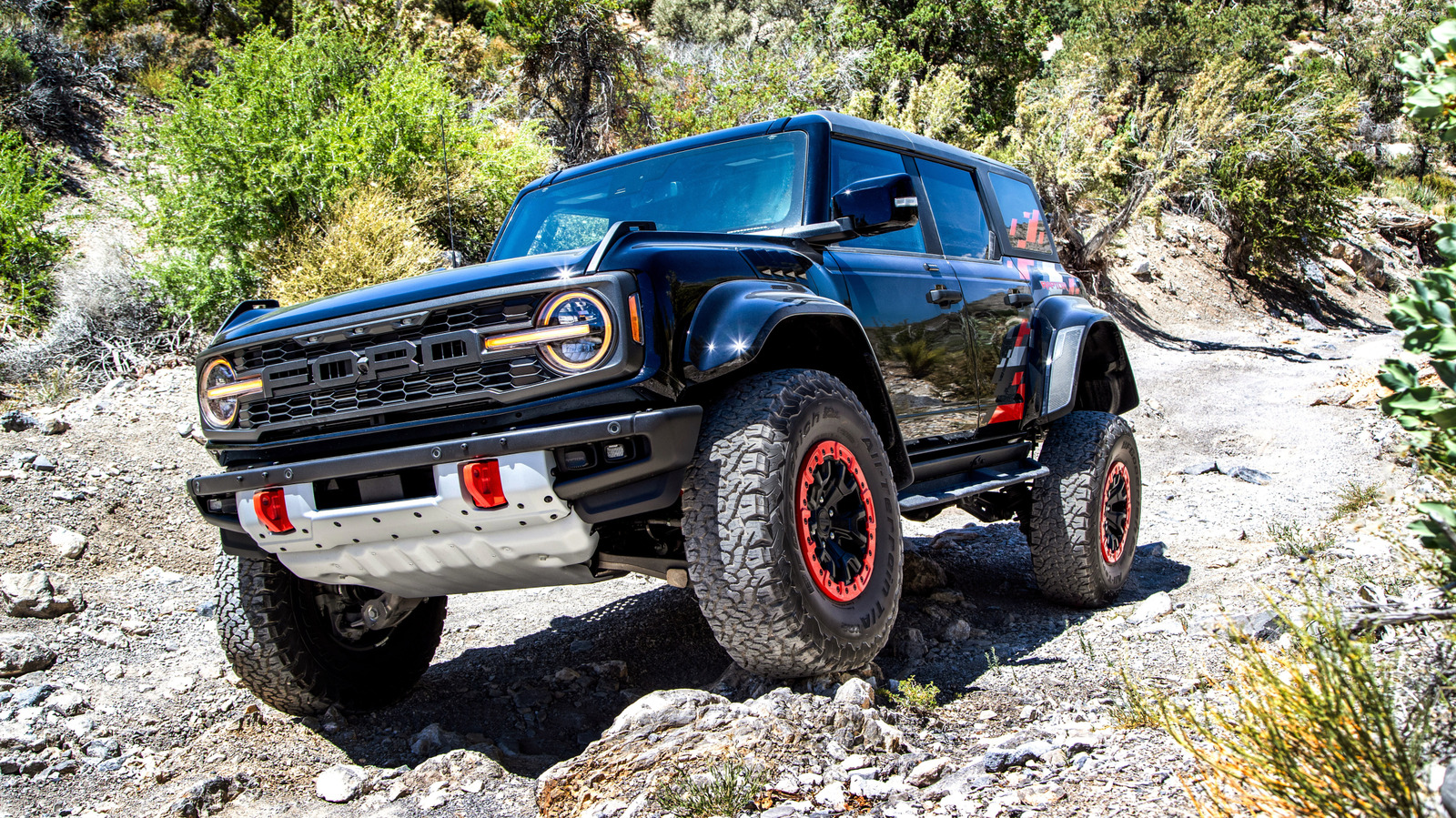
Ford has officially closed the door on high-performance variants of the Bronco Raptor and Ranger Raptor. Carl Widmann, Ford Performance's Chief Engineer, stated that both trucks "already have too much power" for their platforms, eliminating the possibility of more potent versions.
The Bronco Raptor packs 418 horsepower and 440 pound-feet of torque from its 3.0-liter EcoBoost engine, paired with an off-road-focused suspension and electronic locking differentials. The Ranger Raptor delivers 405 horsepower and 433 pound-feet from the same powerplant. Both represent significant jumps over their standard counterparts and deliver serious capability for truck enthusiasts.
Widmann's statement reflects engineering constraints rather than marketing hesitation. Adding more power to either platform would require reinforcing drivetrains, suspension components, and frames that are already at their limits with current output levels. The cost and engineering complexity of such upgrades would likely make them economically unfeasible for a market segment where buyers already pay substantial premiums for the Raptor badging.
This positions Ford conservatively compared to rivals. Chevrolet's Colorado ZR2 Bison produces 420 horses and 469 pound-feet, nearly identical to the Bronco Raptor's output. Ram's TRX holds a commanding advantage at 702 horsepower, though it operates in a higher price and capability tier.
Ford's decision highlights how the truck market has matured. Performance ceilings exist not just in consumer demand but in mechanical reality. The Bronco Raptor and Ranger Raptor already deliver off-road prowess that far exceeds what most owners will extract. Pushing beyond current specifications would mean redesigning fundamental chassis architecture, a costly proposition for