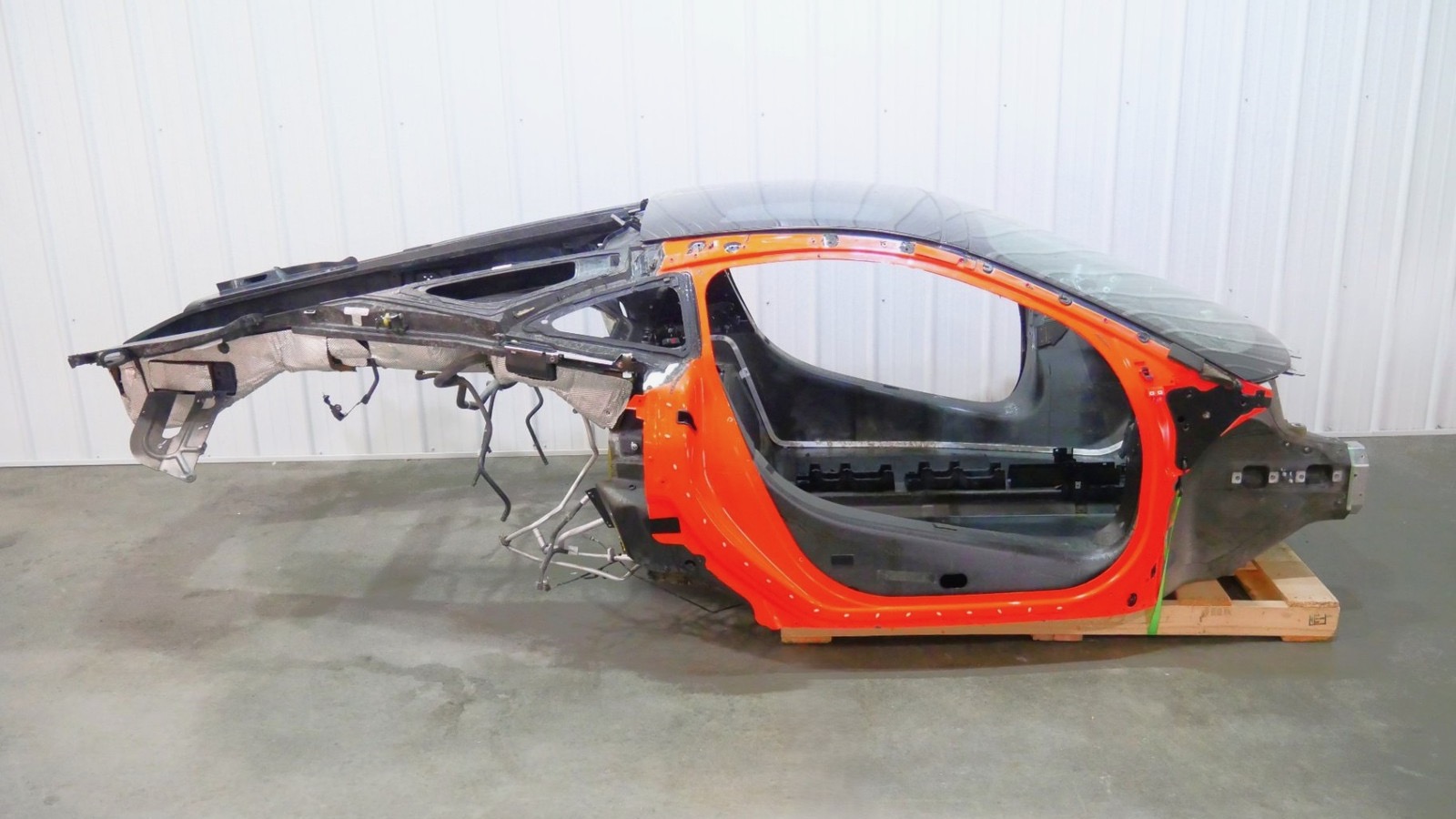
A crashed McLaren GT is being parted out and salvaged in an unconventional way. Rather than rebuild it for road use, someone has extracted the carbon fiber shell and is marketing it as a race car bed. The asking price undercuts the original McLaren GT's MSRP significantly, making it a bargain for buyers willing to forgo the supercar's actual mechanical components and driving capability.
This reflects a quirk in the salvage market where damaged high-end performance cars sometimes find second lives as novelty furniture or display pieces. The McLaren GT, which starts around $210,000 new, delivers 612 horsepower from a 4.0-liter twin-turbo V8 and serves as McLaren's grand touring offering for wealthy buyers seeking long-distance capability alongside supercar performance. Its carbon fiber monocoque chassis represents both its structural integrity and significant material cost.
Converting the shell into a bed capitalizes on the exotic car aesthetic that appeals to collectors and enthusiasts who may lack the budget for an actual McLaren. The carbon fiber construction carries lightweight durability that exceeds typical bedroom furniture, though obviously loses all functional purpose. This salvage strategy sidesteps the expensive repair bills associated with structural damage while still extracting value from the exotic materials.
The move highlights how ultra-luxury cars depreciate catastrophically after damage. A wrecked McLaren GT cannot easily re-enter the market as a legitimate used vehicle, so creative repurposing becomes economically rational. Rather than scrapping the body entirely, sellers tap niche markets for novelty items. Buyers get a piece of automotive exotica without paying six-figure sums.
This trend reflects broader patterns in the exotic car market, where ownership costs and repair expenses create barriers beyond initial purchase price. A single accident can render a vehicle economically totaled, making creative reuse preferable to traditional junking