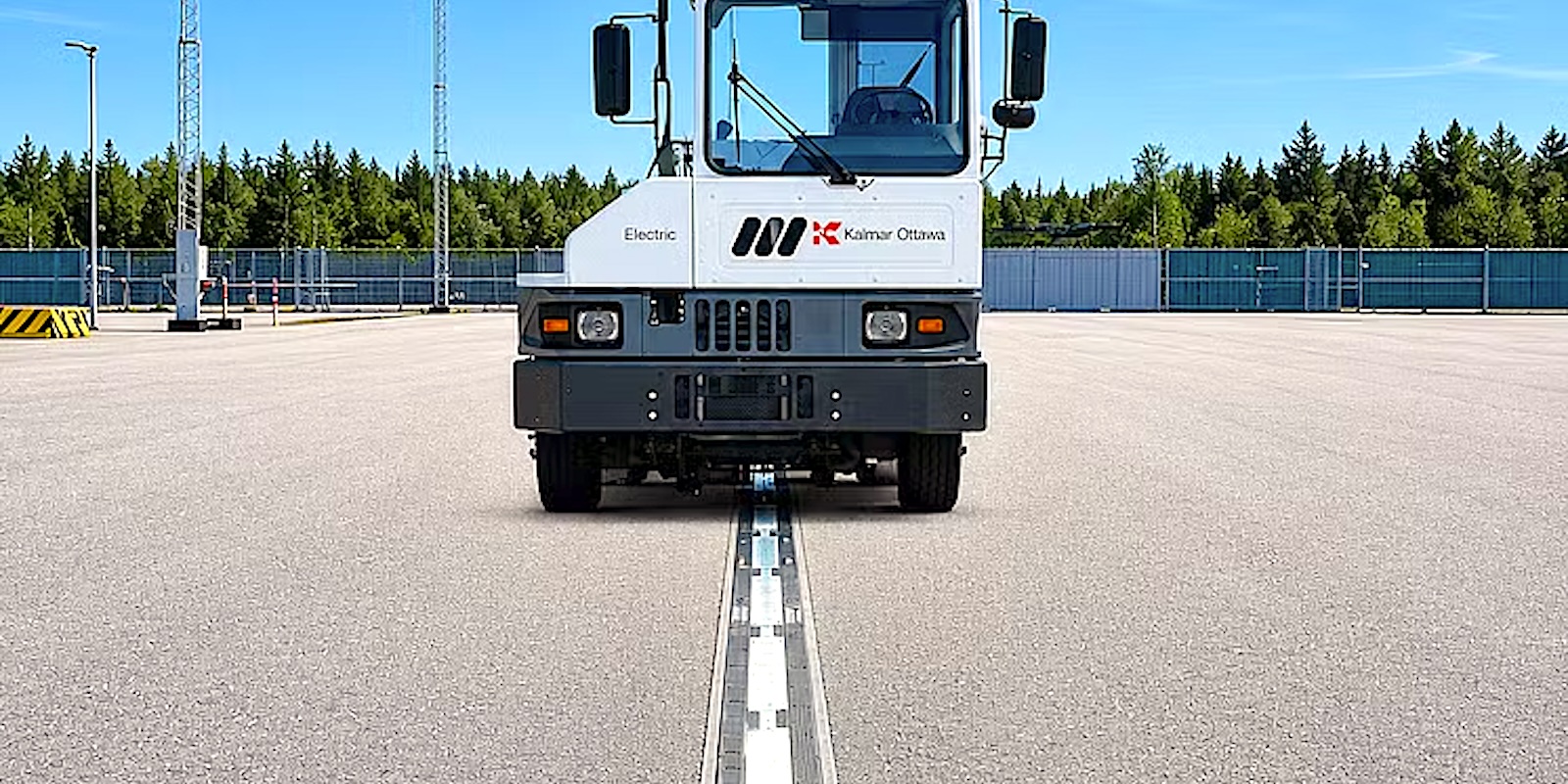
Kalmar has deployed an electric terminal tractor on Sweden's in-road charging infrastructure, eliminating the need for plug-in charging entirely. The Kalmar Ottawa T2 EV operates continuously on roads equipped with embedded charging systems in Ljungby, Sweden.
This approach solves a fundamental constraint of heavy-duty electric vehicles. Terminal tractors move shipping containers between ports and warehouses on fixed, predictable routes. Battery capacity limits their range, forcing overnight charging or frequent plug-in sessions. In-road charging removes this friction by transferring power directly from the pavement as the vehicle drives.
The technology represents a shift in how manufacturers approach electrification of demanding commercial applications. Rather than engineering ever-larger batteries that add weight and cost, embedded road systems charge vehicles dynamically. This reduces onboard battery size requirements and improves total operating efficiency.
Kalmar's T2 EV with in-road charging offers ports and logistics operators significant operational advantages. Equipment stays in motion during peak hours without downtime for charging. Predictable routes make in-road systems practical since infrastructure investment concentrates on specific corridors with reliable traffic patterns.
Sweden leads this segment globally. The country has constructed dedicated in-road charging lanes, embedding the technology in highways and port access roads. Kalmar, a Finnish manufacturer owned by Cargotec, leads commercialization of vehicles designed for these systems.
Heavy-duty electric vehicle adoption depends on solving charging logistics. Battery-electric trucks face range anxiety on long-haul routes. Terminal tractors working fixed circuits offer an ideal first use case. If in-road charging proves reliable and cost-effective, ports worldwide may adopt similar infrastructure, creating standardization pressure on vehicle manufacturers.
Competitors including Volvo and Scania watch Sweden's deployment closely. Success here validates in-road charging as a viable commercial model, potentially accelerating adoption beyond Scandin