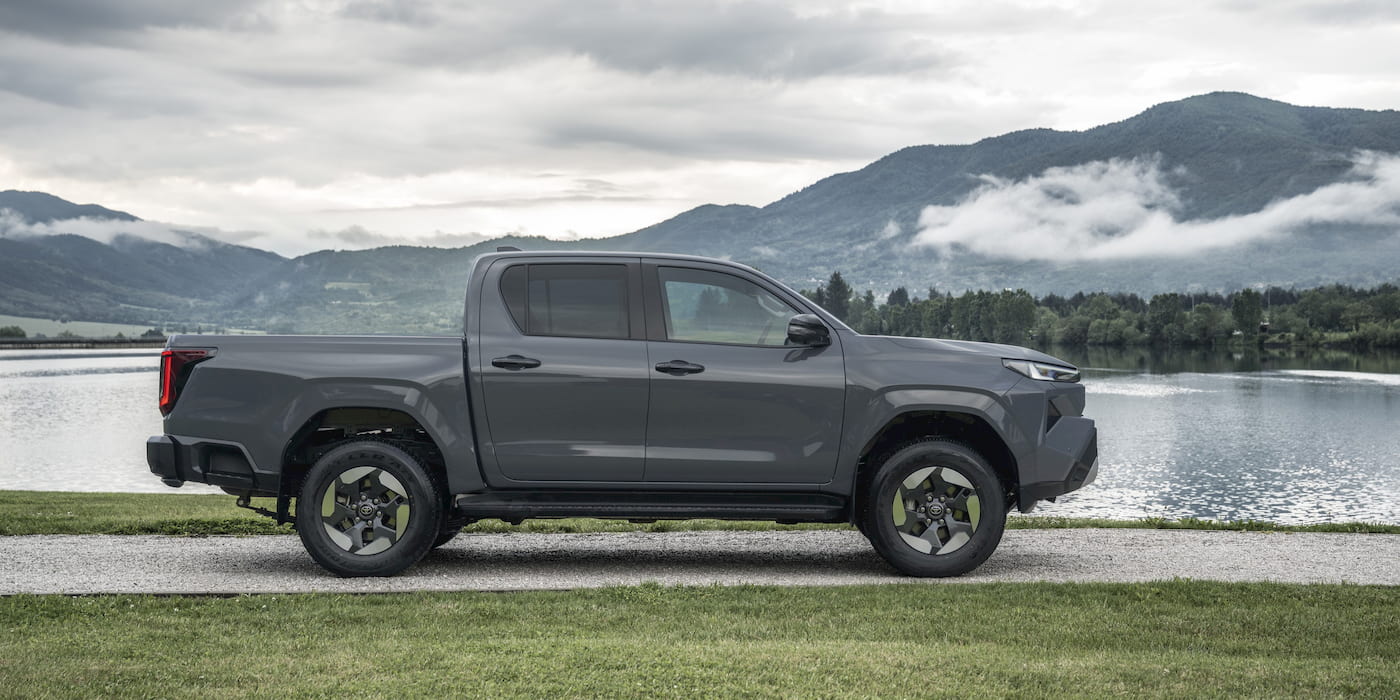
Toyota opened order books for the Hilux BEV, its first fully electric body-on-frame pickup truck. The vehicle starts under $60,000, positioning it as an affordable entry point in the emerging EV truck segment.
The Hilux BEV represents Toyota's push into electric utility vehicles. Body-on-frame construction offers durability and towing capacity that unibody designs cannot match. Toyota selected this architecture deliberately. The truck competes directly with emerging EV pickups from startups and traditional automakers building electric work vehicles for commercial and consumer markets.
Pricing below $60,000 undercuts established rivals. Ford's F-150 Lightning starts around $55,000 for base models but offers longer EPA range and Supercharger access. Chevrolet's Silverado EV prices higher, near $85,000. Rivian's R1T begins at $73,000. The Hilux BEV's aggressive pricing targets budget-conscious buyers and fleet operators seeking electric alternatives to traditional pickups.
Toyota's entry into body-on-frame electric trucks reflects industry momentum. Automakers increasingly recognize that traditional truck buyers prioritize practicality and durability over cutting-edge design. Electrification demands rethinking vehicle architecture. Body-on-frame simplifies battery integration while maintaining structural rigidity needed for towing.
The Hilux nameplate carries weight globally. Toyota's Hilux dominates developing markets and ranks among the world's best-selling vehicles. Electrifying the nameplate signals Toyota's commitment to EV adoption beyond sedans and crossovers. Trucks and SUVs drive profit margins and remain central to automaker portfolios.
Order opening indicates Toyota expects genuine demand. The company typically launches conservative initial volumes. Real-world feedback will determine whether the Hilux BEV attracts traditional truck buyers