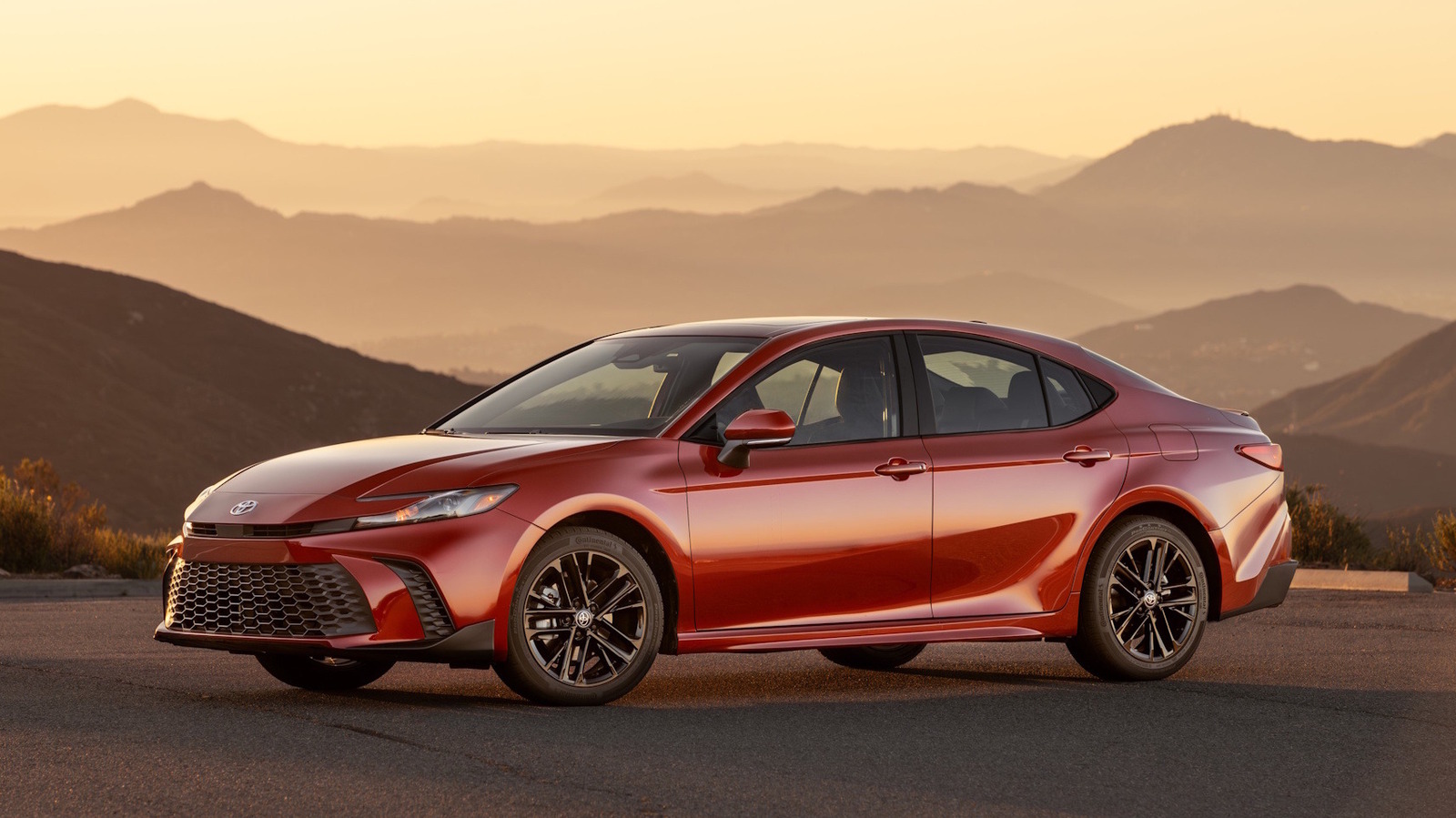
Toyota's 2026 Camry Hybrid and Prius occupy different segments of the hybrid market, each targeting distinct buyer priorities.
The Prius remains the fuel economy leader. The 2026 Prius achieves 56 city/56 highway/56 combined mpg in standard form, with the Eco trim hitting 58 combined. Toyota's iconic hatchback prioritizes maximum efficiency through its lightweight platform, aerodynamic design, and smaller engine displacement. It seats five and offers 50.3 cubic feet of cargo space with rear seats folded. The Prius starts around $30,000.
The Camry Hybrid takes a different approach. It delivers 51 city/46 highway/48 combined mpg with its 2.5-liter four-cylinder hybrid engine. The sedan prioritizes comfort and space over extreme efficiency. It provides more legroom, a traditional trunk with 15.1 cubic feet of capacity, and a quieter cabin. The Camry Hybrid starts near $38,000.
The mpg difference reflects their engineering philosophies. The Prius uses a 1.8-liter three-cylinder paired with electric motors and a continuously variable transmission. The Camry Hybrid pairs a 2.5-liter engine with an eight-speed automatic, prioritizing drivability and refinement over peak efficiency.
Real-world driving patterns matter. Highway miles favor the Camry Hybrid slightly, while city driving amplifies the Prius's electric motor advantage. Both vehicles offer significant fuel savings versus gasoline counterparts. A standard Camry delivers 28 city/39 highway/32 combined mpg, making the hybrid version 18-23 mpg better in city driving.
Buyers choosing between them should consider their actual needs. The Prius makes