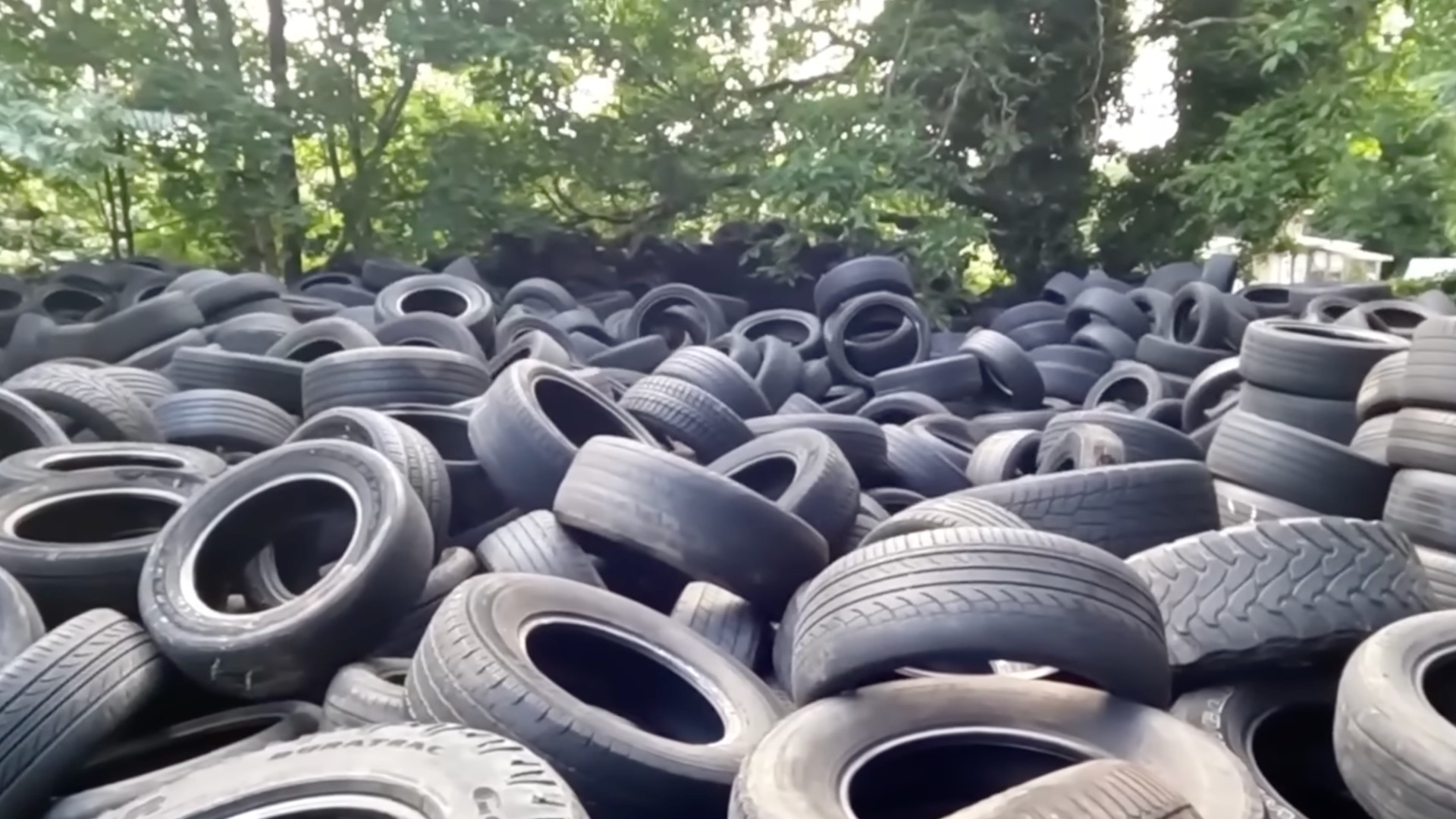
A property owner discovered hundreds of illegally dumped tires stacked six feet high across his land within a 90-day period, with no warning or permission. The tires appeared in organized rows, suggesting deliberate, systematic dumping rather than scattered waste.
This type of illegal dumping represents a growing problem for rural landowners nationwide. Waste disposal companies and individuals dump tires illegally to avoid proper recycling fees, leaving property owners responsible for cleanup costs and environmental remediation. Tires pose serious hazards: they accumulate rainwater that breeds mosquitoes, leach chemicals into soil and groundwater, and create fire risks that burn for months.
The discovery highlights enforcement gaps. Many counties lack adequate resources to monitor illegal dumping, prosecute offenders, or help victims recover cleanup expenses. Property owners often bear the full financial burden of removing hazardous waste from land they don't control.
Proper tire recycling costs money. Facilities charge per tire to process rubber into crumb for playgrounds, asphalt, and other products. Unscrupulous operators and individuals skip legitimate channels to save cash, targeting remote properties with limited foot traffic and surveillance.
Prevention requires stronger enforcement, increased surveillance on vulnerable properties, and community reporting programs. Some states have enhanced penalties for large-scale illegal dumping, though prosecutions remain rare due to investigation costs.
For victims, options include filing police reports, contacting county environmental agencies, and documenting evidence for civil liability claims against identified dumpers. Many states offer free or subsidized tire disposal days to reduce dumping incentives.
This situation underscores why automotive recycling regulations matter. Millions of tires reach end-of-life annually. Infrastructure that handles proper disposal and enforcement prevents exactly these scenarios where innocent landowners become dumping grounds for hazardous waste.