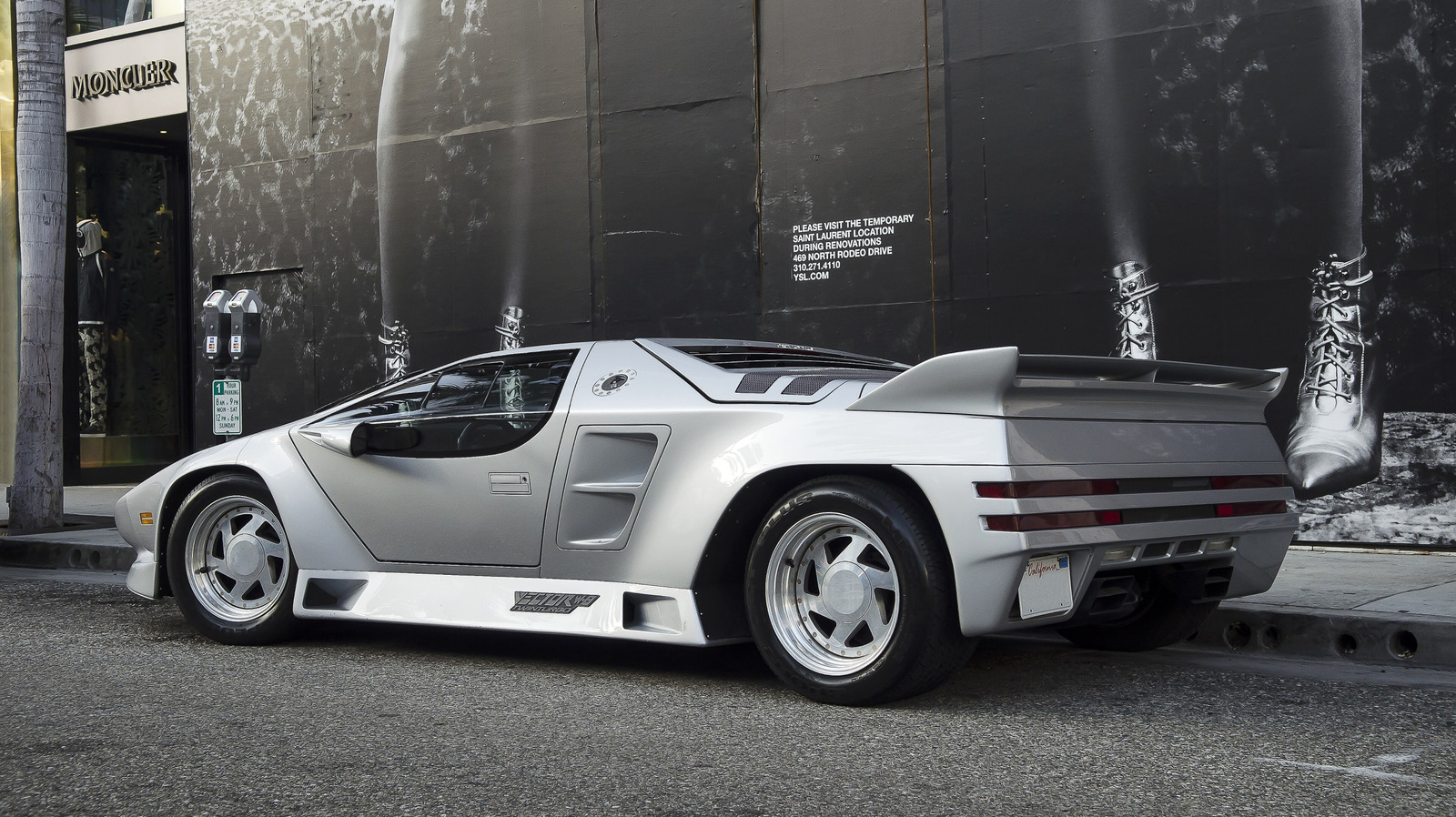
The Vector W8 stands alone as America's sole independently developed supercar of the 20th century, a fact that underscores both its ambition and its ultimate failure. Launched in the 1989-1991 timeframe, this wedge-shaped machine promised Ferrari-level performance with a mid-mounted twin-turbocharged V8 that produced around 625 horsepower. That power output rivaled contemporary Ferrari 348s and Lamborghini Countachs, putting the Vector W8 on paper as a legitimate contender in the supercar wars.
Vector Aeromotive Corporation, founded by Gerald Wiegert, bet everything on this homegrown challenger. The W8's sleek, aggressive design turned heads. Its claimed 0-60 time of 3.2 seconds and top speed of 200-plus mph matched the best European competitors. Yet the road to production exposed the gulf between vision and execution.
Mechanical reliability plagued the W8 from launch. Engine failures and transmission problems mounted across the handful of examples built. Component quality and build consistency fell short of Ferrari and Lamborghini standards, which buyers at that price point rightfully expected. Service and parts availability became nightmares for owners. The company lacked the manufacturing infrastructure and supply-chain depth that European marques took for granted.
Financial troubles compounded the engineering struggles. Vector Aeromotive burned through capital faster than its turbos spooled up, struggling to fund both development and production simultaneously. Bankruptcy arrived, ending the American supercar dream almost before it truly began. Only around 17 W8s reached customers before the company collapsed.
The Vector W8 remains a footnote in automotive history, a reminder that horsepower alone cannot sustain a supercar manufacturer. Building supercars demands more than engineering prowess and daring design. It requires