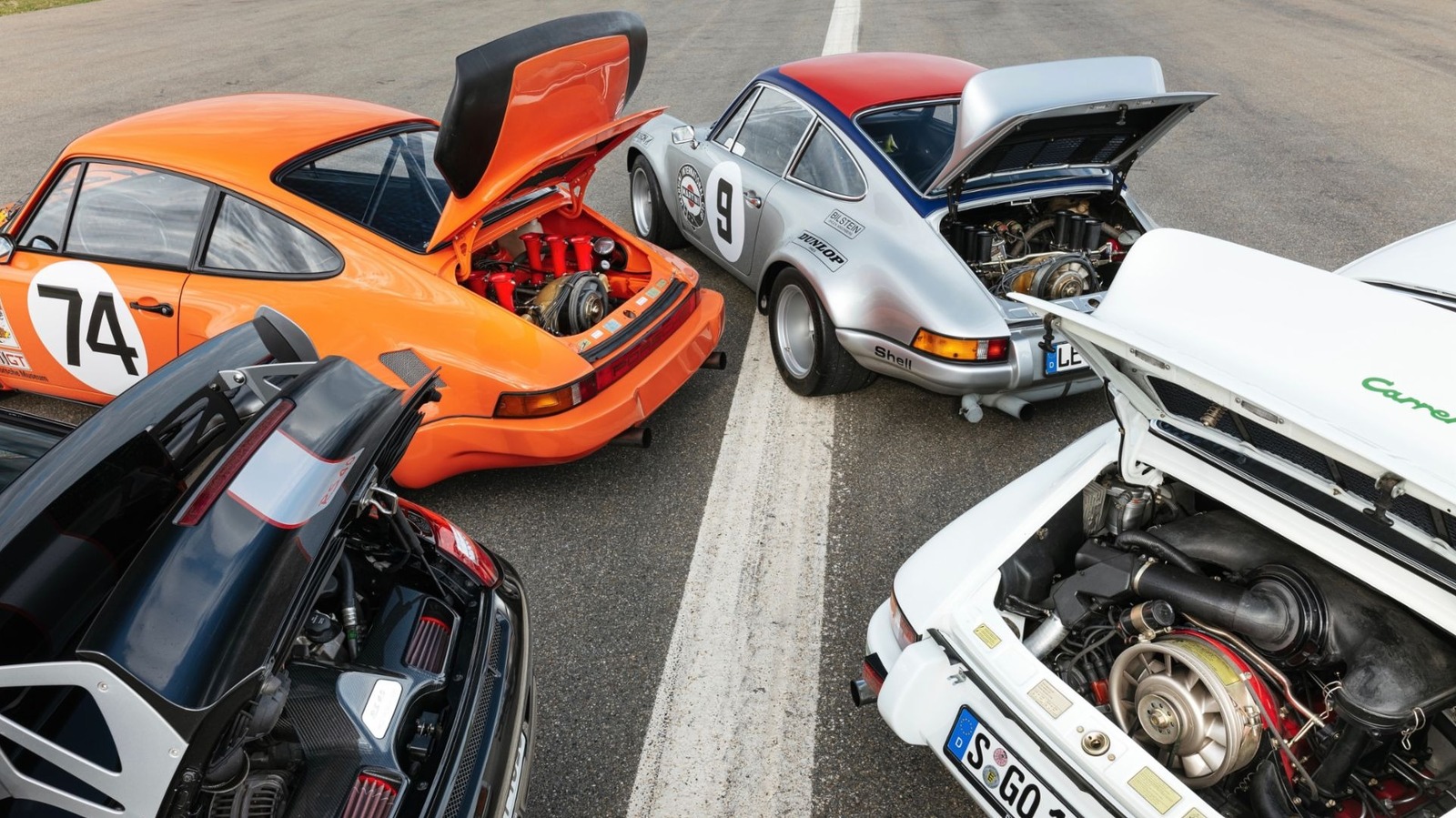
Porsche built its reputation on engineering excellence, and its engine lineup tells that story. The flat-six sits at the heart of the brand's identity, powering everything from the original 356 to today's 911. This horizontally-opposed layout delivers the low center of gravity and balanced weight distribution that define the 911's handling character. Over decades, Porsche turbocharged, naturally aspirated, and hybrid-assisted versions of this engine, with outputs ranging from under 100 horsepower in early models to over 500 in modern variants.
The V10 represents Porsche's brief flirtation with extreme performance. Introduced in the Carrera GT supercar, this naturally aspirated 5.0-liter engine produced 603 horsepower and revved to 8,400 rpm. Its wail became legendary among enthusiasts, though production ended after the Carrera GT's run concluded. The engine never appeared in any other production vehicle.
Porsche's V8 engines powered the Cayenne, Panamera, and 918 Spyder, delivering turbocharged grunt for SUVs and sedans while maintaining the brand's performance standards. The company also experimented with air-cooled flat-sixes in the 356 and early 911s, engines that demanded constant attention but built an emotional bond with drivers.
The 2.7-liter flat-six from the 1973 Carrera RS remains one of the most celebrated variants. This homologation special produced 210 horsepower and cemented Porsche's racing DNA in road-going form.
More recently, Porsche added turbocharged four-cylinder engines to the 911 and other models, responding to efficiency mandates while turbos maintained performance levels. The company also developed hybrid systems, pairing gasoline engines with