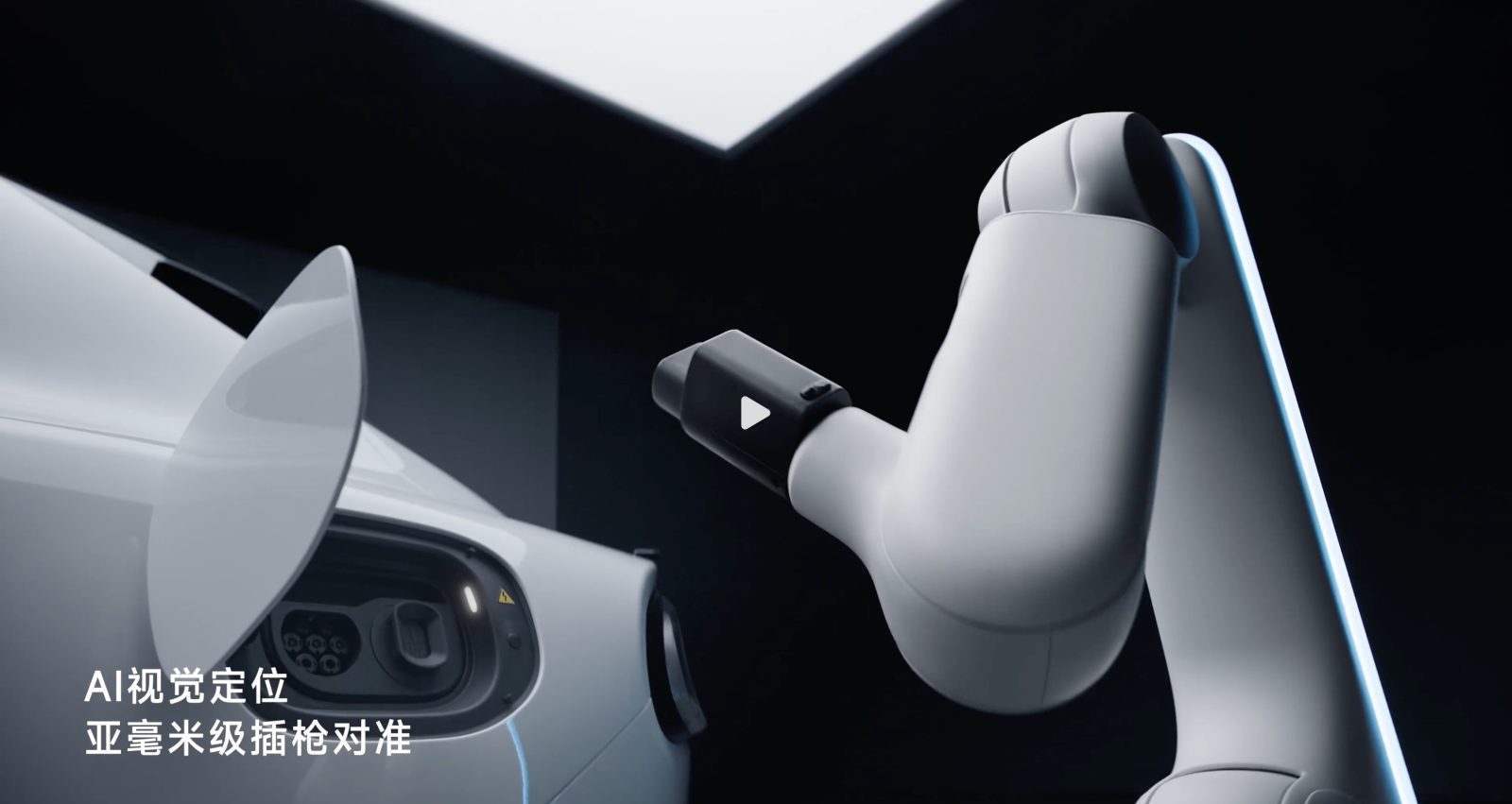
Xiaomi has introduced a home robotic arm charger that automatically connects and disconnects EV charging cables, finally commercializing a concept Tesla envisioned more than a decade ago. Tesla's prototype autonomous charger never reached production, leaving the market open for competitors to execute on the idea.
Xiaomi's version measures just 152 millimeters wide, engineered to fit cramped residential garage spaces where standard charging infrastructure creates awkward obstacles. The device plugs into Xiaomi's broader smart home platform and operates via smartphone control, letting owners manage charging remotely without manual cable handling.
This move highlights how Chinese manufacturers increasingly lead in EV infrastructure and home automation integration. Tesla's Supercharger network dominates public fast-charging, but home charging solutions have remained largely manual. Xiaomi addresses a genuine pain point: the repetitive, inconvenient task of plugging in daily.
The robotic arm concept matters because EV ownership friction extends beyond driving range and purchase price. Convenience features influence daily ownership experience and boost EV adoption among skeptics. A motorized connector eliminates the minor but consistent annoyance of retrieving and connecting cables in weather, especially for users with mobility limitations or tight parking configurations.
Xiaomi's ecosystem integration is strategically smart. Owners already embedded in Xiaomi's smart home network via their phones gain seamless control without switching apps. This reinforces lock-in and positions the company beyond just EV charging into broader residential automation.
The global EV market has matured enough that aftermarket infrastructure now drives adoption rates. Tesla's decade-old inaction on this prototype signals missed opportunity. Chinese competitors like BYD, NIO, and now Xiaomi increasingly capture the secondary innovation layer that makes EV ownership frictionless. Home charging robotics exemplifies this shift. Western automakers focused on battery technology and manufacturing scale while Chinese firms developed ecosystem