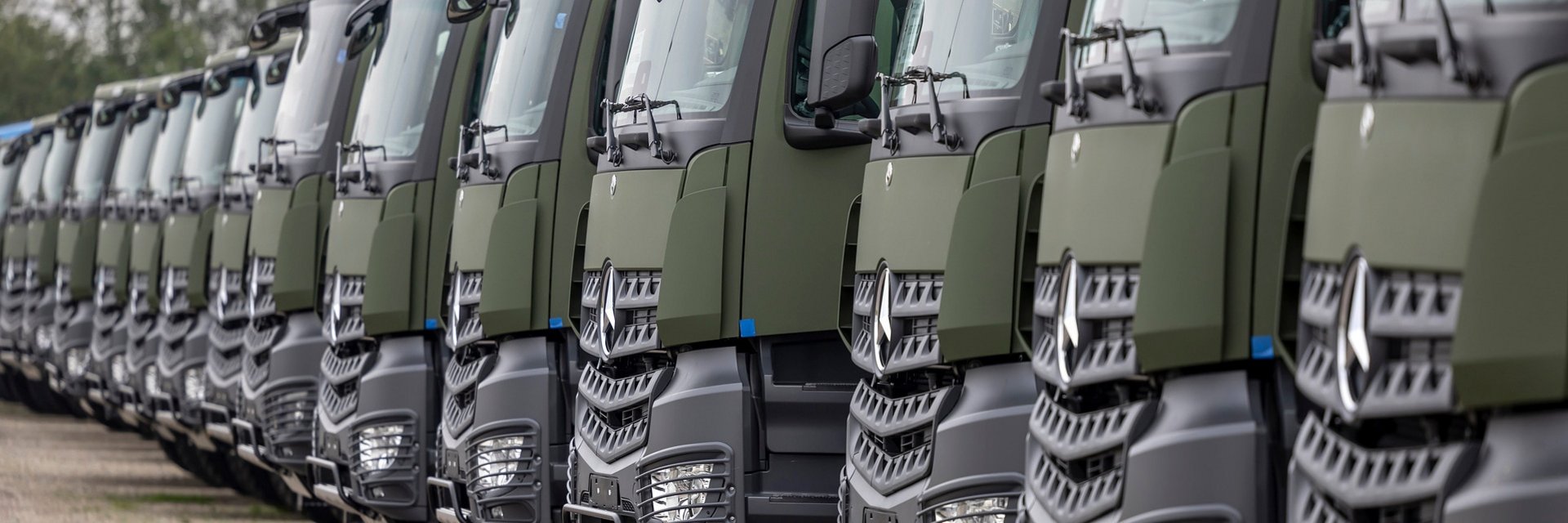
Daimler Truck is reshaping its defence business under a consolidated global brand, betting big on government contracts and military applications. The Stuttgart-based truck manufacturer aims to generate €1 billion in defence revenue by 2028, backed by a nine-figure investment in the division.
This move reflects Daimler Truck's strategy to unlock a distinct revenue stream beyond commercial vehicles. Defence work spans military logistics, specialized transport platforms, and government procurement contracts. By creating a unified brand identity across geographies and programmes, Daimler Truck can streamline operations, improve procurement efficiency, and present a cohesive offering to defence ministries worldwide.
The €1 billion target signals aggressive growth. Current defence revenues remain undisclosed, but the goal implies either substantial organic expansion or acquisition-led consolidation, possibly both. A nine-figure investment covers talent, R&D, manufacturing upgrades, and compliance with strict defence contracting standards.
Geopolitically, the timing matters. NATO members spend heavily on logistics infrastructure. Germany, where Daimler Truck operates, faces pressure to boost defence spending. Eastern European nations purchasing Western military equipment need reliable supply chains. This positions the company well for government contracts across Europe and allied nations.
Daimler Truck, spun off from Daimler AG in late 2021, operates Mercedes-Benz Trucks and Freightliner, among other brands. The company already supplies military variants of civilian platforms. Heavy-duty trucks and specialized chassis form the foundation for defence applications like mobile command centres, ammunition transport, and tactical logistics.
The defence consolidation also hedges against commercial truck market cyclicality. Government spending remains steadier than fleet purchasing. Rising geopolitical tensions sustain defence budgets independent of economic downturns.
Competitors like Volvo, Scania, and MAN already maintain defence divisions, though