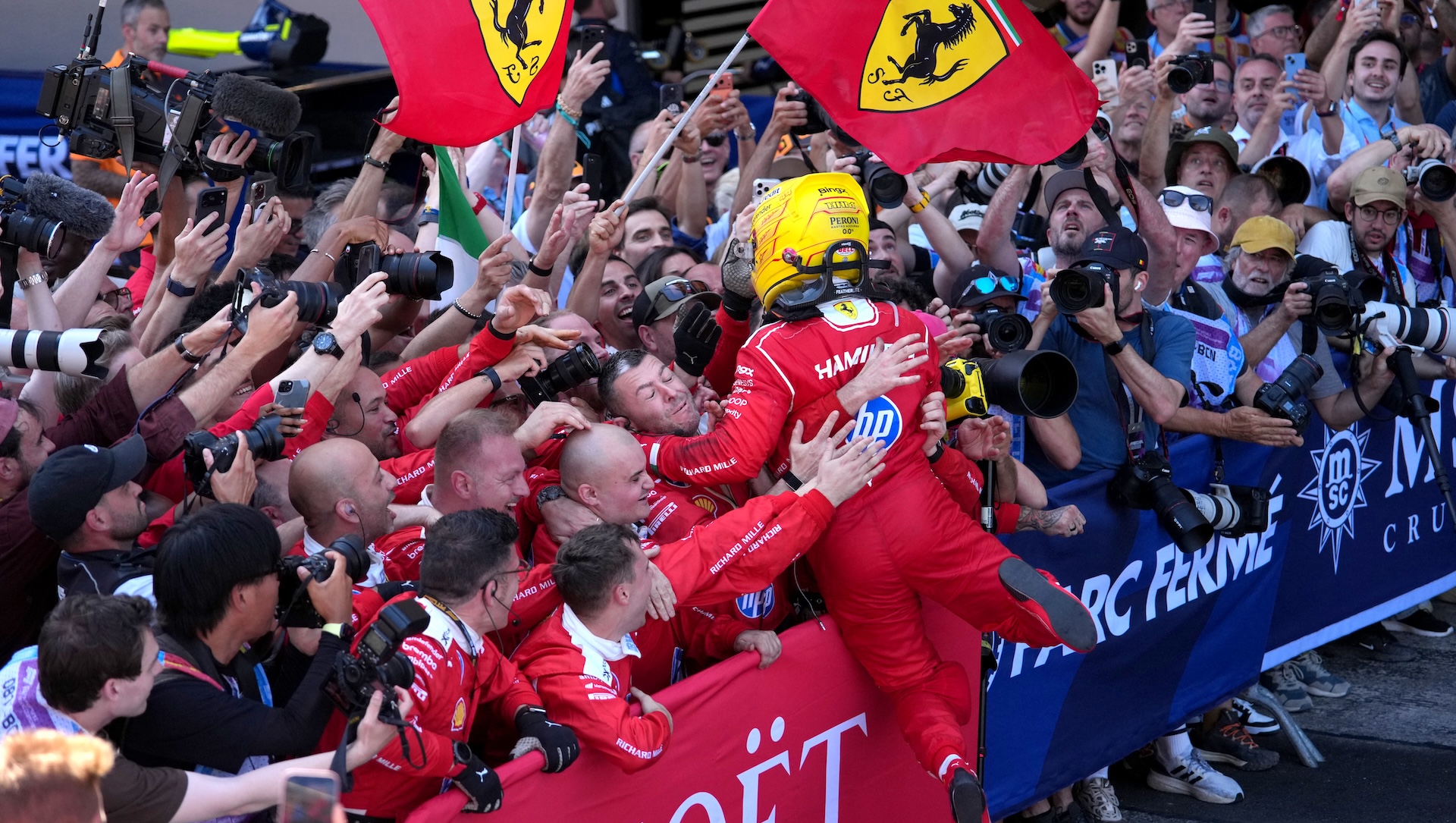
Lewis Hamilton's maiden victory with Ferrari arrives at a critical moment for Formula 1's narrative appeal. The sport depends on compelling storylines to sustain television audiences and fan engagement, and Hamilton's long-awaited Maranello breakthrough delivers exactly that.
Hamilton spent sixteen seasons at Mercedes before joining Ferrari, one of motorsport's most storied franchises. His first win in red marks a watershed moment not just for the driver but for the championship itself. Ferrari needed validation that its restructuring and investment could produce results with a proven talent. Hamilton needed to prove his move wasn't a farewell tour but a genuine competitive reset at the sport's most demanding seat.
Formula 1 operates on narrative fuel. When Max Verstappen dominates as he did for much of his Red Bull tenure, viewership eventually plateaus. The sport thrives on tension, rivalry, and unexpected outcomes. A Hamilton Ferrari partnership sat dormant for years as speculation. Now realized, it generates the exact ingredient F1 craves: a fresh power dynamic.
The championship benefits from multiple competitive narratives. Verstappen's dominance remains potent, but Hamilton and Ferrari inject uncertainty. Will Ferrari's engineering support the driver? Can Hamilton adapt to a different car philosophy after years of Mercedes' design fingerprint? These questions matter to hardcore fans and casual observers alike.
Hamilton's profile transcends Formula 1. His cultural reach, commercial value, and seven world championships mean his success reaches audiences beyond traditional motorsport demographics. Ferrari, similarly, carries global brand recognition that extends far beyond racing circles.
This victory also reshapes team dynamics within F1. It signals that Mercedes' era of guaranteed championship dominance has genuinely ended. It suggests Ferrari's recovery is real, not temporary. These narrative shifts keep the sport fresh and unpredictable.
The timing matters too. As F1 navigates questions about regulation stability and cost controls, a credible challenger