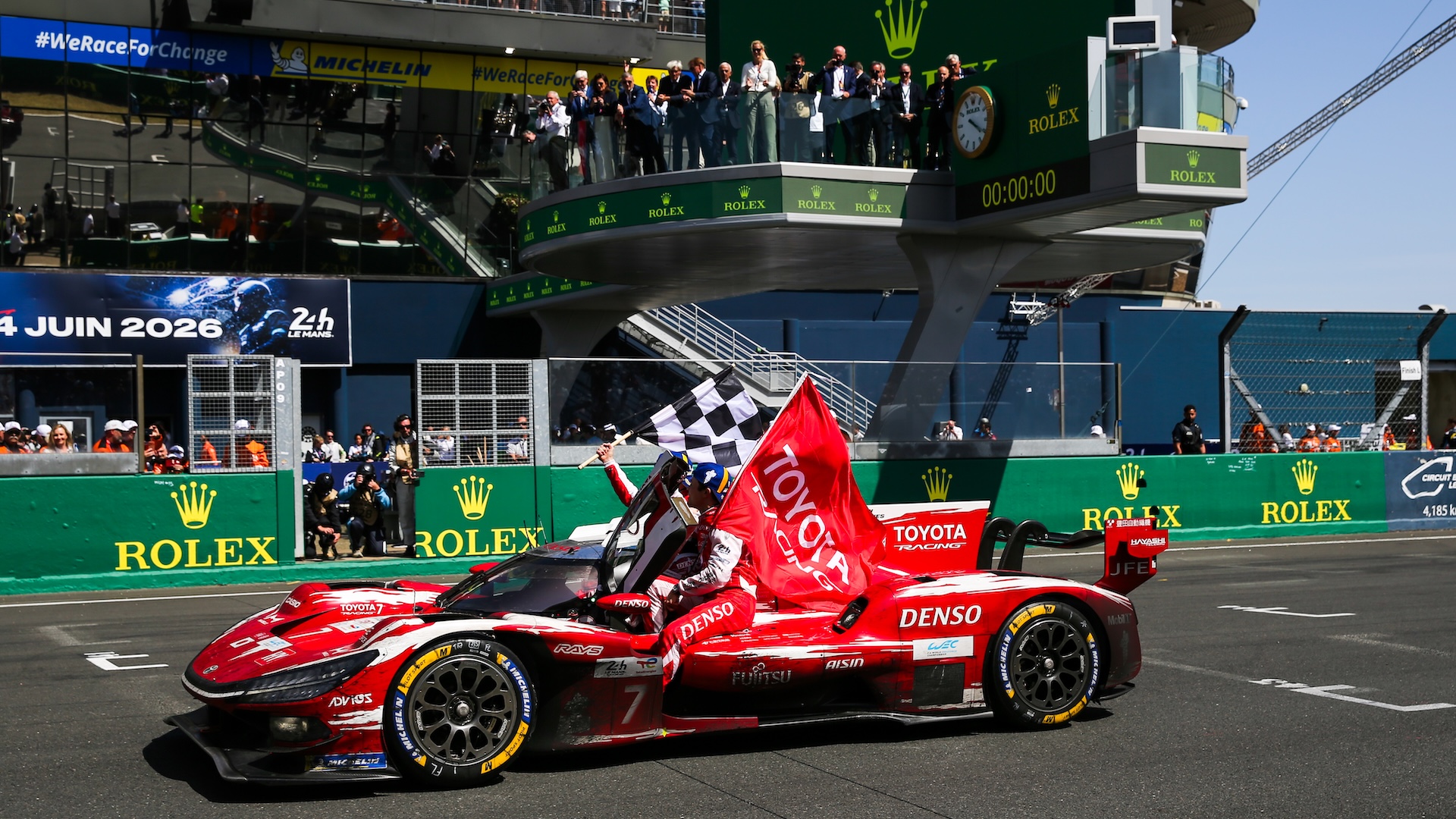
Toyota claimed victory at Le Mans for the first time since 2020, ending a four-year drought at the world's most demanding endurance race. The win silences questions about the team's competitiveness in the hypercar class and represents a methodical return to form after years of technical setbacks and heartbreaking near-misses.
Ferrari emerged as the pre-race favorite and later blamed an unbalanced Balance of Performance adjustment for the outcome. Other competitors cited mechanical failures and strategy miscues. Toyota, however, executed cleanly. The team's GR010 Hybrid ran reliably through the grueling 24-hour grind while rivals faltered, a reminder that Le Mans ultimately separates careful engineering from excuses.
This victory underscores what makes Le Mans unique in motorsport. The race does not forgive complacency or bad luck equally. A team can run perfectly and still lose to circumstances beyond its control, yet a team that controls what it can control often prevails. Toyota controlled its car, its pit strategy, and its driver rotation across a full day and night of racing. Ferrari's performance complaints and other teams' mechanical troubles became footnotes to that simple fact.
For Toyota, the win validates years of development on the GR010 Hybrid platform. The automaker has invested heavily in hybrid hypercar technology, betting that electrification matters at Le Mans just as much as it does in road-car markets. This result proves that bet was sound. It also reestablishes Toyota as a serious Le Mans contender after the organization endured heartbreak in 2016 when a mechanical failure took out a leading car just hours before the finish.
The 2024 Le Mans result strips away the noise. No asterisks. No excuses. Toyota showed up with a fast, reliable car and a prepared team. That formula worked. In a