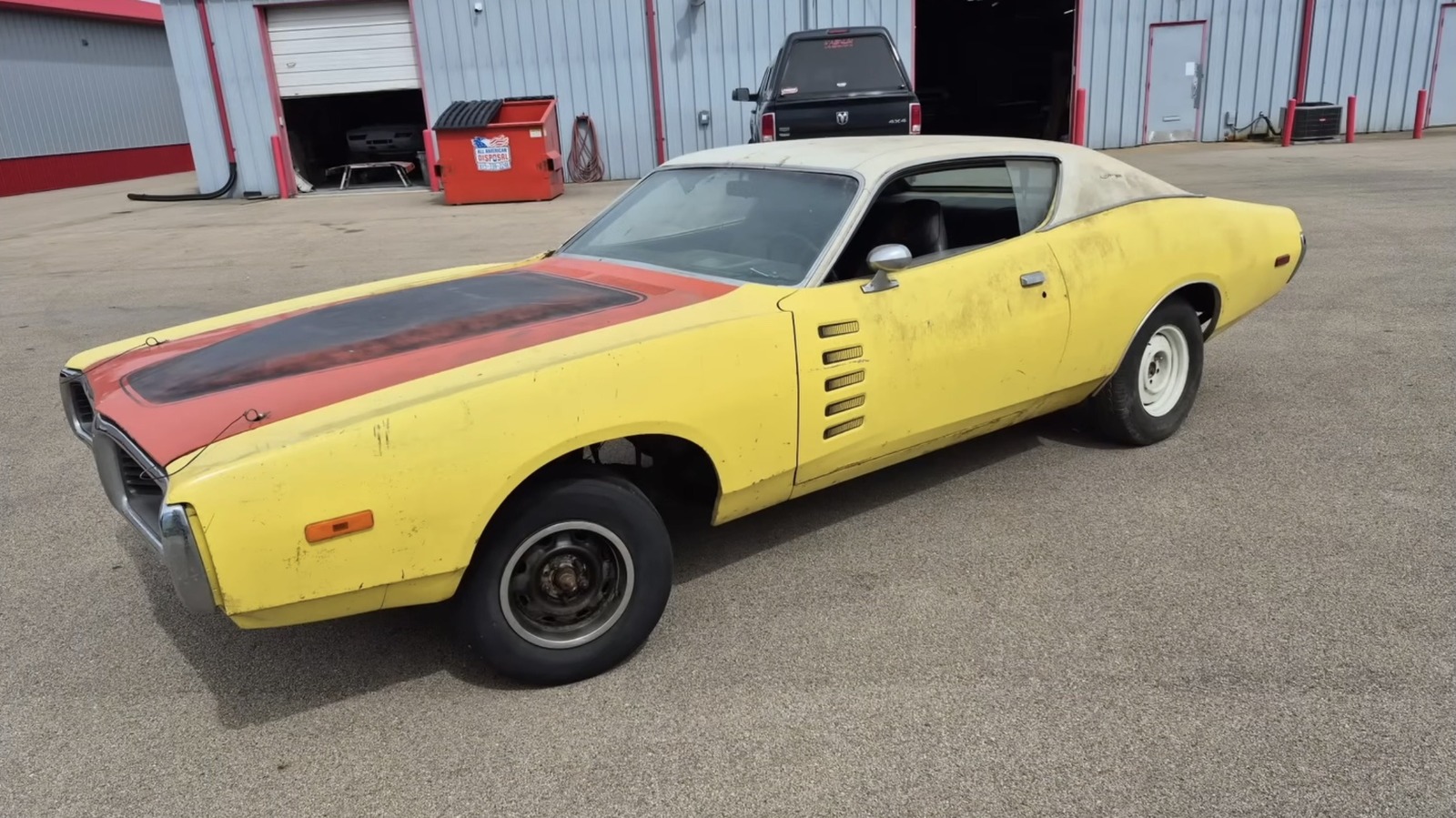
A 1972 Dodge Charger with a 440 Six Pack engine represents a fragment of American muscle car history now being restored. The Charger emerged from storage after decades, and enthusiasts identified it as one of the few examples factory-equipped with the triple-carb 440 cubic inch powerhouse.
The 440 Six Pack delivered 385 horsepower in 1972, making it one of the final high-output engines Dodge offered before emission regulations and insurance costs gutted the muscle car market. Most 1972 Chargers came with smaller displacement engines like the 318 or 360. The 440 Six Pack's rarity stems from declining buyer interest in fuel-intensive performance cars during the oil crisis and economic slowdown of that era.
Factory documentation confirms this Charger's original specification. The barn-find example shows the wear of decades in storage, with rust, faded paint, and dormant mechanical systems typical of abandoned vehicles. Restoration requires addressing structural corrosion while preserving the authenticity that makes this particular Charger valuable to collectors.
The 440 Six Pack represented Dodge's final hurrah for genuine high-performance hardware. After 1972, the company shifted toward less aggressive engine tuning and lower power ratings. Insurance premiums for young drivers operating these cars had climbed dramatically, and gas prices made daily driving economically painful.
Finding a 1972 440 Six Pack Charger with documented factory provenance commands serious money in the collector market. Museums and private enthusiasts pursue these vehicles aggressively because production numbers remained minimal. The combination of styling, historical moment, and mechanical significance makes the second-generation Charger platform one of the most sought-after American muscle cars.
This particular restoration will return a piece of automotive heritage to running condition, preserving evidence of an era when manufacturers still built genuinely