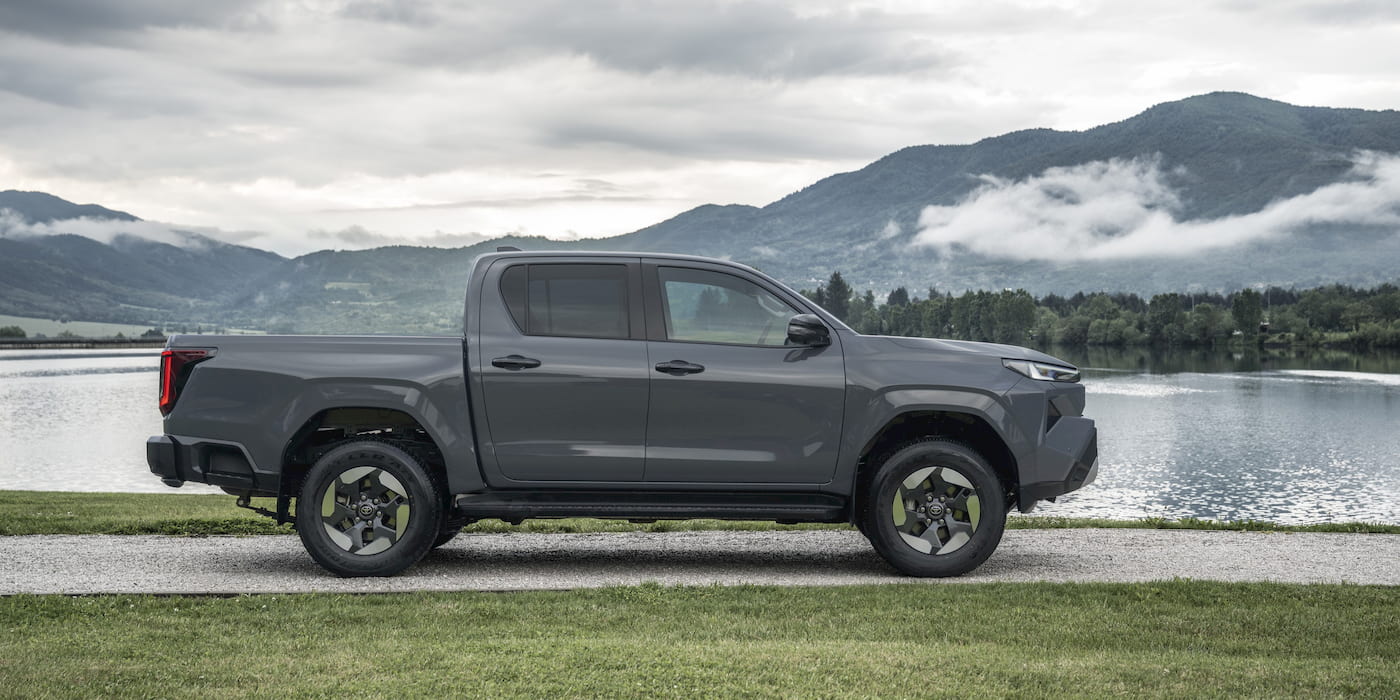
Toyota has priced its first fully electric pickup truck, the Hilux BEV, marking the Japanese automaker's entry into the booming EV truck segment. The Hilux BEV represents a significant strategic move, combining Toyota's proven truck heritage with battery electric propulsion in a body-on-frame design.
The Hilux nameplate carries weight globally. Toyota sells the Hilux across Europe, Asia, Africa, and Australia as a workhorse pickup. The BEV variant targets markets where electrification demand is strongest, particularly in Europe and developed Asia-Pacific regions. This isn't a niche product. It's Toyota betting that commercial and consumer truck buyers will embrace EVs when the familiar Hilux badge carries the technology.
The body-on-frame construction matters. Unlike unibody electric trucks such as the Rivian R1T or Ford F-150 Lightning, the Hilux BEV maintains the structural approach that contractors, farmers, and fleet operators understand and trust. This design choice signals Toyota's commitment to practical utility rather than lifestyle positioning.
Pricing remains competitive within the global EV truck market, though exact figures vary by region and powertrain configuration. Toyota typically offers multiple battery sizes and capability levels. Buyers will evaluate the Hilux BEV against competitors like the Volkswagen ID.Buzz Cargo, BYD Tang EV, and regional offerings from Isuzu and Hino.
Range, payload capacity, and charging speed determine real-world value for commercial users. Toyota hasn't yet released comprehensive specifications, but the Hilux BEV needs to deliver 200-plus miles of range and maintain competitive towing capacity to justify premium EV pricing.
The broader context matters. Ford, General Motors, and traditional truck manufacturers now race to electrify their pickup lineups. Toyota entered this race later than American