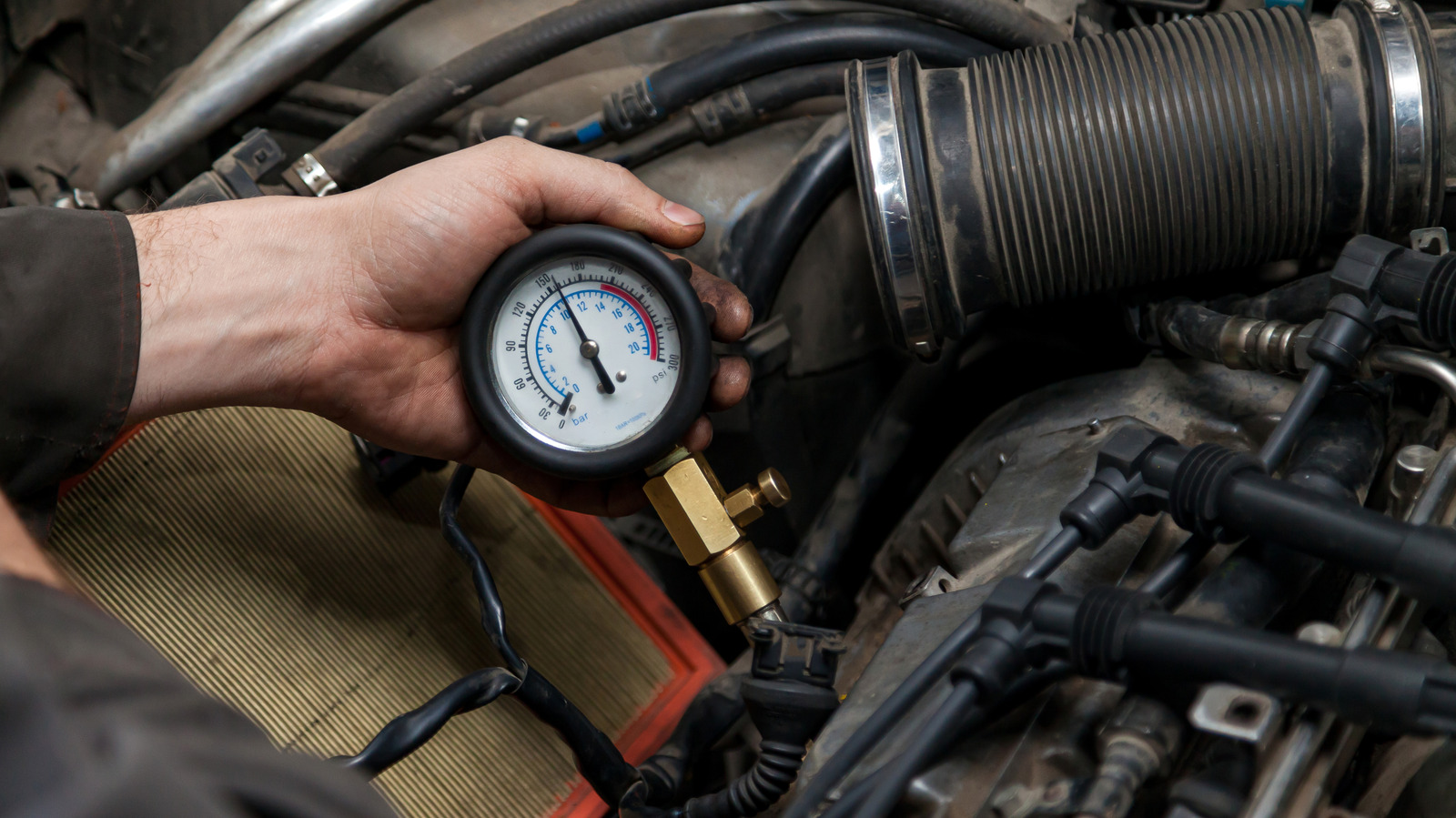
Compression testing and leak-down testing serve different diagnostic purposes when evaluating engine health, though both measure combustion chamber integrity.
Compression testing measures the peak pressure an engine builds during the compression stroke. A mechanic threads a gauge into a spark plug hole, cranks the engine, and records the maximum PSI. This test reveals overall pressure numbers but doesn't pinpoint where problems originate. A weak cylinder might read 90 PSI instead of the typical 140-160 PSI range, but compression testing alone won't tell you whether a faulty piston ring, leaking valve, or damaged head gasket caused the drop.
Leak-down testing goes further by pressurizing the combustion chamber with compressed air while the piston sits at top dead center. A technician then listens to determine where air escapes. Hissing from the crankcase indicates ring wear. Air bubbling through the coolant suggests a head gasket leak. Whistling from the intake or exhaust manifold points to valve problems. Leak-down testing identifies the specific component failing, not just the pressure loss.
Compression testing works best as a quick screening tool. It's faster, cheaper, and requires less equipment. Mechanics run it first to determine if deeper diagnostics are needed. If compression readings fall within specification across all cylinders, the engine likely runs properly.
Leak-down testing demands more time and expertise but delivers actionable information. Professional shops use it when compression results look questionable or when customers report performance issues. The test costs more because technicians must interpret results and correlate findings to actual mechanical failures.
Most shops combine both methods for thorough diagnostics. Compression testing provides the headline; leak-down testing provides the diagnosis. Together, they reveal whether an engine needs immediate attention or can continue operating safely.