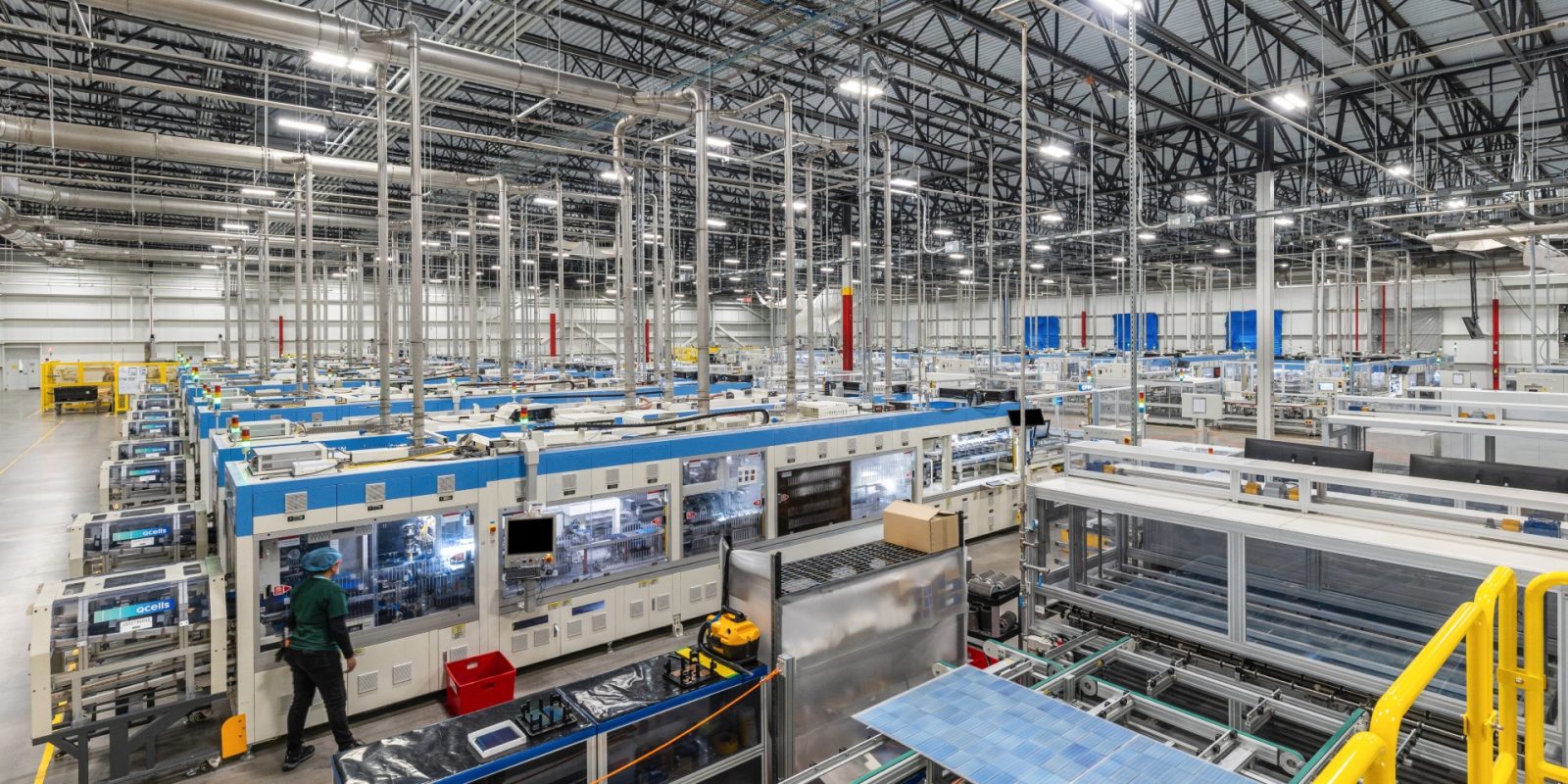
Qcells has begun production at its Cartersville, Georgia manufacturing facility and is positioned to operate the largest solar cell factory in US history by the third quarter of 2026. The facility represents a major expansion of domestic solar manufacturing capacity at a time when the US solar industry faces supply chain vulnerabilities and foreign competition.
Qcells, a South Korean solar manufacturer and subsidiary of Hanwha Q Cells, invested substantially in the Georgia operation as part of a broader push to localize production. The timing matters. The Inflation Reduction Act accelerated domestic solar manufacturing incentives, drawing international manufacturers to establish US-based facilities. Qcells joins competitors like First Solar and others racing to capture market share in a sector experiencing rapid growth.
The Cartersville plant focuses on solar cell production, the core component that converts sunlight into electricity. Higher capacity here means the company can supply more cells to assemblers and installers across North America without relying on imports. That directly impacts cost structure and supply reliability for residential and commercial solar projects.
For the broader industry, a mega-factory of this scale signals confidence in sustained US solar demand. It also reduces dependence on Chinese manufacturers, which currently dominate global cell production. Domestic production typically carries higher labor costs but avoids tariffs and supply chain delays that have constrained US solar deployment in recent years.
Qcells enters a competitive environment where US-based manufacturing still represents a small fraction of global capacity. Yet scale matters. Once operational at full capacity, Cartersville will process raw silicon into finished cells ready for module assembly. That vertical integration strengthens Qcells' competitive position and justifies the capital investment.
The Georgia location offers proximity to major US markets, established infrastructure, and workforce availability. By Q3 2026, the factory should reach its designed throughput, making it not just significant for Qcells but a