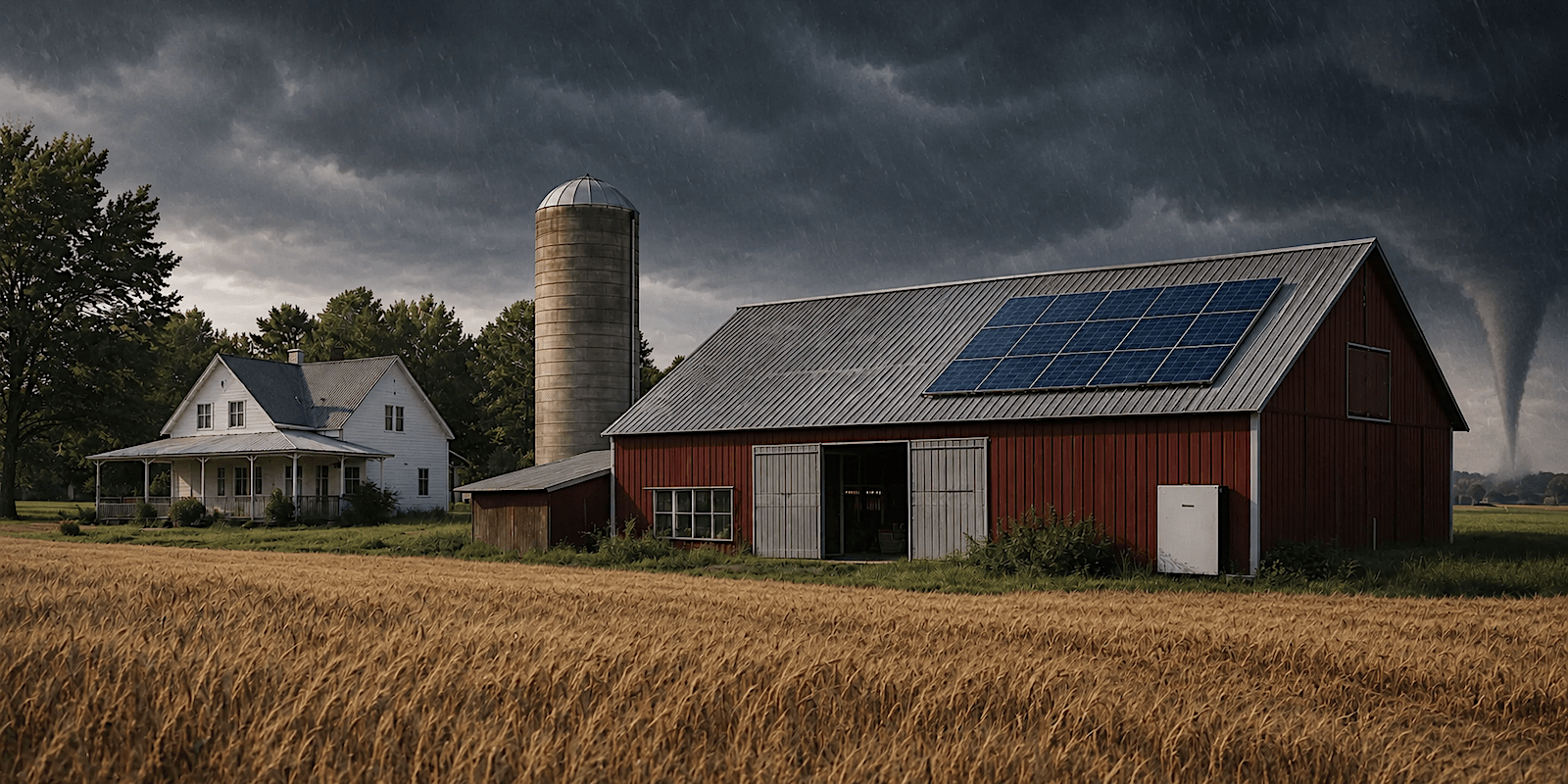
Rural homeowners face fundamentally different solar and battery challenges than their suburban counterparts, particularly when severe weather strikes. Storms that knock out power lines leave rural communities without electricity for days while utilities prioritize restoring service to denser urban areas first. This reality demands a different approach to home solar sizing and battery capacity.
Standard solar guidance assumes outages lasting hours, not days. Rural homes need substantially larger battery banks to sustain critical loads through extended blackouts. A well pump, for instance, becomes non-negotiable during emergencies. Without it, homes lose water pressure entirely. Propane systems, septic pumps, and refrigeration all depend on electricity in ways urban grid-connected homes rarely consider.
The physics work against rural solar owners. Summer storms that damage power infrastructure often create cloud cover lasting multiple days, reducing solar generation precisely when battery reserves deplete fastest. A system sized for suburban outages fails catastrophically in rural conditions.
Battery capacity requirements shift dramatically for rural applications. Where a city home might install 10-15 kilowatt-hours for backup, rural systems need 20-30 kilowatt-hours or more to bridge multi-day gaps. This means substantially higher upfront costs. A Tesla Powerwall costs around $15,000 installed. Rural homeowners needing multiple units face $30,000-$45,000+ in battery alone before adding panels and inverters.
Geographic isolation compounds the problem. Rural areas receive less utility investment in grid hardening. Power lines remain more vulnerable to weather damage. Restoration crews travel longer distances, delaying repairs that might take hours in suburbs.
Smart rural solar design prioritizes redundancy and oversizing. Larger panel arrays compensate for cloudy recovery periods. Propane or generator backup systems provide insurance when batteries deplete during extended outages. Some rural builders add larger water storage tanks to reduce well pump cycling.
The economics