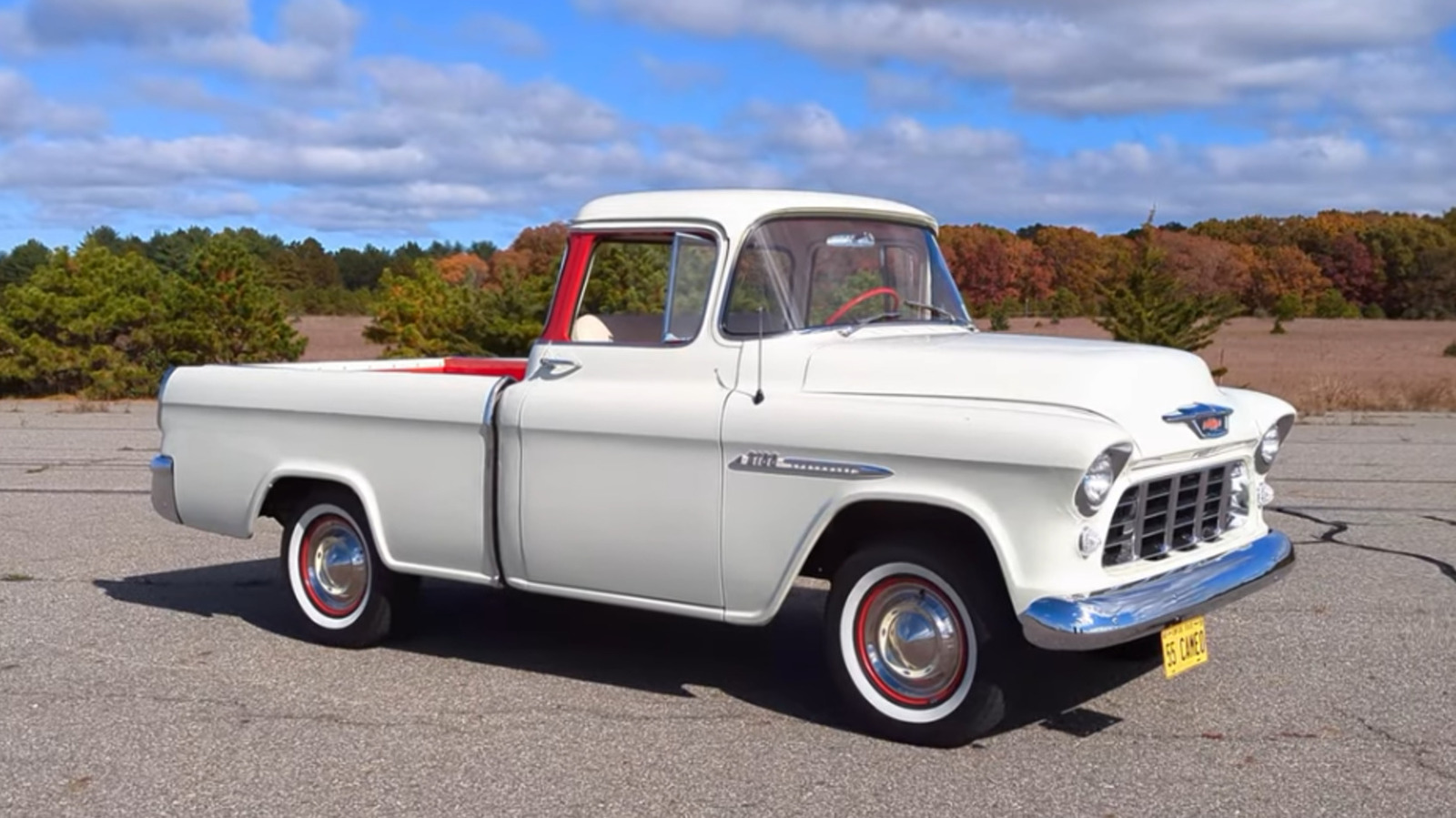
The 1955 Chevrolet Cameo Carrier fundamentally shifted how America viewed pickup trucks, transforming them from purely utilitarian workhorses into lifestyle vehicles that buyers wanted to own for reasons beyond hauling cargo.
Before the Cameo, pickups served a single purpose. They were tools for construction crews, farmers, and commercial operators. Chevrolet changed that calculation by adding sheet metal body sides instead of traditional wooden slats, paired with a sleek car-like design that borrowed cues from the era's passenger vehicles. The Cameo seated three across and featured chrome trim, two-tone paint options, and a genuinely comfortable cab. This wasn't a vehicle you hid behind the barn.
The timing mattered. The mid-1950s brought postwar prosperity and suburban expansion. Chevrolet recognized an emerging market: homeowners and small business owners who needed occasional hauling capacity but wanted something respectable to drive around town. The Cameo delivered that equation.
Competitors eventually noticed. Ford and Dodge scrambled to create their own lifestyle trucks. What started as a niche experiment became the blueprint for the modern pickup market. Today, luxury pickup trucks command $80,000 price tags. Buyers specify leather interiors, panoramic sunroofs, and premium sound systems. The truck bed matters less than creature comforts.
The Cameo's innovation wasn't mechanical. Its engine and chassis resembled conventional pickups. Rather, Chevrolet understood that buyers respond to aesthetics and identity. A truck could be both capable and desirable. It could perform work while projecting status.
Seven decades later, this principle dominates the segment. The Ford F-150, Ram 1500, and Chevrolet Silverado sell millions of units annually because buyers view them as personal transportation, not just commercial equipment. Crew cabs outsell