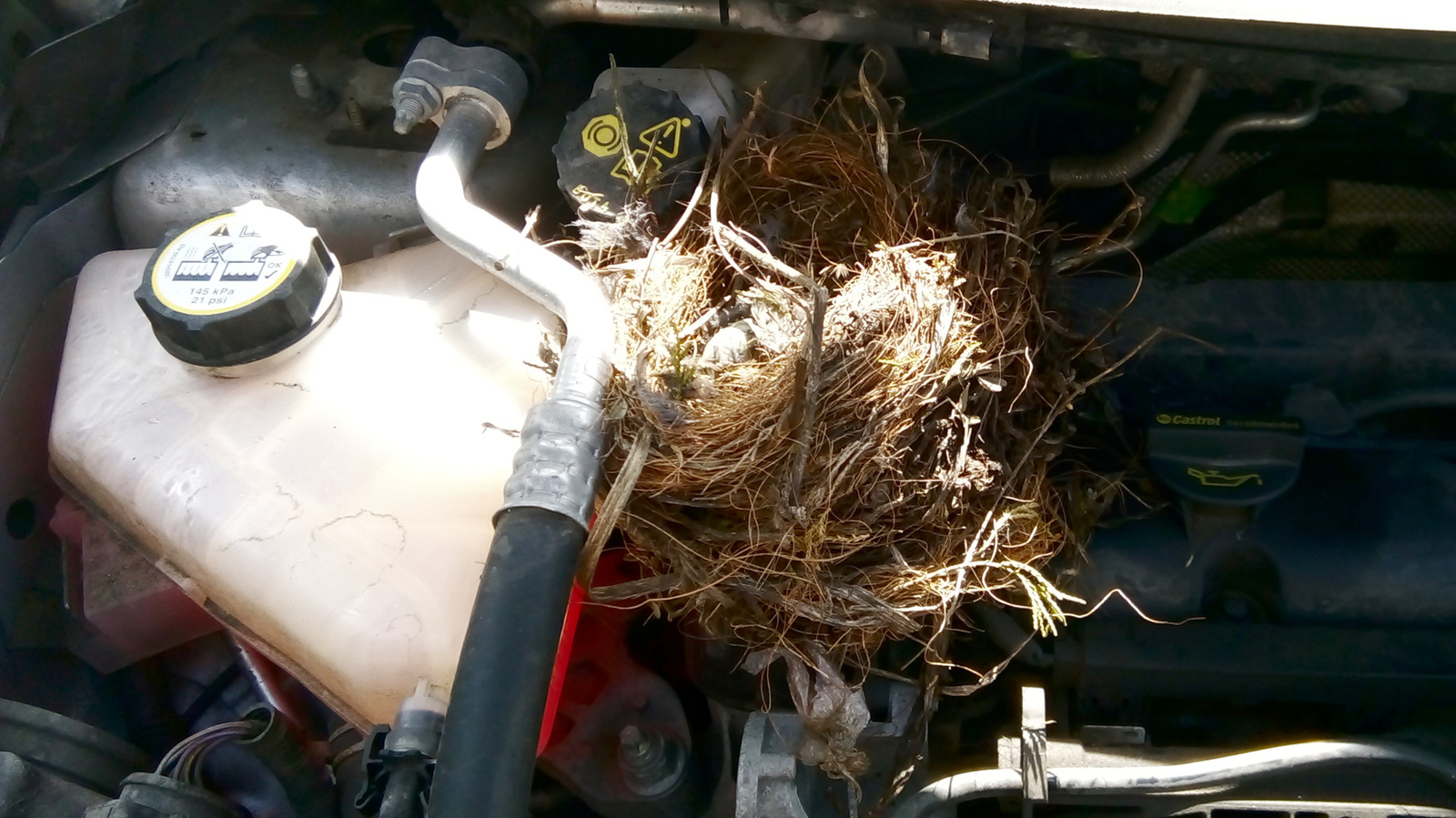
A bird nest lodged in your engine bay presents genuine mechanical hazards that extend well beyond the annoyance of chirping. Nests built around engine components can obstruct airflow, damage wiring, and create fire risks when nesting material contacts hot surfaces during operation.
Birds favor engine compartments because they offer warmth, shelter, and protection from predators. Common culprits include sparrows, swallows, and wrens. The problem worsens in spring and early summer when nesting activity peaks, particularly if your vehicle sits idle for extended periods.
The immediate concern centers on blockages. Nesting material can clog air intake systems, reducing engine efficiency and triggering check-engine lights. Twigs and grass packed around hoses restrict coolant flow, causing overheating. Debris wrapped around fan belts creates hazardous spinning obstacles.
More critical, the flammable nature of dried grass and feathers sitting inches from engine manifolds operating at hundreds of degrees poses a legitimate fire hazard. Additionally, bird droppings corrode electrical connections and battery terminals, leading to starting problems and costly component replacement.
To prevent nesting, keep your garage door closed whenever possible. Park in covered structures. Install mesh screens over engine intake vents and hood louvers. Run your vehicle regularly, as bird activity decreases around frequently used cars.
If you discover an active nest, don't start the engine. Many species receive legal protection under wildlife laws, and disturbing nests during breeding season can trigger federal violations. Contact a local wildlife removal service instead. They'll relocate the nest safely and legally once eggs hatch and fledglings leave.
For inactive nests, remove them completely using gloves and dispose of nesting material. Inspect hoses, wiring, and air intake systems for damage. Clean any accumulated droppings with appropriate solvents. Check that nothing blocks