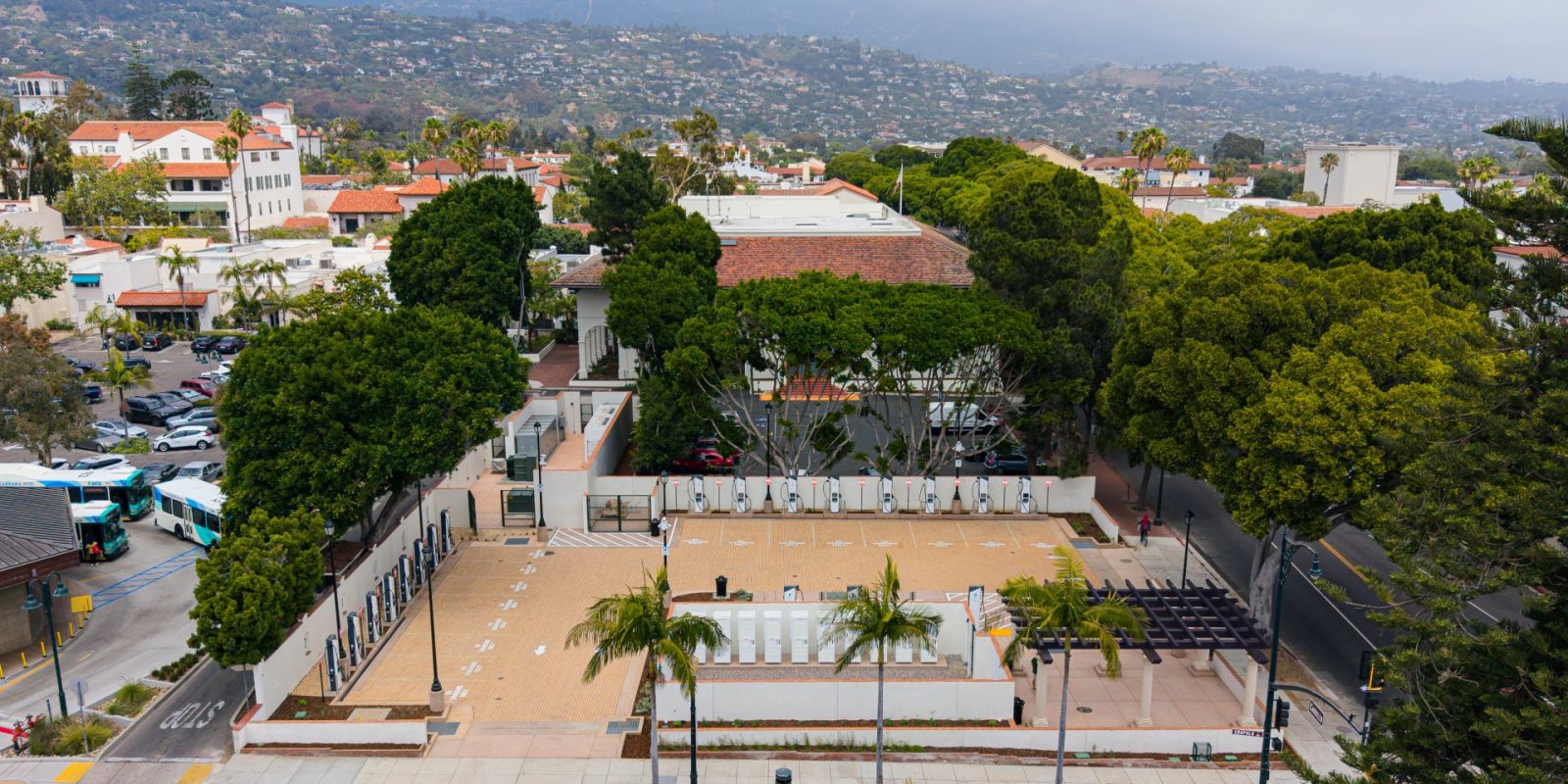
Electrify America opened a new charging hub in downtown Santa Barbara that marks a scaling shift for the nation's largest public EV charging network. The station features 20 DC fast chargers paired with the company's largest battery energy storage system yet deployed publicly.
Battery-backed charging stations solve a real infrastructure problem. Grid connections in urban centers often lack the capacity to feed dozens of simultaneous fast chargers without causing voltage drops or triggering costly demand charges. On-site batteries absorb power during off-peak hours, then discharge during peak charging windows. This approach lets Electrify America pack more chargers into dense locations without expensive grid upgrades.
Santa Barbara represents Electrify America's bet that this model works at scale. The station handles the power demands of 20 simultaneous chargers without straining local infrastructure. That matters for California drivers, where charging gridlock plagues popular corridors. The battery system also smooths out the economics of rural and remote stations where grid infrastructure is thin.
This deployment reflects industry consolidation around proven technology. Tesla already built battery storage into its Supercharger network. ChargePoint and EVgo have tested similar setups. Now Electrify America, backed by Volkswagen Group's commitment to spend billions on charging infrastructure, makes batteries standard at new major hubs.
For drivers, the outcome is straightforward. More chargers in one location means less wait time during peak hours. Battery storage ensures chargers operate at full speed regardless of grid conditions. The Santa Barbara station can charge an EV from 10 percent to 80 percent in roughly 20 to 30 minutes, depending on the vehicle and charger rating.
Electrify America operates over 900 stations and 3,500 chargers nationwide. Adding battery storage to flagship locations signals a pivot toward denser, more reliable urban charging. As EV adoption accelerates