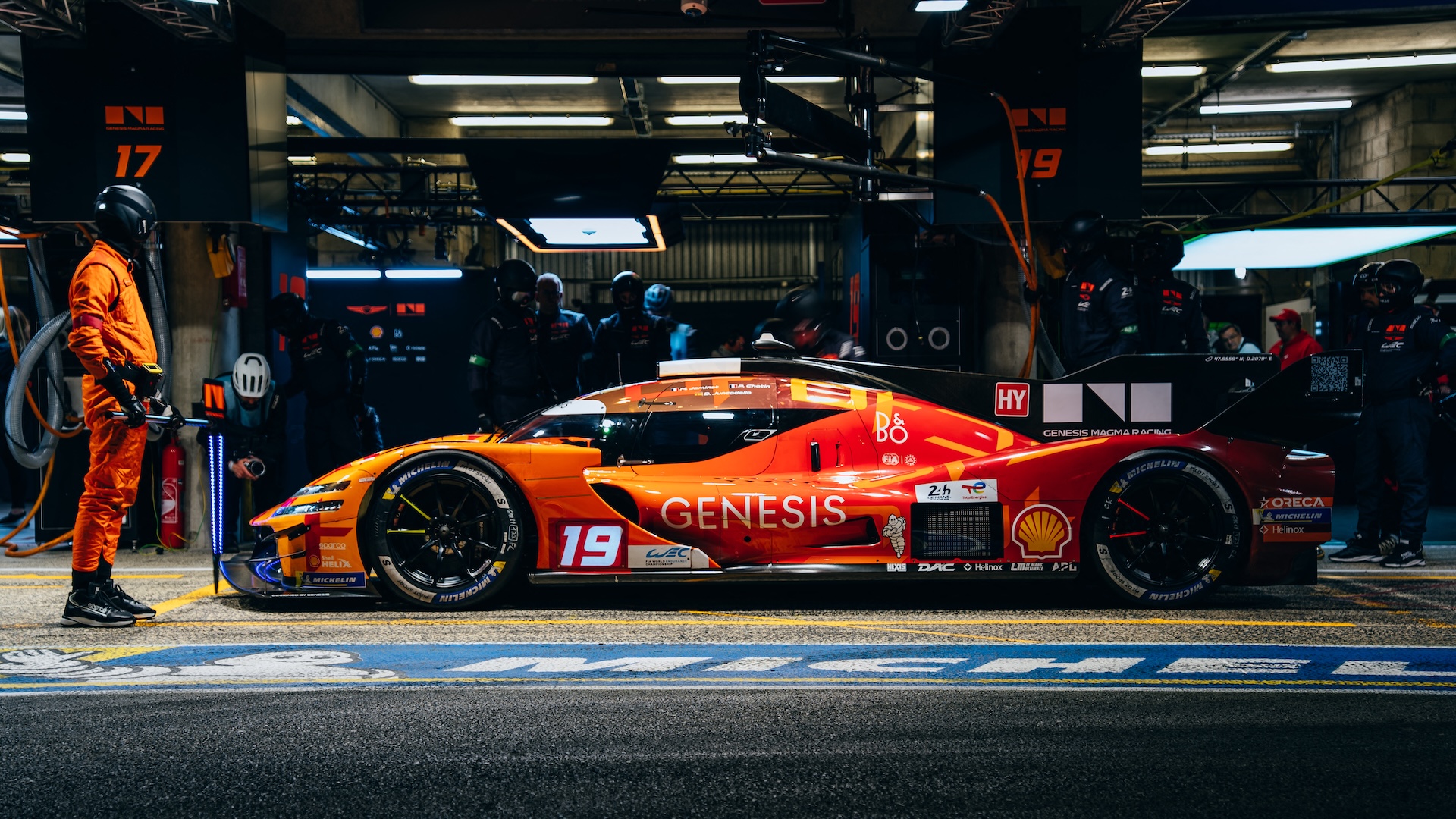
Genesis Magma Racing completed the 24 Hours of Le Mans, a watershed moment for the luxury brand's racing program. The team fielded a car in endurance racing's most demanding event despite existing as a WEC competitor for just two months. Finishing Le Mans represents a genuine accomplishment for any rookie team, let alone one backed by a brand that has only operated for a decade.
Genesis entered Le Mans to prove its commitment to motorsport and performance engineering. The brand, launched in 2015 as Hyundai's luxury division, has aggressively pursued premium positioning through technology and design. Le Mans participation underscores that ambition. Endurance racing at that level demands reliability, driver skill, and engineering sophistication. Teams that DNF (do not finish) at Le Mans vastly outnumber those that cross the finish line, especially first-timers.
The fact that Genesis Magma Racing completed the full 24-hour distance signals competence across multiple fronts. The team avoided mechanical failure, managed tire and fuel strategy, executed pit stops cleanly, and coordinated driver changes under pressure. These basics separate finishers from failures at Le Mans.
For Genesis as a brand, Le Mans participation carries marketing value beyond motorsport circles. Luxury buyers associate endurance racing success with engineering credibility. Mercedes, BMW, Porsche, and Ferrari all leverage racing pedigree in showroom messaging. Genesis now holds Le Mans finisher status, however modest the grid position.
The real test comes next. One completion does not guarantee consistent performance. Genesis must develop the program, improve reliability metrics, and climb the competitive order. Other manufacturers dominate the GTP and LMGT3 classes through decades of investment. Genesis enters from scratch with fresh resources but no institutional racing knowledge.
Still, crossing the line at Le Mans matters. The