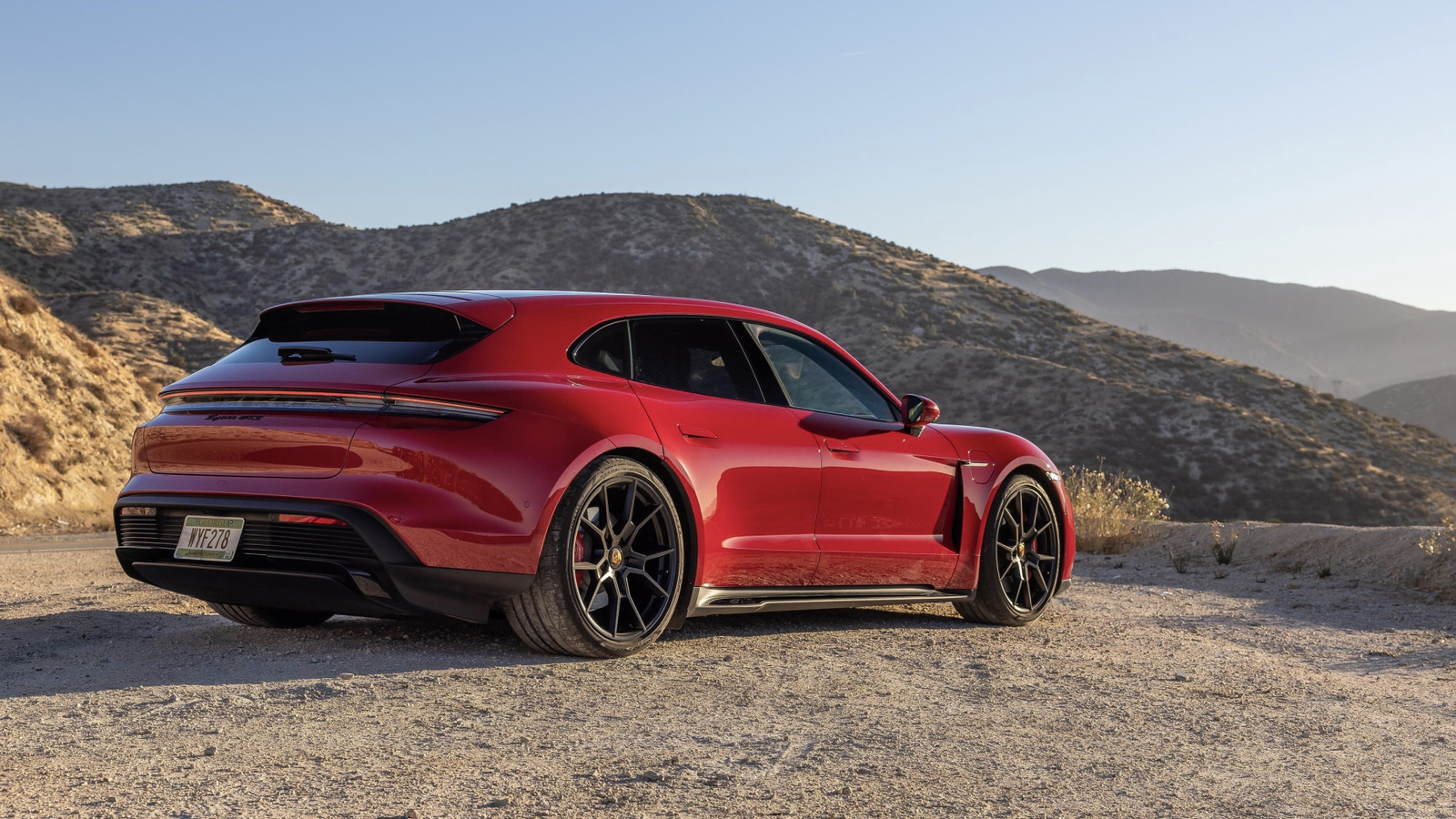
Porsche is discontinuing both Taycan wagon variants, eliminating the Cross Turismo and Sport Turismo body styles from its electric sedan lineup. The decision reflects harsh market realities in the United States, where wagon configurations consistently underperform despite enthusiast praise online.
The Taycan Cross Turismo offered all-wheel drive capability and raised ground clearance, positioning itself as a rugged EV crossover alternative. The Sport Turismo presented a more traditional wagon silhouette with a lower stance. Both models delivered the same performance credentials as the standard Taycan sedan, including up to 750 horsepower and 0-60 times under three seconds in top-tier configurations.
Porsche's pullback highlights a persistent disconnect in the American automotive market. Enthusiasts across internet forums champion wagons as practical, stylish alternatives to crossovers and SUVs. Yet actual sales data tells a different story. Wagon shoppers remain a niche segment, with most U.S. buyers gravitating toward taller, truck-like silhouettes regardless of efficiency penalties or handling compromises.
This trend extends beyond Porsche. BMW, Mercedes-Benz, and Audi have all retreated from U.S. wagon offerings in recent years. Even Subaru, which built a loyal following around wagon designs, has shifted focus toward crossovers. The segment simply cannot sustain production volumes that justify tooling costs and inventory management for premium manufacturers.
For Porsche specifically, the move streamlines its Taycan portfolio and redirects resources toward higher-volume models like the Macan electric SUV, expected to arrive in 2024. Porsche remains profitable in wagons elsewhere, particularly in Europe and China, where practicality and understated performance carry cultural weight. But American customers have voted with their wallets, and automakers follow the