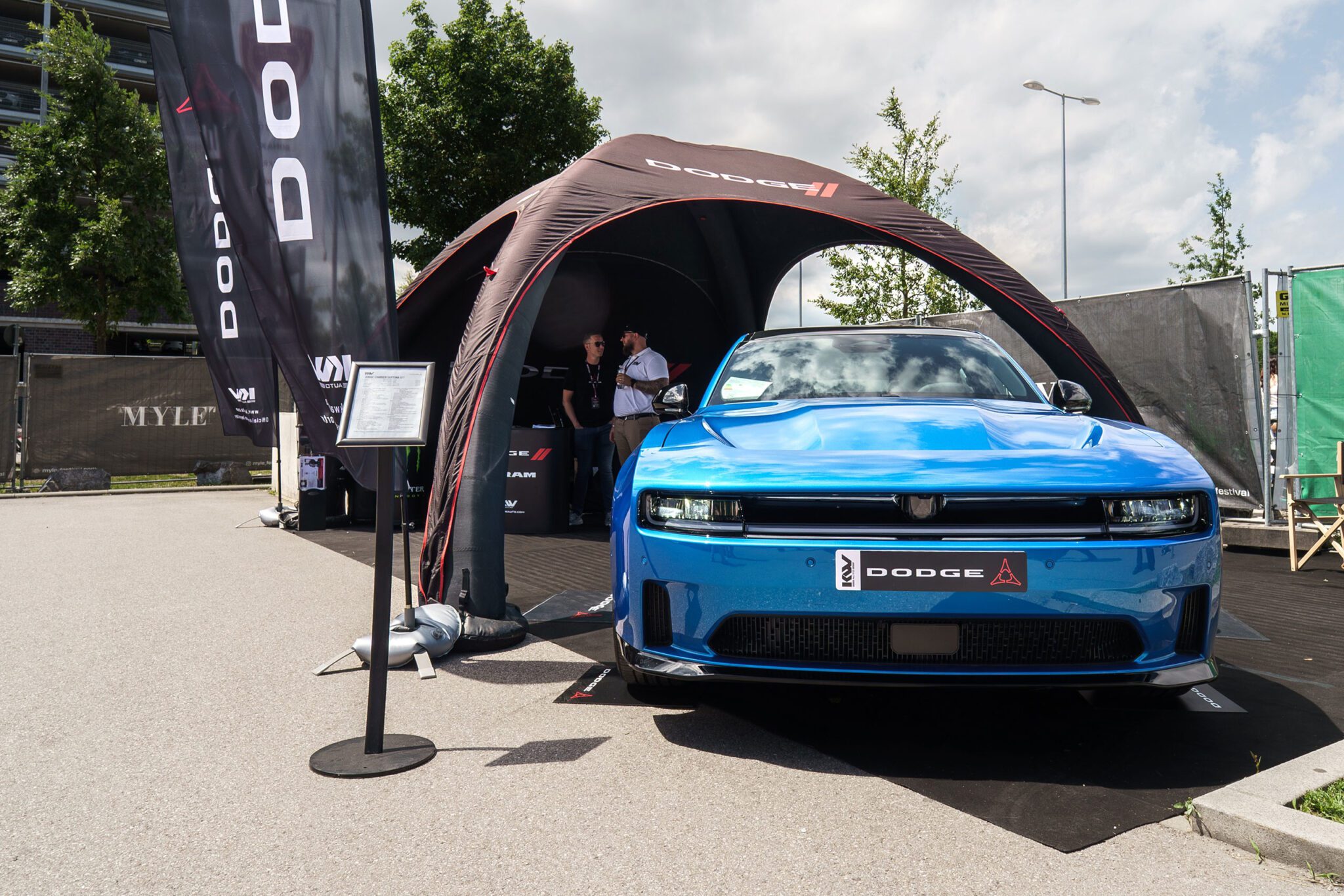
Dodge unveiled the Charger electric muscle car at Munich's Myle event, marking the brand's formal European entry into a crowded EV sedan market. The move signals Dodge's pivot from traditional muscle car heritage toward a lifestyle positioning in regions where that branding carries real competitive weight.
The Charger represents Dodge's most aggressive international expansion since Stellantis consolidated the brand under its portfolio. Europe's EV adoption rates far exceed North America's, forcing Dodge to abandon its domestic-focused strategy and compete directly against Tesla, BMW's i-series, Porsche Taycan, and luxury Chinese manufacturers increasingly flooding European showrooms.
Positioning matters here. Dodge can't win on technology or charging infrastructure. Instead, the brand leans on American muscle car authenticity and design drama. The Charger's angular styling and performance-oriented messaging aim to capture buyers fatigued by sterile EV designs from conventional manufacturers.
The Munich debut carries strategic weight. Germany hosts three of Europe's most influential auto manufacturers and sits at the continent's EV technology center. Staging the Charger's introduction there, rather than at Frankfurt or Paris, signals Dodge's intent to compete at the premium end rather than volume segments.
However, Dodge faces structural headwinds. European buyers prioritize charging speed, range efficiency, and resale value over brand mythology. Dodge lacks the service network, charging partnerships, and residual value reputation that German and Swedish EV makers command. Chinese competitors like BYD and Nio already offer superior battery technology at competitive pricing.
The lifestyle positioning works if Dodge commits resources. That means European service centers, charging partnerships with networks like Ionity, and aggressive marketing tied to design leadership and performance specs. Without that infrastructure, the Charger becomes a novelty import rather than a viable competitor.
Dodge's European ambitions depend on whether Stell