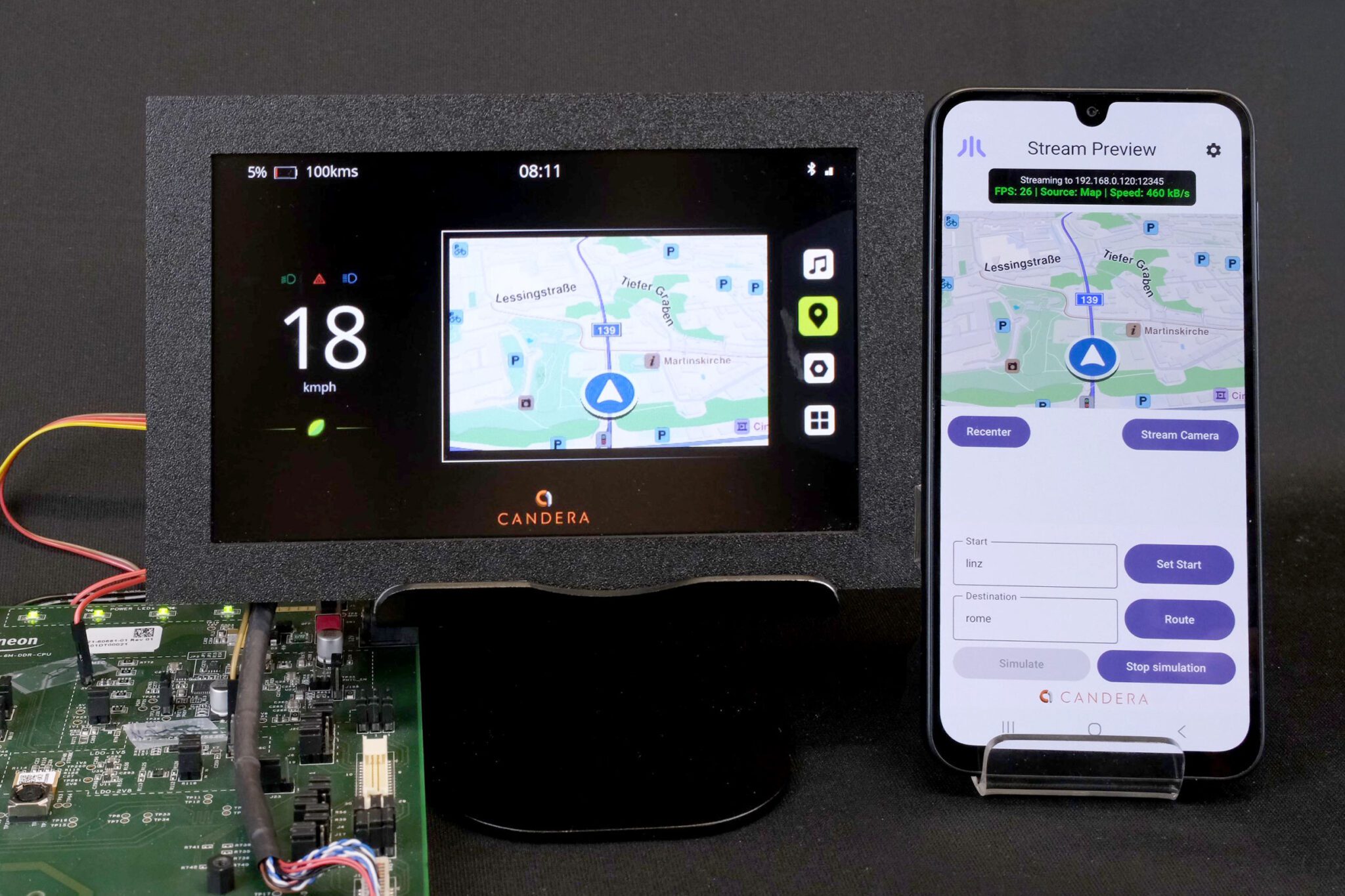
Candera and Magic Lane have partnered to integrate navigation capabilities directly into human-machine interface platforms, rather than treating navigation as a standalone system. This collaboration addresses a fundamental shift in how automakers approach in-vehicle software architecture.
The partnership reflects an industry-wide movement toward consolidating vehicle functions within unified HMI ecosystems. By embedding navigation as a native HMI feature, manufacturers reduce complexity and improve user experience through seamless integration with other vehicle controls and displays. This approach differs from legacy systems that bolt navigation onto existing platforms.
Candera, a specialist in HMI development, brings automotive-grade interface design expertise. Magic Lane contributes routing and mapping technology. Together, they create a cohesive navigation experience that operates within the broader vehicle software framework rather than as a separate application layer.
The strategic importance here extends beyond user convenience. Standardizing navigation as an HMI component simplifies software architecture, reduces development costs, and allows manufacturers to deploy updates more efficiently across vehicle fleets. It also creates opportunities for deeper integration with driver assistance systems and infotainment functions.
The automotive industry has moved toward this consolidation model in recent years. Tesla pioneered built-in navigation without reliance on traditional third-party systems. Traditional automakers increasingly develop proprietary HMI platforms that minimize dependence on external suppliers for core functions. This partnership demonstrates that specialized suppliers can still play vital roles by providing best-in-class functionality within manufacturer-controlled ecosystems.
For consumers, embedding navigation into HMI platforms delivers tangible benefits. Updates happen automatically with vehicle software rather than requiring separate map updates. Voice control, gesture recognition, and other HMI features integrate seamlessly with navigation. Functionality appears natural rather than grafted on.
The partnership signals that competitive differentiation in vehicles now depends heavily on how well suppliers and manufacturers collaborate to create cohesive software experiences. Navigation remains fundamental to vehicle usability,