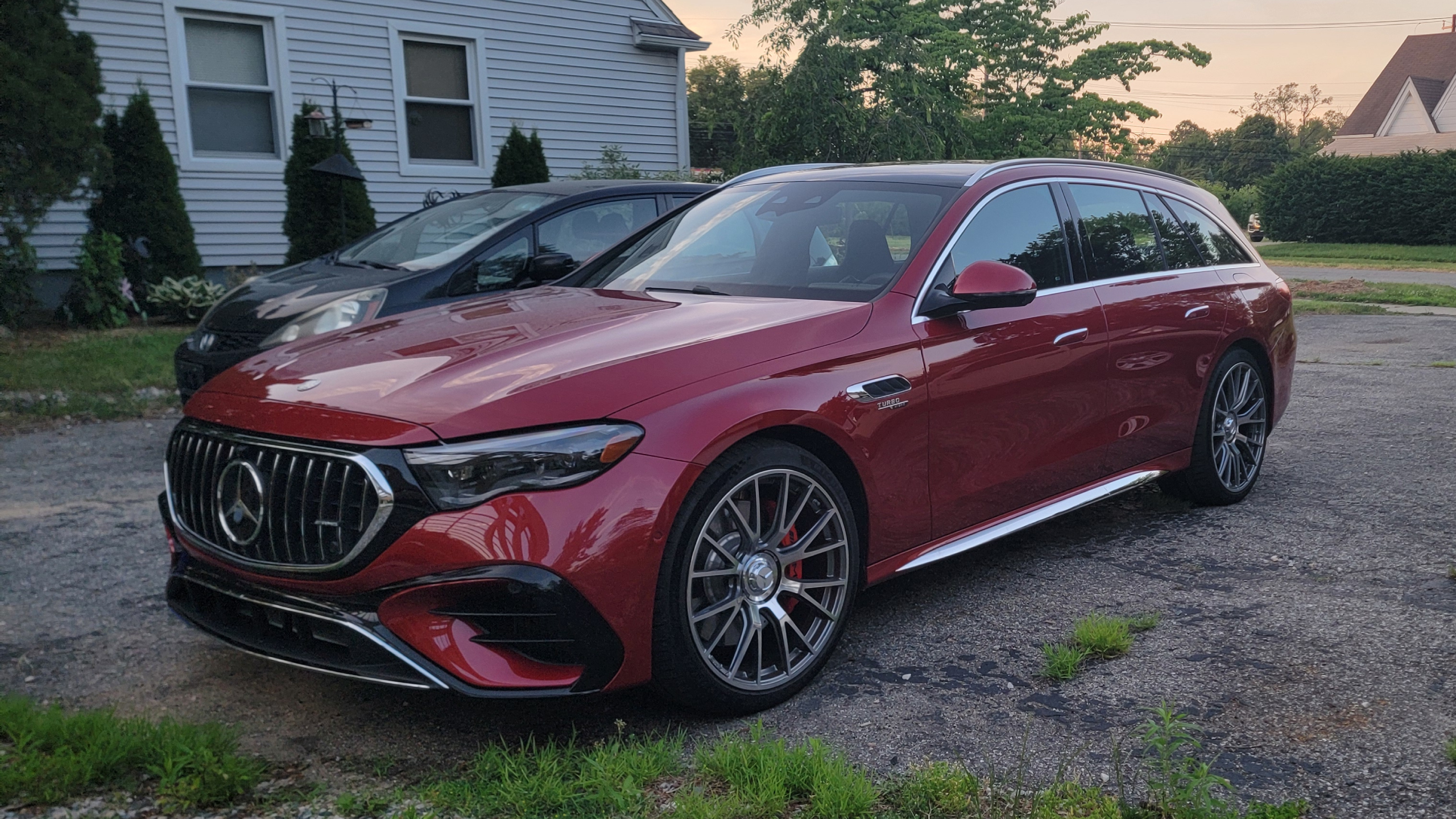
Mercedes-Benz is ditching the V8 from its mid-tier AMG wagon lineup, replacing it with a plug-in hybrid that delivers serious performance without the cylinder count purists expect. The 2026 AMG E53 Wagon trades traditional eight-cylinder grunt for a turbocharged four-cylinder engine paired with electric motors, creating a powertrain that produces competitive output compared to larger-displacement rivals.
This shift reflects Mercedes' broader electrification strategy. The E53 badge historically sat below the fire-breathing E63 models in the performance hierarchy, but the new PHEV architecture narrows that gap considerably. The hybrid system allows Mercedes to boost power delivery while meeting stricter emissions standards and improving fuel economy, a balance luxury automakers must strike in 2026.
The wagon body style matters here. Mercedes recognizes that performance-minded buyers want practicality too. The E53 Wagon offers genuine cargo space alongside track-capable acceleration, positioning it as a direct competitor to BMW's M440i xDrive Touring and Audi's S4 Avant in European markets. Without a V8, the E53 avoids the fuel consumption penalties that made those engines harder to justify for daily-use luxury wagons.
Performance figures remain strong. The hybrid setup delivers acceleration that justifies the AMG badge without requiring the extreme complexity and cost of a V8. Buyers get the theater of a performance car with superior real-world efficiency. The electric motors provide torque instantly off idle, actually improving drivability compared to traditional turbocharged engines that need to spool up.
This represents the future of mid-tier AMG performance. Mercedes recognizes that raw V8 displacement no longer defines a fast car. Hybrid technology, dual turbocharging on smaller engines, and electric torque fill the gaps that cylinders used to occupy. The