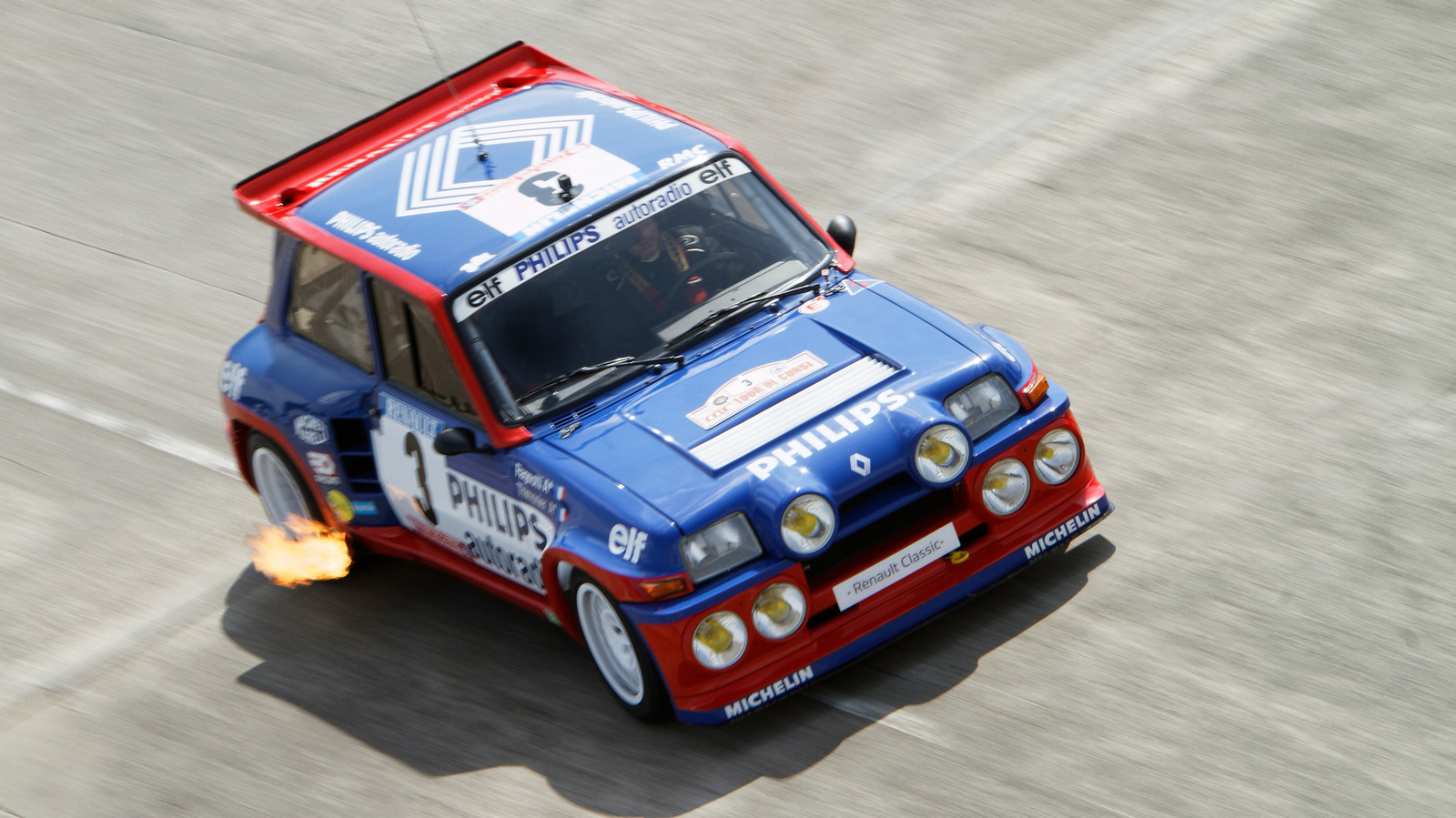
Renault's original 5 Turbo from the 1980s stands as a rallying legend with an unusual claim to fame. The French manufacturer engineered this hot hatch specifically for competition, but a single modification unlocked an extraordinary 800-mile range.
The 5 Turbo packed a turbocharged 1.4-liter engine producing around 120 horsepower in road trim, making it genuinely quick for its era. Renault mounted the engine mid-ship for better weight distribution and handling balance, a bold move for a city car. This layout gave the 5 Turbo a low center of gravity and nimble chassis that made it devastatingly effective in rally competition.
The secret to that legendary 800-mile range came from a massive fuel tank capacity. While standard city cars made do with modest tanks, Renault fitted the 5 Turbo with an oversized fuel reservoir that transformed its touring credentials. This tank allowed drivers to stretch fuel economy across distances normally requiring multiple fill-ups, even accounting for the turbo's thirsty nature under acceleration.
This combination created a peculiar vehicle. The 5 Turbo delivered hot-hatch performance with genuine practicality for long-distance driving. Rally teams could tackle events with fewer fuel stops while road users gained unexpected touring capability from a compact, turbocharged machine. The turbo technology was cutting-edge for the time, delivering forced-induction power before it became commonplace on compact cars.
The 5 Turbo's legacy shaped how manufacturers approached performance variants of city cars. Its mid-engine layout influenced future hot hatches, while the focus on genuine rally capability rather than styling cues established credibility in the segment. Today's performance hatchbacks owe a debt to Renault's willingness to fundamentally alter a basic platform for serious competition purposes