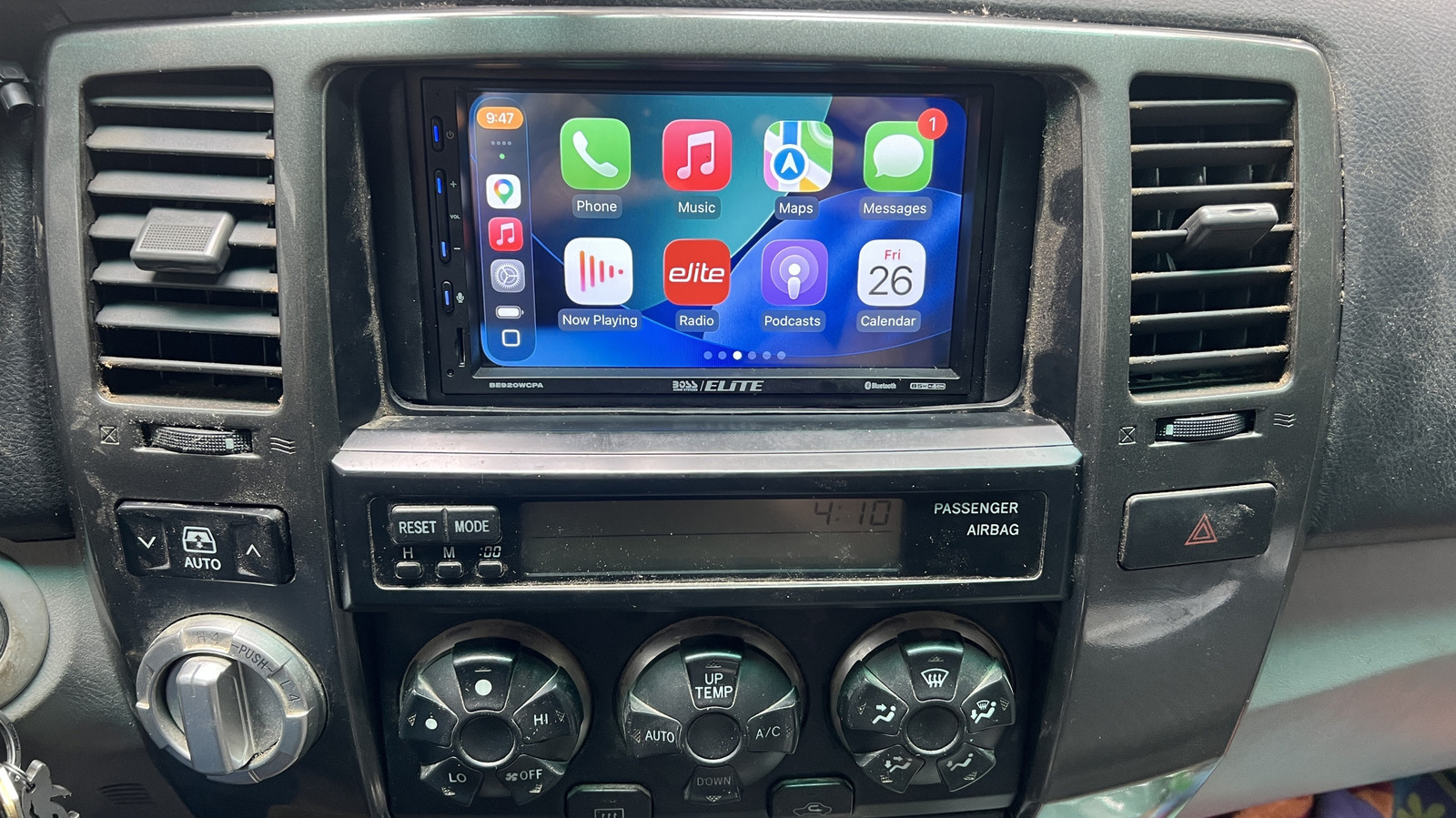
A 2006 Toyota 4Runner with 300,000 miles on the odometer received a modern infotainment upgrade via Apple CarPlay installation. The owner chose to retrofit the aging SUV rather than replace it, making the case that adding wireless connectivity justifies keeping an older vehicle in the family fleet.
The 4Runner platform has proven its durability. Toyota's body-on-frame design survives heavy use across two decades, and owners routinely push these trucks past 200,000 miles. Factory infotainment from 2006 delivers basic AM/FM radio and limited auxiliary input options. That gap between vehicle longevity and technology stagnation creates an opening for aftermarket solutions.
CarPlay integration solves a real friction point. Older vehicles lack smartphone integration, navigation apps, and streaming audio. Adding CarPlay to an otherwise dependable truck bridges that technology gap without requiring a new vehicle purchase. Wireless CarPlay systems handle the retrofit without extensive dashboard demolition.
The decision reflects broader owner behavior. Extended vehicle lifecycles have become common as new car prices climb. Midsize SUVs and trucks from the 2000s retain value partly because buyers recognize their mechanical simplicity and parts availability. A modest infotainment retrofit costs considerably less than a new 4Runner, which now starts above 40,000 dollars.
Toyota's legendary reliability deserves credit here. The 4Runner's 5.7-liter V8 and five-speed automatic deliver adequate power despite their age. Frame rust and transmission wear present real concerns in certain climates, but many examples run strong well past 250,000 miles. That durability math changes the ownership calculus.
Aftermarket solutions now address this exact scenario. Standalone CarPlay units range from 200 to 800 dollars depending on features. Installation requires basic wiring knowledge or professional shop