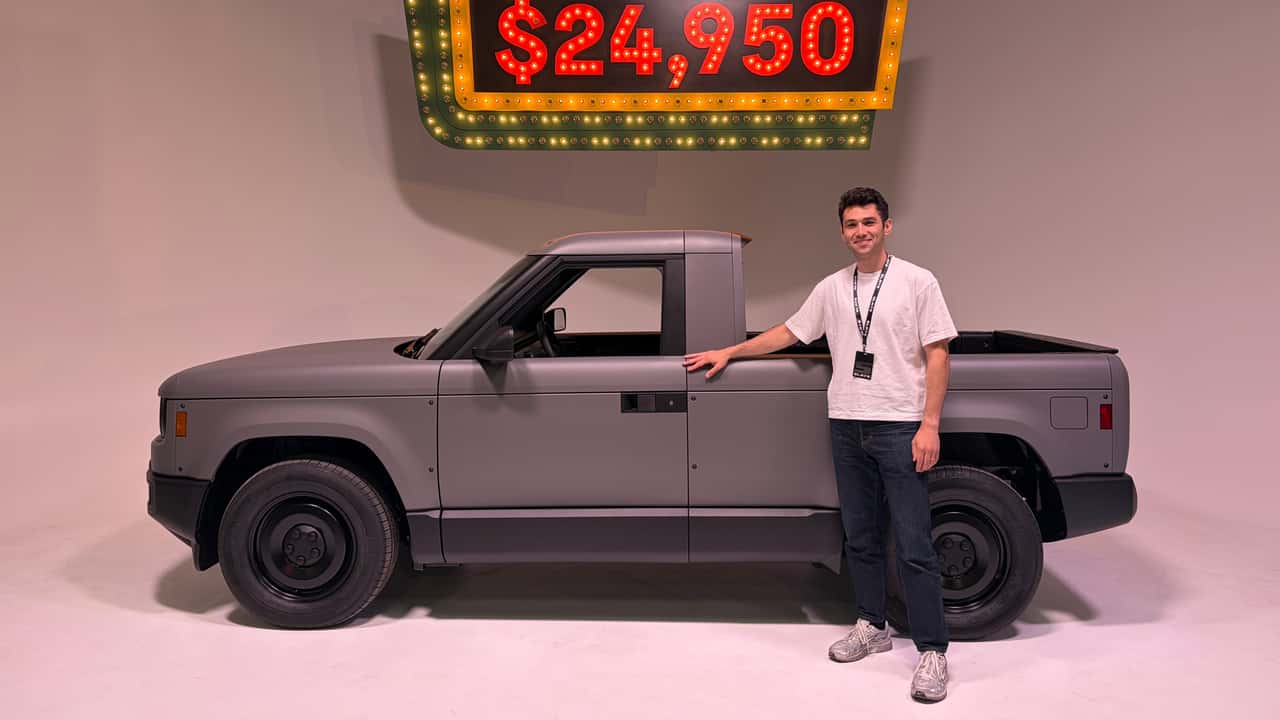
Slate has launched an aggressively affordable electric pickup positioned to undercut Tesla's Cybertruck on price. The $25,000 starting figure targets first-time truck buyers and value-conscious fleet operators who prioritize cost over luxury features.
The interior reflects its price point. Hand-crank windows, basic plastics, and minimal sound deadening create a utilitarian cabin more akin to work trucks from the 1990s than modern EVs. Slate stripped away creature comforts intentionally. Air conditioning works. The infotainment system functions. Heated seats and leather trim do not exist.
Ride quality surprised positively. The suspension absorbs road imperfections competently despite the spartan setup. Acceleration feels adequate for daily driving, though performance specs remain modest compared to competitors. The steering feels responsive and direct. Wind noise invades the cabin at highway speeds due to basic window seals, a trade-off Slate accepted to hit the $25K target.
Storage is practical. The truck bed offers genuine utility without frills. Payload capacity suits contractor work and light hauling. Battery range sits at adequate levels for regional driving, though long road trips require planning around charging infrastructure.
This truck exemplifies a broader EV trend. Manufacturers increasingly segment the market vertically. Tesla aims upmarket with the Cybertruck's $61,990 starting price. Ford's F-150 Lightning ($52,995) targets affluent buyers. Hyundai's upcoming electric pickup and others chase the premium segment.
Slate instead targets the working person who needs reliable transportation without monthly payments exceeding $400. The crank windows and hard plastics signal honesty rather than cheapness. You receive exactly what you pay for.
The real question isn't whether the Slate is too basic. It's whether the American truck buyer will accept basic when basic costs $25,