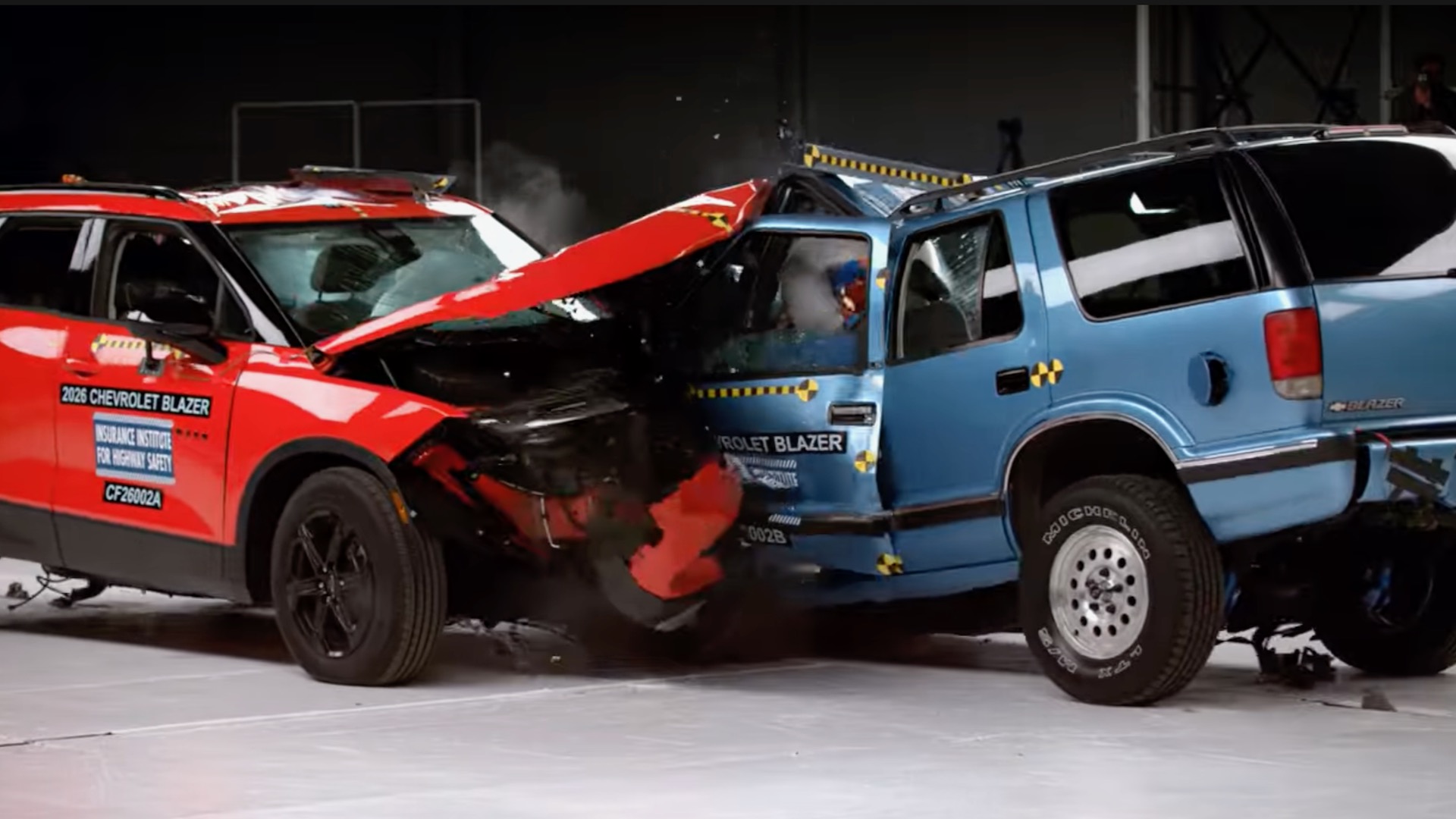
The Insurance Institute for Highway Safety (IIHS) conducted a crash test comparing a 1996 Chevrolet Blazer with the 2026 model, revealing the dramatic evolution of vehicle safety over three decades. The older Blazer suffered catastrophic structural failure, with the cabin collapsing and the dummy experiencing severe injuries that would have been fatal. The modern Blazer maintained structural integrity, absorbed impact energy efficiently, and kept the crash test dummy safe within the survivable zone.
This comparison underscores how engineering advances in materials, crumple zones, airbag systems, and electronic stability control have transformed crash dynamics. The 1996 Blazer's rigid frame actually worked against occupants, transferring violent forces directly into the cabin. The 2026 model uses high-strength steel strategically placed to absorb energy while protecting the passenger compartment.
The IIHS attributes nearly 50,000 lives saved over the past 30 years to its rigorous testing protocols. These standards pushed manufacturers to innovate rather than simply meet minimum regulations. Features once considered luxury items—side curtain airbags, electronic rollover protection, adaptive headrests—are now standard equipment across all price points.
The generational gap extends beyond structure. Modern vehicles include pre-collision warning systems, automatic emergency braking, and lane-keeping assist that prevent crashes entirely. The 1996 Blazer relied entirely on driver awareness and reaction time.
Chevy's investment in the current Blazer's safety architecture reflects how competitive pressure around crash ratings influences buyer decisions. Consumers now check IIHS and NHTSA ratings before purchase, making safety performance a market differentiator rather than an afterthought.
This test demonstrates that improved survival rates in accidents stem from systematic, evidence-based testing and industry-wide adoption of proven technologies. Each generation of vehicles