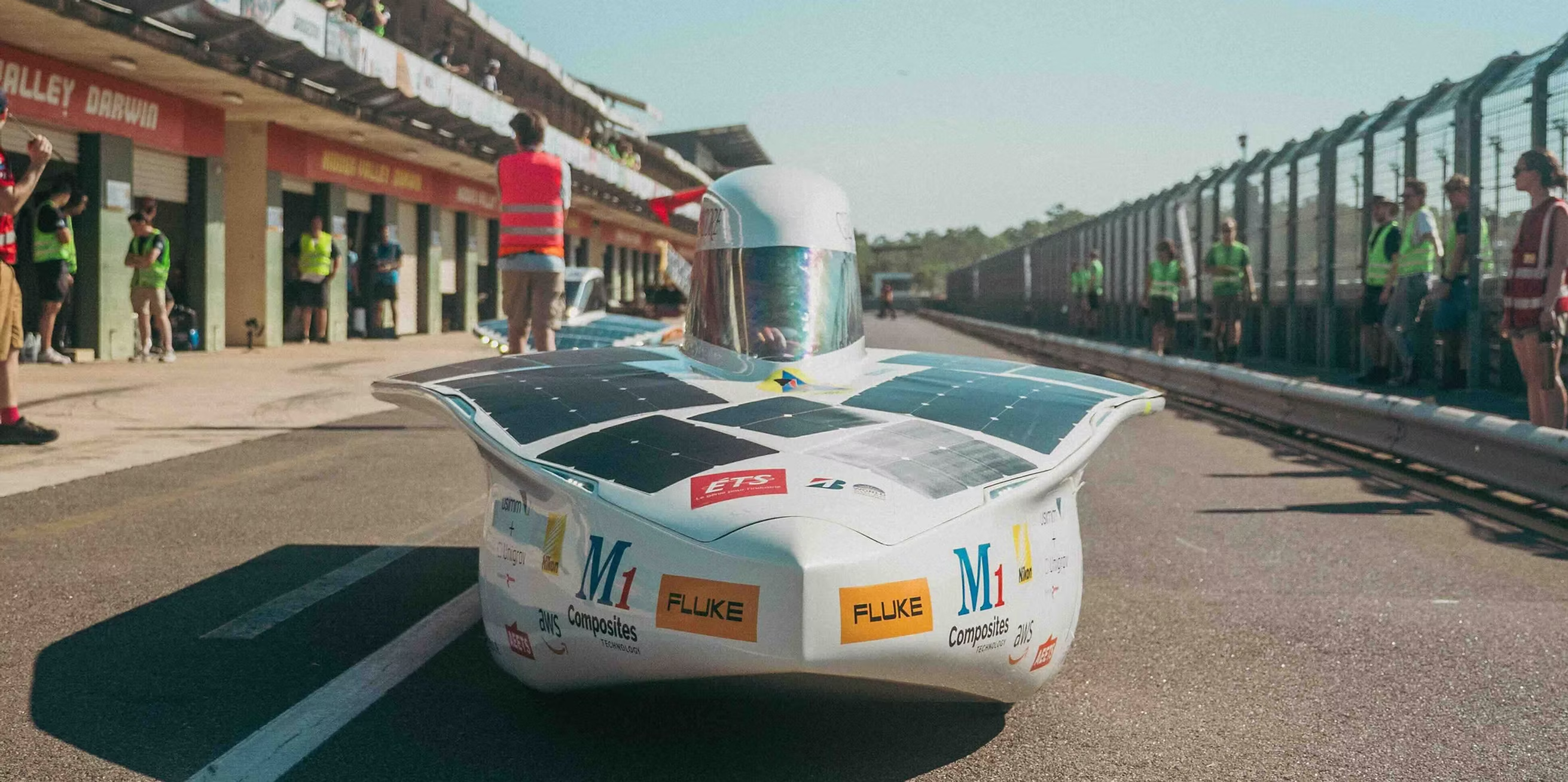
Éclipse, the solar car racing team from École de technologie supérieure in Montreal, brings over three decades of competition experience to the 2026 Electrek American Solar Challenge and Formula Sun Grand Prix, heading to Minnesota this July.
The Canadian outfit has built solar vehicles continuously since 1992, making them one of the longest-running programs in the sport. That longevity translates into institutional knowledge few teams possess. Solar car racing demands mastery across aerodynamics, lightweight materials, electrical efficiency, and energy management. Teams that last 33 years develop deep expertise in each domain.
The American Solar Challenge and Formula Sun Grand Prix represent the pinnacle of collegiate and semi-professional solar racing in North America. These events push engineers to design vehicles that travel hundreds of miles powered entirely by sunlight, requiring obsessive attention to weight reduction and efficiency. A single kilogram saved matters. A percentage point improvement in solar panel efficiency shifts race outcomes.
Minnesota provides a new venue for 2026, reshuffling logistics and course dynamics for all competitors. Teams accustomed to previous locations must adapt vehicle setups and power management strategies to unfamiliar terrain and weather patterns.
Éclipse's longevity suggests a program with sustained institutional support and recruitment pipelines. That continuity matters when competing against well-funded university teams that may field fresh designs annually. Veteran programs understand what works and what consumes resources without payoff.
Solar racing sits at the intersection of EV development and engineering education. While road-going EVs dominate headlines, solar car competitions incubate battery management systems, lightweight structure techniques, and aerodynamic principles that eventually filter into production vehicles. Teams that persist for 33 years contribute disproportionately to that knowledge transfer.
Éclipse's participation signals the health of solar racing despite its niche status. Without teams showing genuine commitment across decades, the