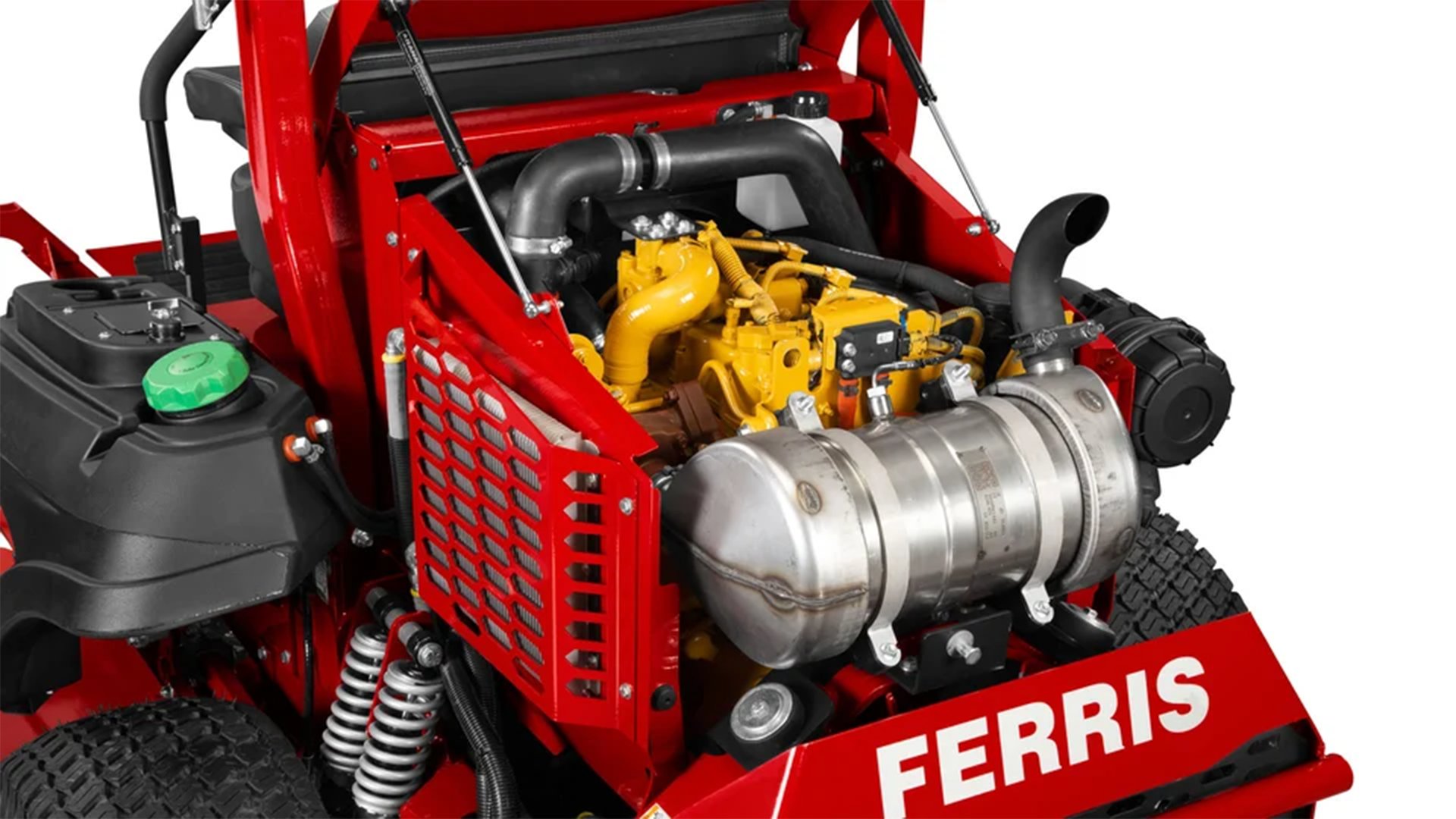
Caterpillar has engineered a diesel-powered zero-turn mower with an engine displacement larger than a Honda Civic's powerplant. The CAT mower's diesel engine outranks the compact sedan's gasoline unit in raw cubic capacity, a comparison that underscores the sheer engineering ambition behind the machine.
This spec advantage reflects Caterpillar's industrial heritage and the demands of commercial grounds maintenance. Diesel engines deliver superior torque at low RPMs, ideal for pulling heavy cutting decks across tough terrain for extended periods. The larger displacement ensures the mower can sustain consistent power output without strain, even under demanding conditions that would tax smaller engines.
A Honda Civic produces around 174 horsepower from its 1.5-liter turbocharged gasoline engine in current models. The mower's diesel mill sits in a fundamentally different performance category, designed for work rather than commuting. Diesel's energy density and fuel efficiency make it the logical choice for equipment operators who measure productivity in acres cut per day and fuel consumption in gallons per hour.
The zero-turn mower segment attracts both residential and commercial buyers, though this CAT offering clearly targets professional landscapers and property maintenance companies. Equipment designed for revenue generation demands reliable, fuel-efficient powerplants that run all day. Diesel delivers both. Competitors like John Deere and Kubota offer diesel options in their commercial lineups, but Caterpillar's entry brings its reputation for durability and component quality to an underserved niche.
Displacement alone doesn't determine capability. Weight distribution, cutting deck design, transmission efficiency, and operator controls matter just as much. Still, the fact that Caterpillar engineered a mower with more displacement than most economy cars signals serious intent in the commercial grounds care market. This positioning challenges established players and appeals to