# Scientists Answer Vital Question: What Happens If You Throw A Paper Airplane In Space?
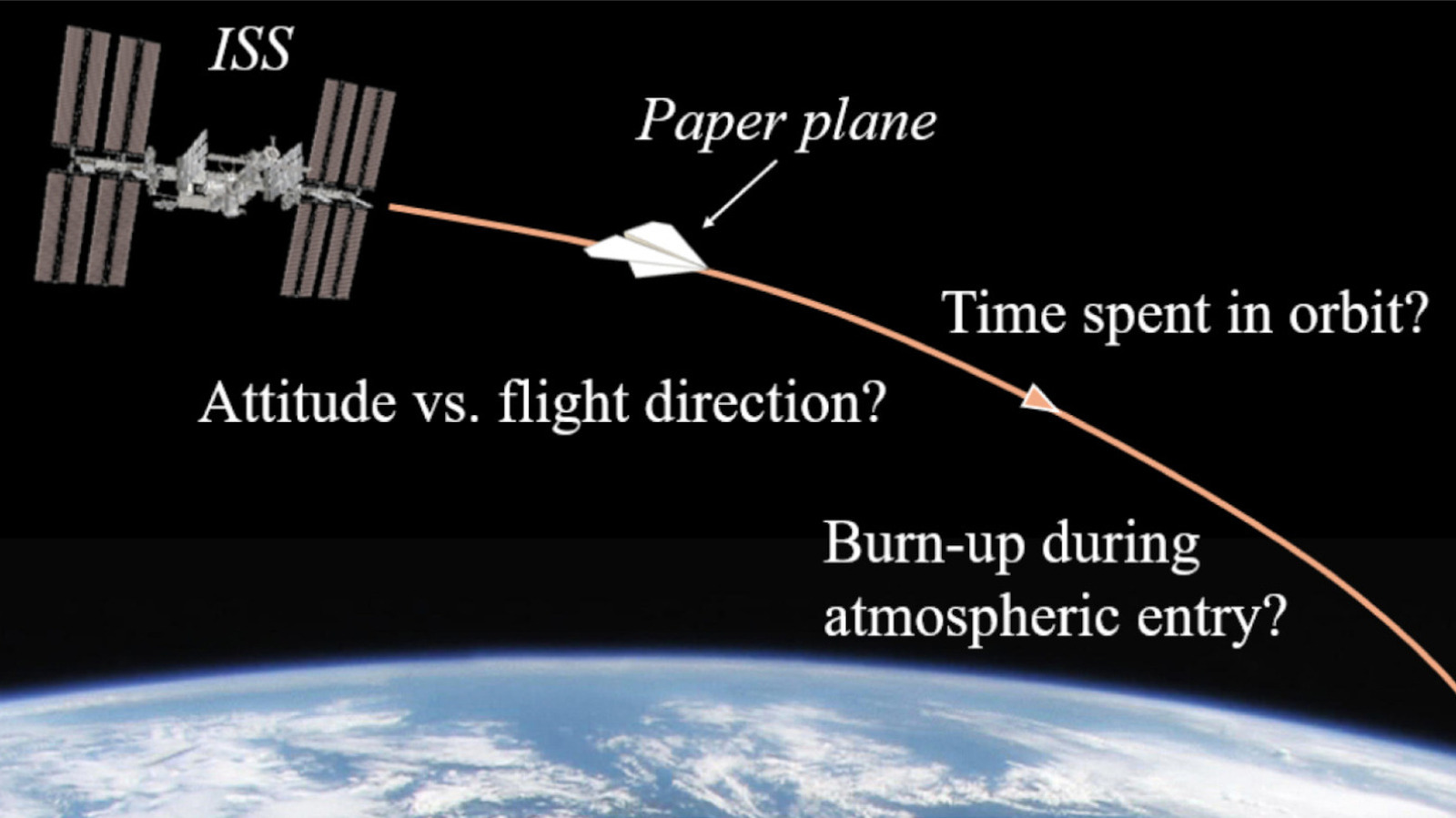
Researchers Maximilien Berthet and Kojiro Suzuki have tackled an unconventional question that bridges physics and aerodynamics. Their work examines the behavior of a paper airplane in the vacuum of space, where traditional flight dynamics cease to function.
In Earth's atmosphere, paper airplanes rely on air pressure differential and drag to generate lift and control. Remove the atmosphere entirely, and those principles become irrelevant. The paper airplane cannot generate thrust or lift without air molecules to interact with. Instead, it simply maintains whatever velocity it possessed at the moment of release, moving in a straight line indefinitely unless acted upon by another force like gravity or collision.
The study holds relevance beyond novelty. Understanding object behavior in vacuum conditions informs spacecraft design, debris management, and materials testing for space applications. Engineers must account for how objects behave when traditional aeronautical principles no longer apply. The research also touches on fundamental physics principles, specifically Newton's first law of motion.
Berthet and Suzuki's work demonstrates that even seemingly trivial questions can yield valuable scientific insights. The paper airplane becomes a teaching tool for understanding the radical difference between Earth's physics and space physics. This approach to science education has gained traction in recent years, with researchers using everyday objects to explain complex concepts.
The study exemplifies how playful scientific inquiry can coexist with serious research. While the subject matter might appear lighthearted, the methodology and conclusions contribute to our understanding of physics in extreme environments. Space agencies and aerospace companies benefit from this expanded knowledge base when designing experiments and equipment for orbital missions.
The research also highlights how paper planes have served as physics models for decades. From classroom demonstrations to sophisticated aerodynamic studies, these simple craft provide accessible ways to explore how objects move through different mediums.