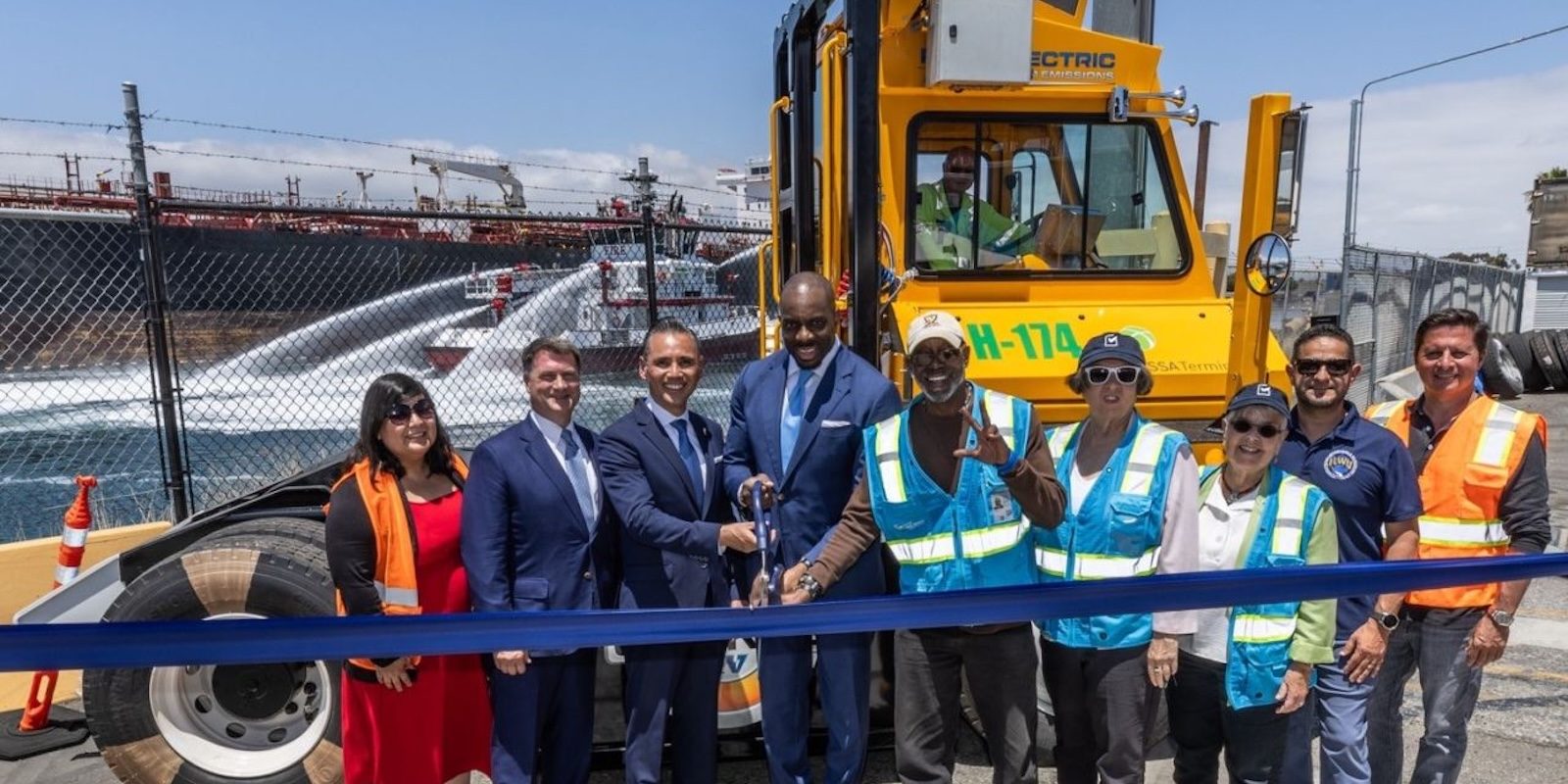
The Port of Long Beach received a record $383 million state grant from California's Port and Freight Infrastructure Program to accelerate the shift toward zero-emission logistics operations. The funding targets creation of 22,000 clean jobs while reducing emissions from port and freight operations at one of America's highest-traffic cargo hubs.
The grant reflects California's aggressive push to decarbonize its massive goods movement sector, which accounts for roughly one-third of the state's transportation emissions. Long Beach, which handles over 9 million containers annually, serves as a critical test bed for clean technology deployment. The funding will likely support electrification of cargo handling equipment, adoption of zero-emission trucks and drayage vehicles, and modernization of port infrastructure to accommodate cleaner operations.
This investment aligns with broader industry momentum toward electrified freight. Major automakers including Volvo, Daimler, and Tesla have committed substantial resources to electric truck development. Ports nationwide face increasing regulatory pressure to reduce air quality impacts on surrounding communities, particularly in Southern California where Long Beach operates.
The scale of the grant signals state confidence in scaling clean freight solutions beyond pilot projects. Job creation numbers suggest workforce training programs and manufacturing operations for electric cargo equipment and vehicles. Supply chain modernization typically includes adoption of advanced logistics software, automated cargo handling systems, and infrastructure upgrades to support electric vehicle charging and hydrogen refueling networks.
Long Beach's competitive position as a major U.S. container port makes it strategically valuable for demonstrating that emission reductions don't compromise operational efficiency or cargo throughput. Success here influences adoption at other major ports including Los Angeles, Oakland, and Seattle.
The funding underscores that California views freight electrification as both an environmental mandate and an economic opportunity. As federal infrastructure spending also targets port improvements, ports receiving early state investment establish themselves as leaders in attracting additional federal dollars and private investment in clean logistics