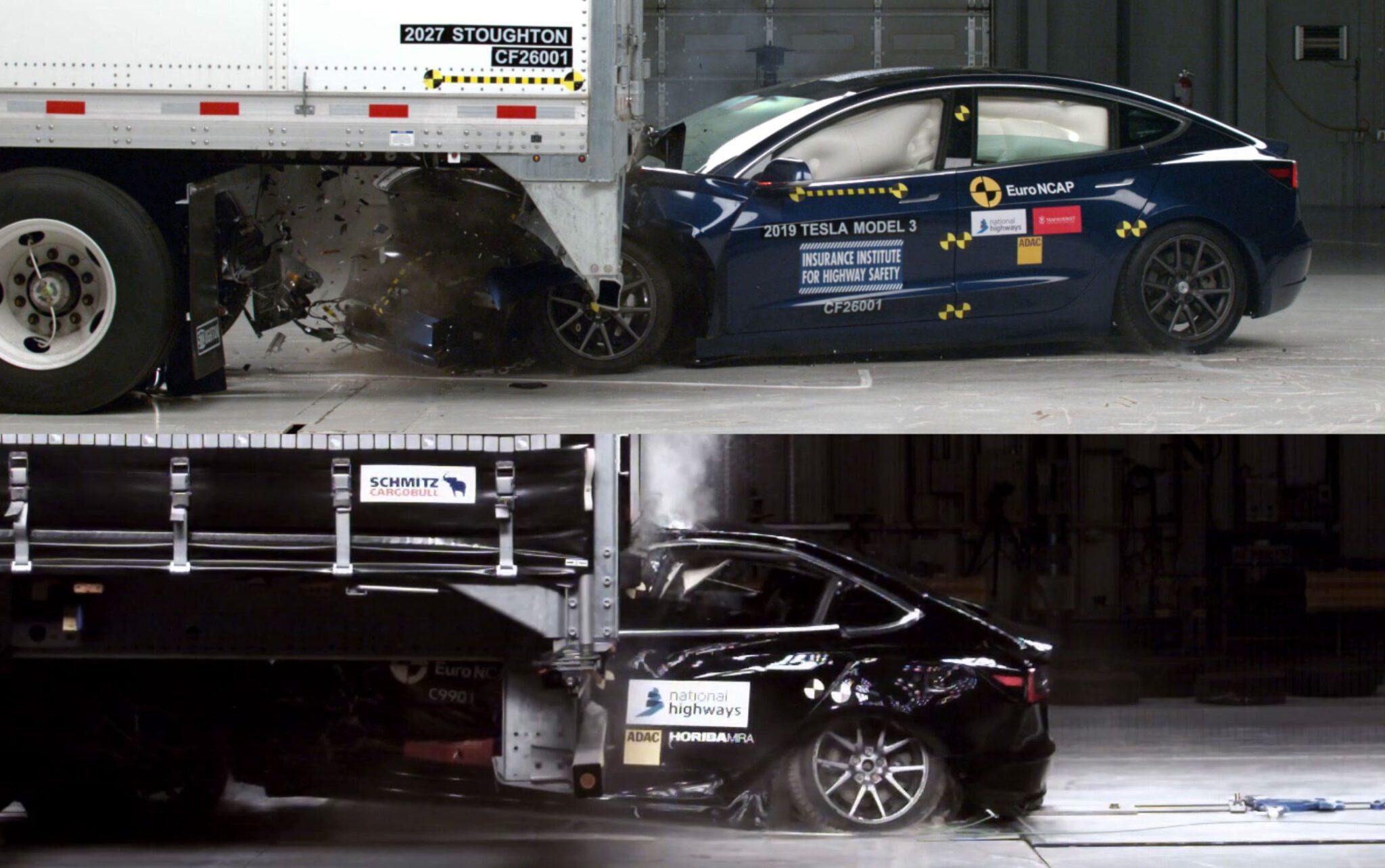
Euro NCAP's latest crash testing has exposed a critical safety flaw in European trailer guards. Regulations mandating side underride guards on trailers since 2022 are not preventing fatal accidents in real-world collisions, the independent safety organization found.
The guards, designed to prevent cars from sliding underneath trailers in side-impact crashes, fail to perform as intended during Euro NCAP's rigorous testing protocols. This reveals a troubling disconnect between what EU law requires and what actually protects drivers on the road.
Side underride accidents remain among the deadliest collision types in Europe. When a passenger car strikes a trailer's side at certain angles and speeds, the vehicle can slide underneath the trailer structure. Without effective guards, occupants face catastrophic injuries or death. The 2022 regulation was supposed to eliminate this threat by requiring manufacturers to fit stronger, lower-mounted barriers.
Euro NCAP's findings suggest the current standard allows guards that look compliant on paper but crumple or misalign during actual crashes. The test protocols reveal guards buckling, shifting position, or failing to arrest the intrusion of vehicle structure into the trailer underside. Real-world crashes don't follow neat regulatory parameters.
This puts pressure on the European Commission and EU member states to tighten trailer guard specifications. Manufacturers already produce trailers meeting the current legal minimum, but "legal" is proving insufficient for safety. The gap between regulation and real protection exposes the limits of prescriptive engineering standards that don't adequately model dynamic crash behavior.
The findings carry implications for major trailer manufacturers across Europe and the logistics industry that operates these vehicles daily. Fleet operators and haulage companies face potential liability questions if their trailers equipped with legally compliant guards contribute to preventable underride accidents.
Euro NCAP's role as an independent testing authority gives its findings significant weight with policymakers. The organization's