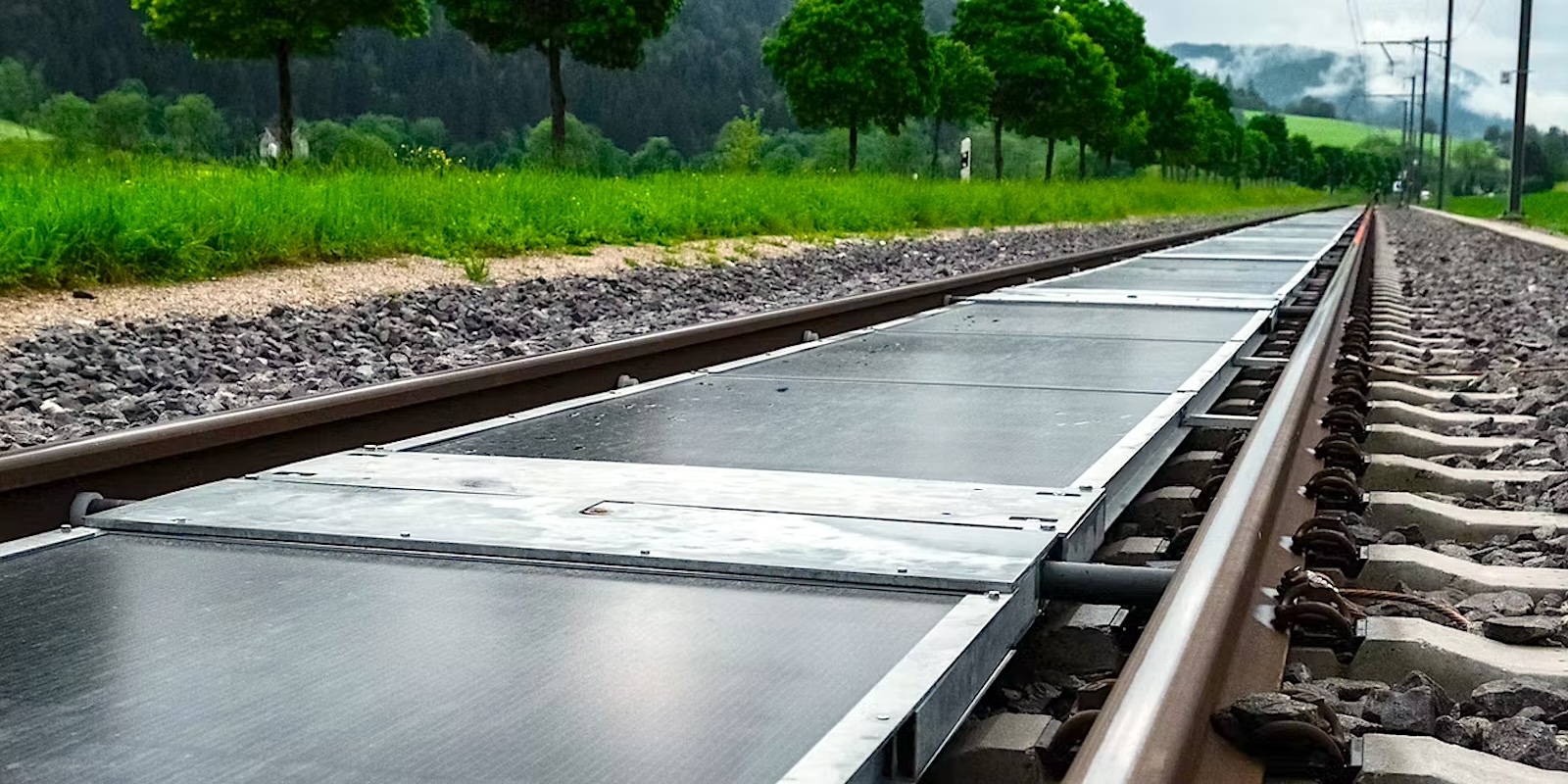
Switzerland's SunWays pilot project demonstrates that railroad corridors offer untapped real estate for solar deployment. The initiative places photovoltaic panels between train tracks, solving a persistent land-use puzzle that has constrained solar expansion across Europe.
Traditional solar siting forces difficult tradeoffs. Farmland conversion sparks agricultural concerns. Rooftops require retrofit complexity and capital. Parking lots demand shade-free positioning that limits other uses. Railroad rights-of-way eliminate these conflicts. The land sits idle between tracks, generates no competing revenue, and remains owned or controlled by rail operators who face pressure to decarbonize their networks.
The Swiss pilot validates technical feasibility. Panels installed between rails withstand vibration, thermal stress, and weather exposure from passing trains. Maintenance access remains straightforward. The installation doesn't interfere with rail operations or safety protocols. Crucially, the solar arrays can power station facilities, signaling systems, or feed excess generation into regional grids.
This approach addresses Europe's renewable energy bottleneck. The continent targets 42.5 percent renewable electricity by 2030, but suitable land for solar farms remains scarce and costly. Railroad networks span tens of thousands of kilometers across the continent. Even modest penetration of solar deployment along these corridors could yield gigawatts of capacity.
Rail operators gain direct benefits. On-site generation reduces grid dependency and operational costs. Some European railways have committed to full decarbonization by 2050, making renewable energy infrastructure essential. German Rail, French SNCF, and other major operators face pressure to slash emissions from energy-intensive operations.
The model works best on non-electrified routes or secondary lines with lower train frequency. High-traffic electrified corridors present greater engineering complexity but aren't impossible. Automation systems can monitor panel condition and alert maintenance crews to debris or damage.
Scaling