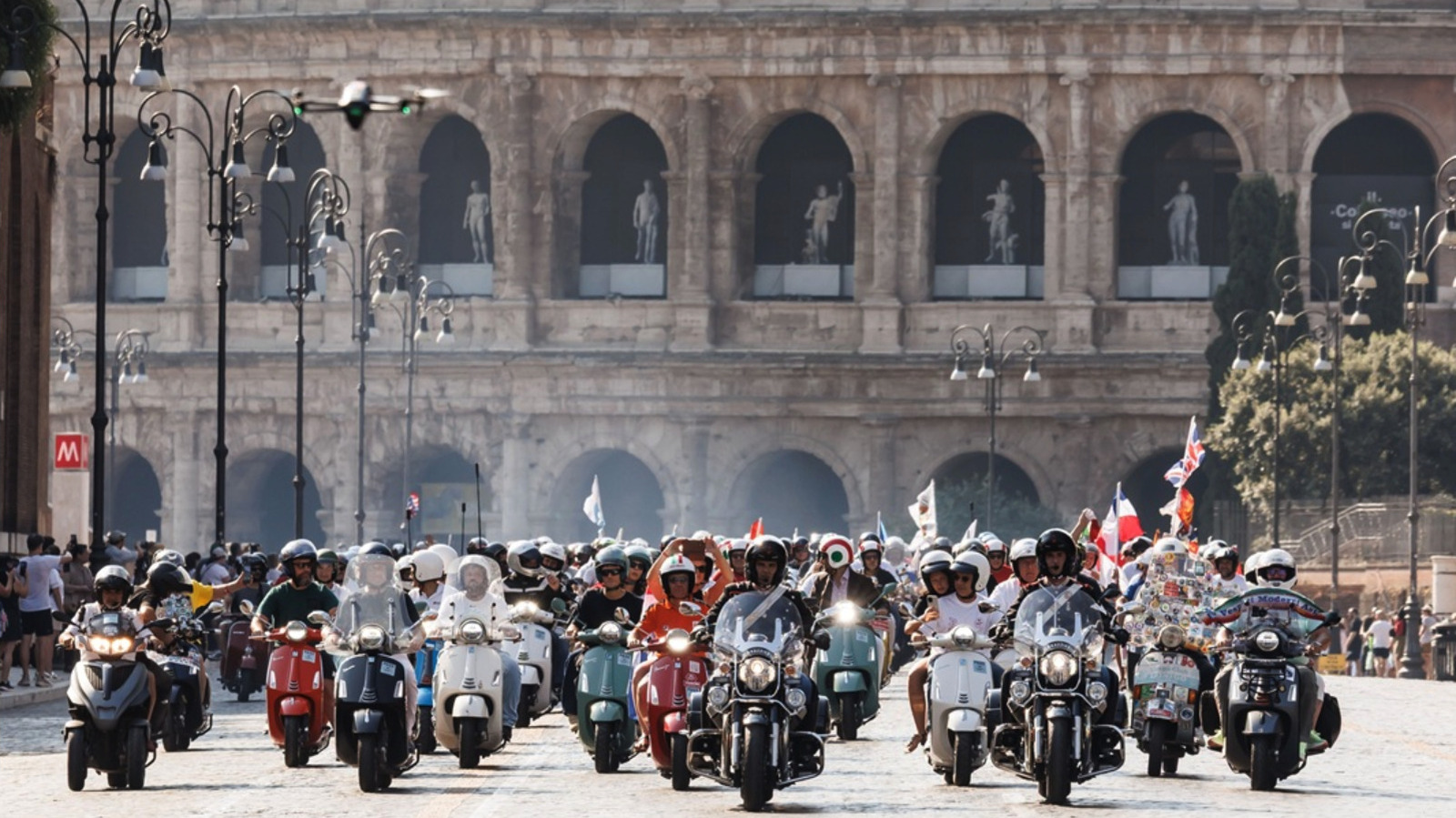
Vespa riders from across Europe descended on Rome this week to celebrate the Italian scooter brand's 80th anniversary. The rally drew thousands of enthusiasts on two wheels, transforming the Italian capital into a sea of vintage and modern Vespas.
The gathering underscores Vespa's enduring cultural grip beyond mere transportation. Since 1946, the Vespa has transcended its original purpose as an affordable post-war commuter vehicle to become a global icon of Italian style and lifestyle. The scooter's distinctive silhouette, tubular steel frame, and front-wheel enclosure remain virtually unchanged across eight decades, a rarity in the automotive world where constant redesigns drive sales.
Today's Vespa market reflects this heritage protection. Piaggio, the manufacturer, produces modern Vespas with contemporary engines and emissions controls, yet the design language stays frozen in time. Models range from the Vespa Primavera with a 50cc or 150cc engine for urban riders to the Vespa Sprint offering more power. The newer GTS models push displacement to 300cc for highway capability, addressing riders who want authentic Vespa style with actual modern performance.
The Rome rally represents the passionate owner community that keeps the brand alive. Unlike mass-market scooters from Honda or Yamaha, Vespa buyers chase a lifestyle narrative rooted in La Dolce Vita cinema and Mediterranean romance. Pricing reflects this premium positioning. A basic Vespa Primavera starts around $2,000-2,500, while GTS models exceed $5,000.
Piaggio faces pressure from electric alternatives, including its own Vespa Elettrica. Yet these celebrations prove the brand's retro-modern positioning remains commercially viable. Vespa sells roughly 200,000 scooters annually worldwide, a modest number by global standards but