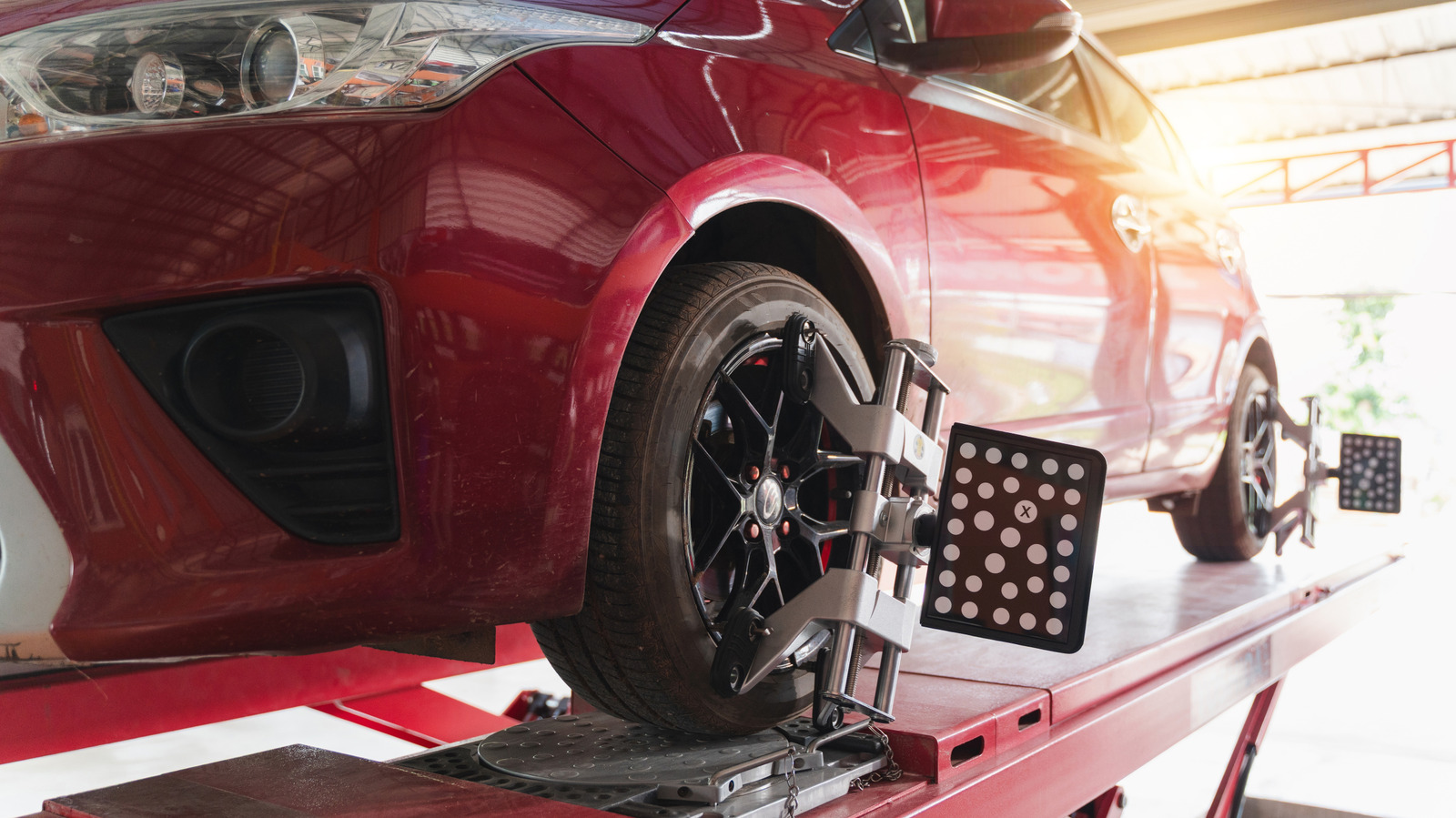
Wheel alignment geometry shapes every aspect of vehicle handling, yet most drivers never adjust these settings. Camber, caster, and toe represent the three core alignment angles that determine how tires contact the road surface and how a car responds to steering input.
Camber measures the vertical tilt of the wheel relative to vertical. Negative camber angles the tire inward at the top, which increases grip during hard cornering by keeping more of the tire's contact patch engaged with the asphalt. Track-focused builds run aggressive negative camber, sometimes 2 to 3 degrees or more, to maximize cornering performance. The tradeoff arrives in straight-line stability and tire wear on the inner edge.
Caster describes the forward or backward tilt of the steering axis. Positive caster, where the steering axis tilts back, improves high-speed stability and provides self-centering feedback through the steering wheel. Racing drivers value this natural return-to-center characteristic during transitions between corners. Too much caster demands heavier steering inputs at low speeds.
Toe refers to the angle of the wheels relative to the vehicle's centerline when viewed from above. Toe-in, where the fronts point slightly inward, promotes stability on straights and improves braking balance. Toe-out encourages sharper initial turn-in response but reduces straight-line stability. Front-wheel-drive cars typically run toe-in for predictability, while rear-wheel-drive and race cars often prefer slight toe-out for responsive steering.
Track drivers constantly dial these angles based on tire compound, weather conditions, and track characteristics. Gran Turismo players enjoy the same flexibility, tuning suspension geometry to extract hundredths of seconds per lap. Road cars ship with conservative alignment to prioritize tire longevity and everyday drivability over outright performance.
Understanding alignment geometry separates