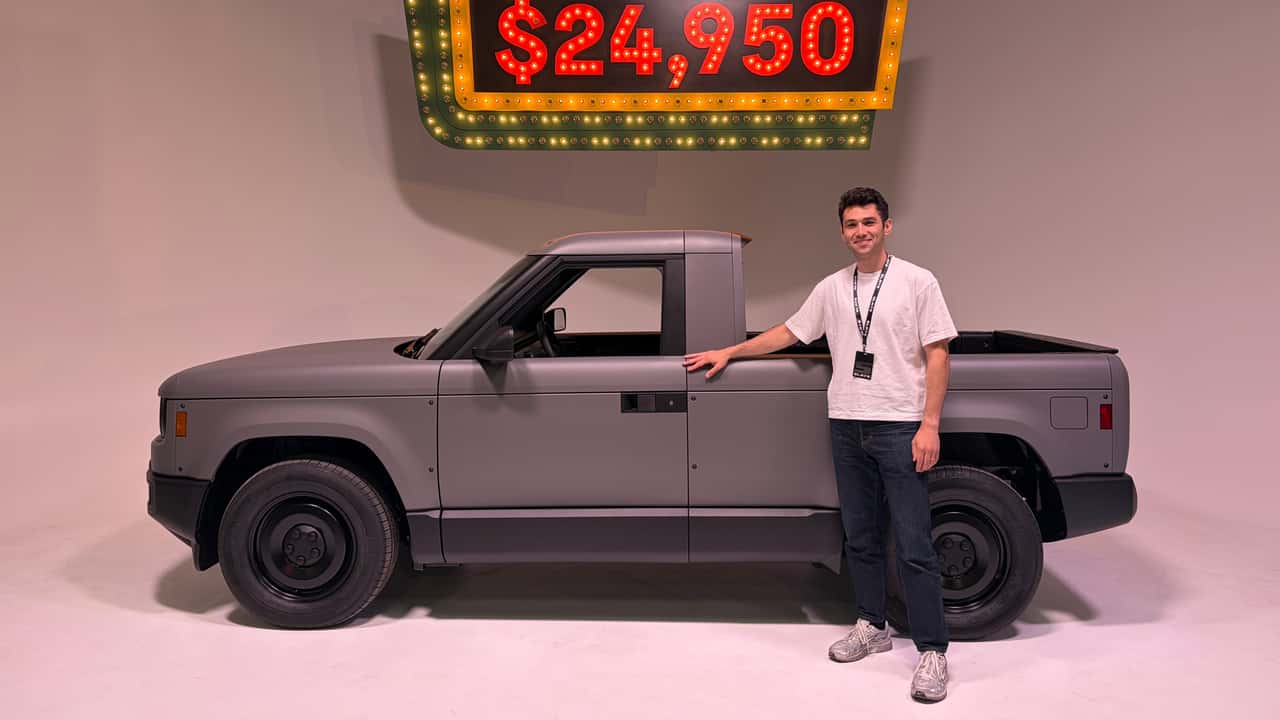
Slate, the EV startup founded by former Tesla engineers, is bringing its $25,000 electric pickup to market with a stripped-down philosophy that challenges industry assumptions about truck features and price. The company's bet is simple: buyers want affordable EVs, not loaded cabins.
The Slate Truck delivers that promise literally. Crank-up windows replace power windows. Manual locks replace power locks. The interior eschews touchscreens and unnecessary trim. Every omission cuts cost and weight, pushing the vehicle closer to that critical $25,000 price point that would undercut Ford's F-150 Lightning by roughly half.
Ride quality on the Slate felt composed despite the minimalist approach. The truck's platform handles bumps without the harshness you'd expect from a cost-cutting exercise. Slate engineered the suspension to work, not just exist at a discount.
The real tension emerges inside the cabin. Crank-up windows feel authentically retro, not in a charming way. They're slow. The lack of power steering controls or modern conveniences forces a stark choice on buyers: save $15,000 to $20,000 against a Tesla or Ford, or accept driving experience that feels a generation old.
This strategy targets working contractors and fleet buyers who care about payload and range, not leather seats or ambient lighting. Slate's engineering team from Tesla understands that segment well. They're not trying to sell luxury. They're selling utility at a price point that makes economic sense.
Whether the market accepts such austerity remains unclear. Pickup buyers have grown accustomed to power conveniences as standard. Asking them to hand-crank windows in 2024 requires a mental shift. Slate's bet hinges on affordability trumping comfort for a specific buyer group willing to sacrifice convenience for cost savings and honest electric performance.