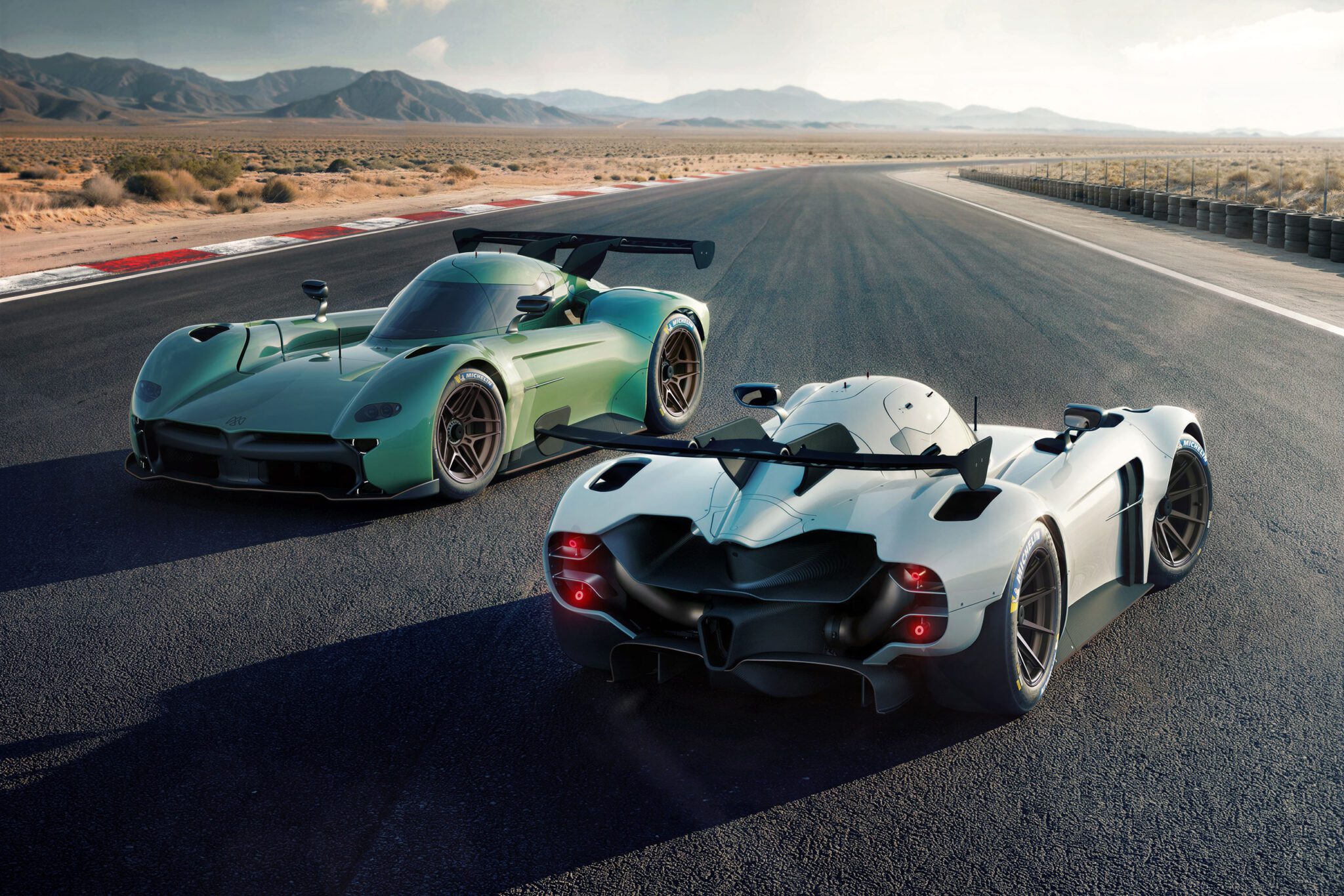
McMurtry Automotive has unveiled the Spéirling Pure, a production hypercar engineered around active aerodynamic technology that generates downforce from a complete standstill. This capability fundamentally separates it from wing-dependent competitors that rely on speed to generate grip.
The Spéirling Pure leverages McMurtry's proprietary fan-based downforce system, which draws air through the chassis floor to create massive aerodynamic load independent of velocity. Traditional hypercars like the Ferrari 288 GTO Evoluzione or Lamborghini Reventon depend on passive wings and splitters that only become effective at high speeds. McMurtry's approach inverts that physics entirely.
The implications for track performance are substantial. A stationary Spéirling Pure already generates lateral grip unavailable to competitors. Under braking into corners, the active system maintains downforce while other hypercars lose aerodynamic support as speed drops. This creates a pronounced advantage through technical sections where traditional vehicles must scrub velocity to maintain traction. The effect compounds on tight, slow-speed circuits where traditional aero offers minimal benefit.
McMurtry hasn't released complete specifications for the Pure variant, but the production hypercar slots into an increasingly crowded segment where Porsche's 918 Spyder, McLaren's P1, and Ferrari's LaFerrari established the template a decade ago. Unlike those hybrid systems, McMurtry emphasizes pure aerodynamic innovation over powertrain complexity, suggesting a different engineering philosophy focused on mechanical grip.
The active downforce system carries cost and complexity implications. Electromechanical fans, sensors, and ducting add weight and manufacturing difficulty compared to passive wings. However, the performance benefit justifies the approach for buyers targeting serious track use rather than road duty.
This technology addresses a gap in hypercar design. Most ultra-high-performance