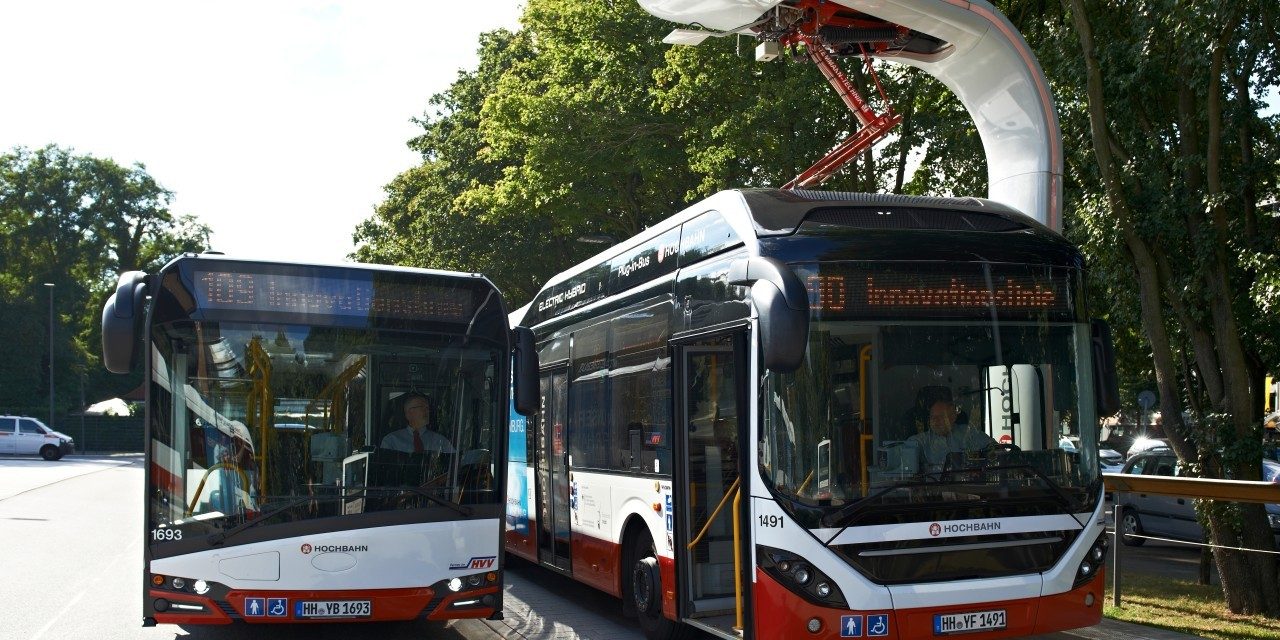
The Washington, DC, metro area has deployed its first overhead pantograph chargers for electric buses operating mid-route. These en-route charging systems allow buses to top up their batteries while stopped at designated stations, extending range without requiring larger on-board battery packs or longer charging windows between shifts.
Pantograph chargers lower from overhead infrastructure to connect directly to receptors on bus roofs, delivering rapid DC power in minutes. This technology eliminates the need for lengthy depot charging sessions and enables transit agencies to operate smaller fleets more efficiently. The DC deployment represents a shift in how urban transit systems approach EV infrastructure. Rather than relying solely on depot charging overnight, en-route systems let buses complete longer routes and operate more flexibly throughout the day.
This infrastructure choice addresses a core challenge facing transit agencies adopting electric buses. Bigger batteries add weight and cost; longer depot charging cuts into revenue hours. Pantograph systems split the difference. Agencies like Washington's can deploy smaller battery packs, reduce total charging time, and keep buses rolling longer each day.
The technology works best in dense urban corridors where stops cluster predictably. Washington's implementation targets high-traffic routes where buses naturally pause frequently. Other systems including those in New York and Chicago have piloted similar approaches with success.
Equipment manufacturers like Siemens dominate the pantograph charger space, supplying systems globally. Adoption remains sparse in the US compared to Europe, where cities like Zurich and Amsterdam operate mature en-route charging networks. DC's move signals growing acceptance among American transit operators that mixed charging strategies beat single-solution approaches.
The infrastructure investment also signals rider confidence. Reliable en-route charging reduces the anxiety around electric bus performance and strengthens the business case for further EV fleet expansion. For DC's transit authority, the chargers support broader electrification targets while keeping operational costs manageable. This approach will likely influence how