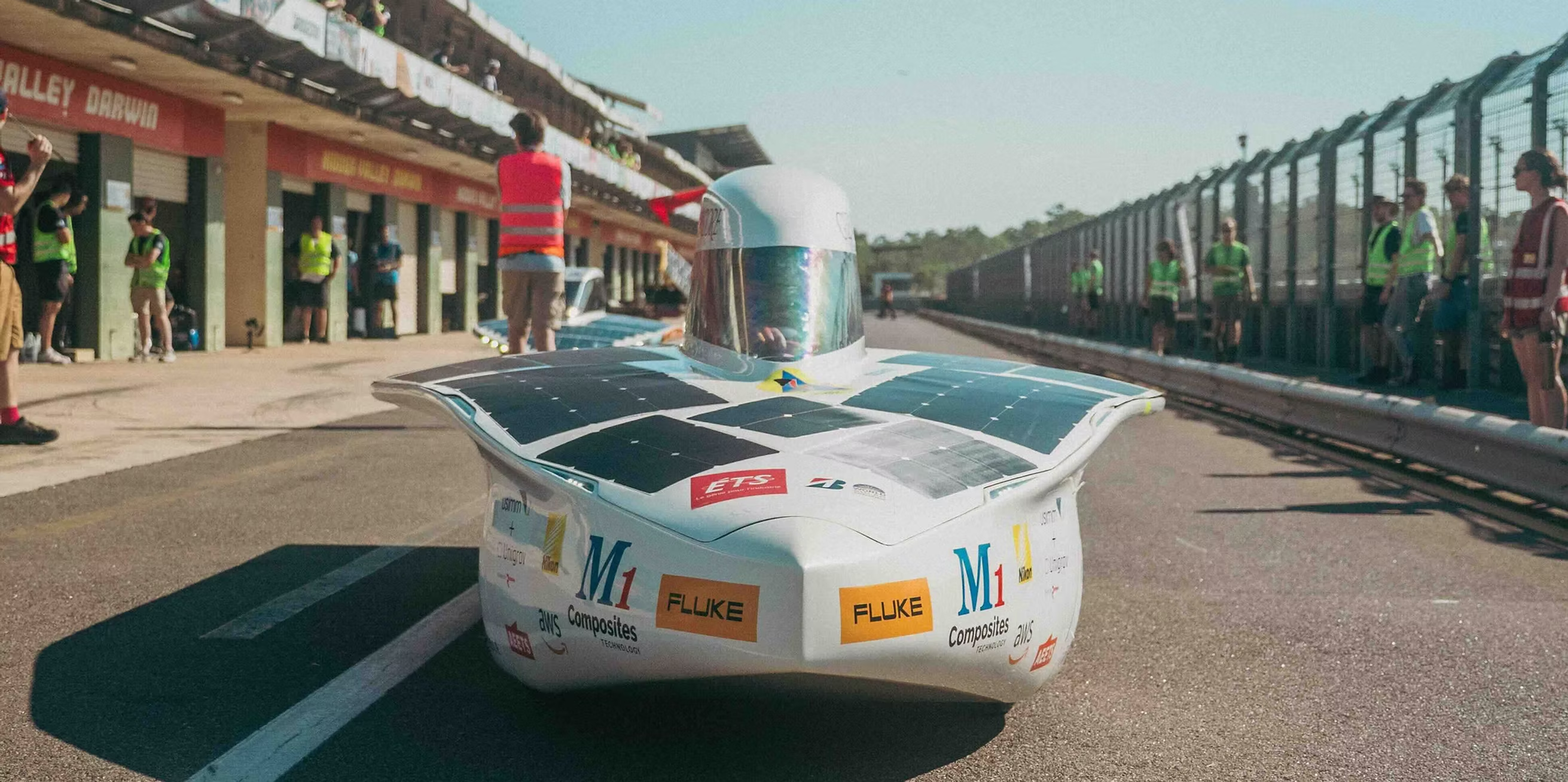
Éclipse, the solar car team from École de technologie supérieure in Montreal, brings three decades of competition experience to the 2026 Electrek American Solar Challenge and Formula Sun Grand Prix, both heading to Minnesota this July.
The Canadian program has fielded solar vehicles since 1992, making it one of the longest-running teams in the sport. That longevity translates to institutional knowledge few competitors possess. Éclipse understands aerodynamics, lightweight construction, and power management at a level built through continuous iteration across multiple generations of engineers and students.
Solar car racing sits at the intersection of engineering pragmatism and innovation theater. Teams must balance efficiency gains against real-world constraints. A more aerodynamic chassis saves energy. Lighter materials preserve speed. Better solar cell integration captures maximum sunlight. But every choice involves tradeoffs. Éclipse's 33-year track record means they've solved these problems repeatedly, refining approaches each cycle.
The American Solar Challenge emphasizes endurance across distance, testing how teams manage thermal dynamics, weather variability, and sustained performance. The Formula Sun Grand Prix focuses on speed and acceleration. Both competitions demand different engineering priorities, yet Éclipse competes in both, requiring versatile design philosophy.
Solar racing attracts serious engineering talent because it forces genuine innovation. Electric vehicles dominate passenger cars, but solar integration remains a specialized challenge. Teams pushing solar technology develop expertise applicable to mainstream EV development, battery management, and lightweight construction.
Minnesota's selection as host venue matters. The northern location presents weather challenges solar cars rarely face in traditional competition regions. Cloud cover, temperature fluctuations, and variable sunlight conditions test reliability beyond ideal-weather scenarios. Éclipse's experience handling diverse conditions across Canada positions them well.
The team arrives with their strongest entry yet, suggesting they've made meaningful advances in either efficiency, speed, or