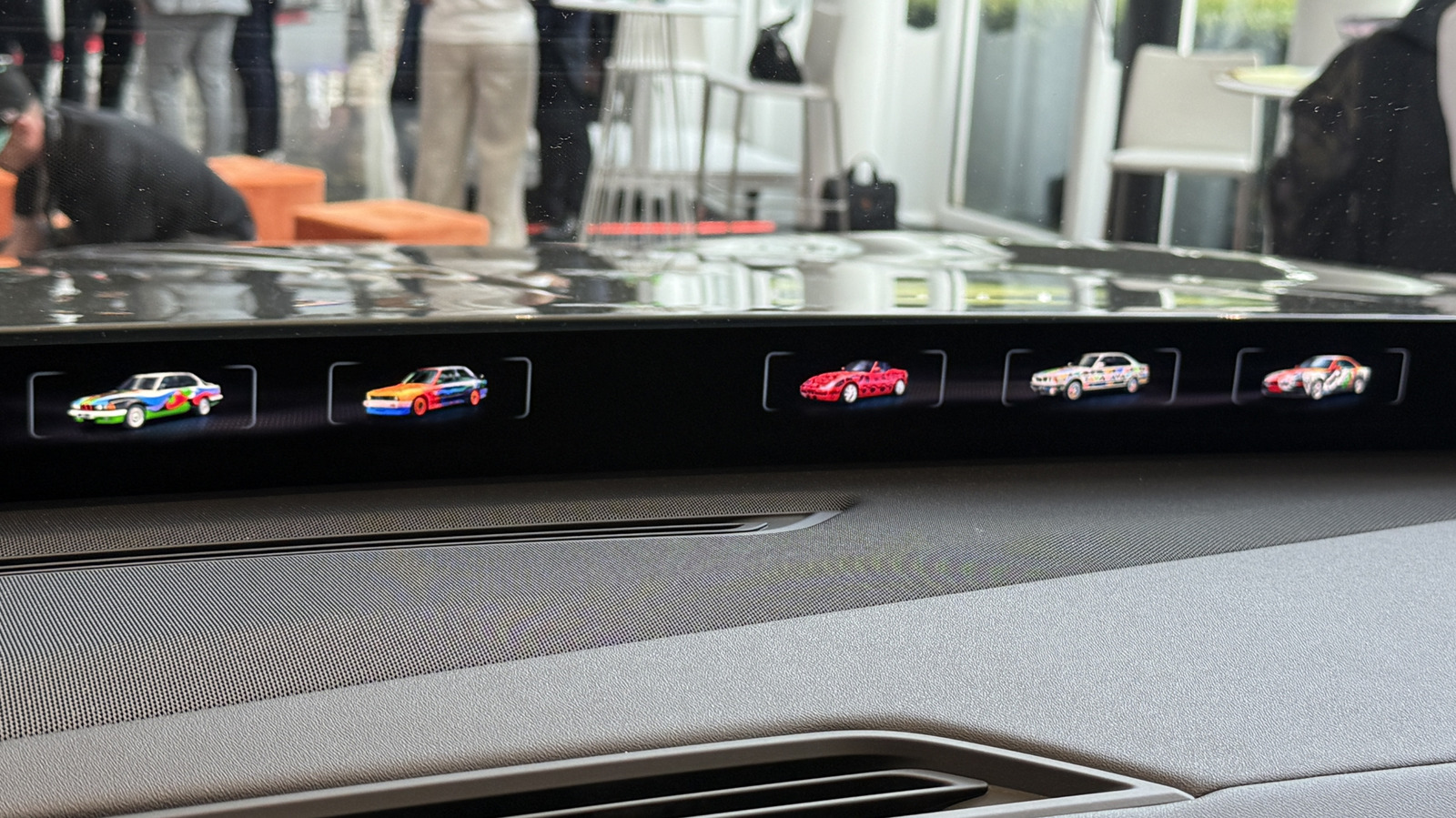
BMW's 2025 X5 features a panoramic windshield display called Panoramic Vision that projects information directly onto the glass. The system delivers navigation, driver alerts, and vehicle data in the driver's line of sight. But the automaker recognized buyers might want something different.
The new feature lets X5 owners display images from BMW's legendary Art Car collection on the panoramic screen. The program launched in 1975 with Alexander Calder's abstract BMW 3.0 CSL and continued through decades with works by famous artists including Andy Warhol, David Hockney, and Jenny Holzer. Owners can cycle through decades of these iconic vehicles on their windshield display while parked.
This frivolous addition reflects how automakers now treat in-car screens as entertainment platforms, not just functional tools. Tesla does this with Arcade games. Porsche offers similar gallery features. BMW's approach capitalizes on its heritage and appeals to affluent buyers who appreciate the brand's cultural cachet.
The Panoramic Vision display itself serves practical purposes. It projects speed limits, turn-by-turn directions, and collision warnings directly in the driver's sightline, reducing the need to look down at a traditional dashboard screen. The system uses advanced augmented reality to overlay relevant information seamlessly.
But let's be honest. Most X5 owners will spend more time admiring the Art Car gallery than studying real-time traffic alerts. That's precisely the point. As vehicles become increasingly autonomous and self-driving features mature, manufacturers recognize that entertainment and aesthetics matter as much as raw performance. Passengers need reasons to enjoy their time inside.
BMW's Art Car exhibition on wheels transforms the X5's windshield into a mobile museum. Whether owners actually use it or simply enjoy knowing it exists, the feature positions the X5 as a lifestyle object rather than mere