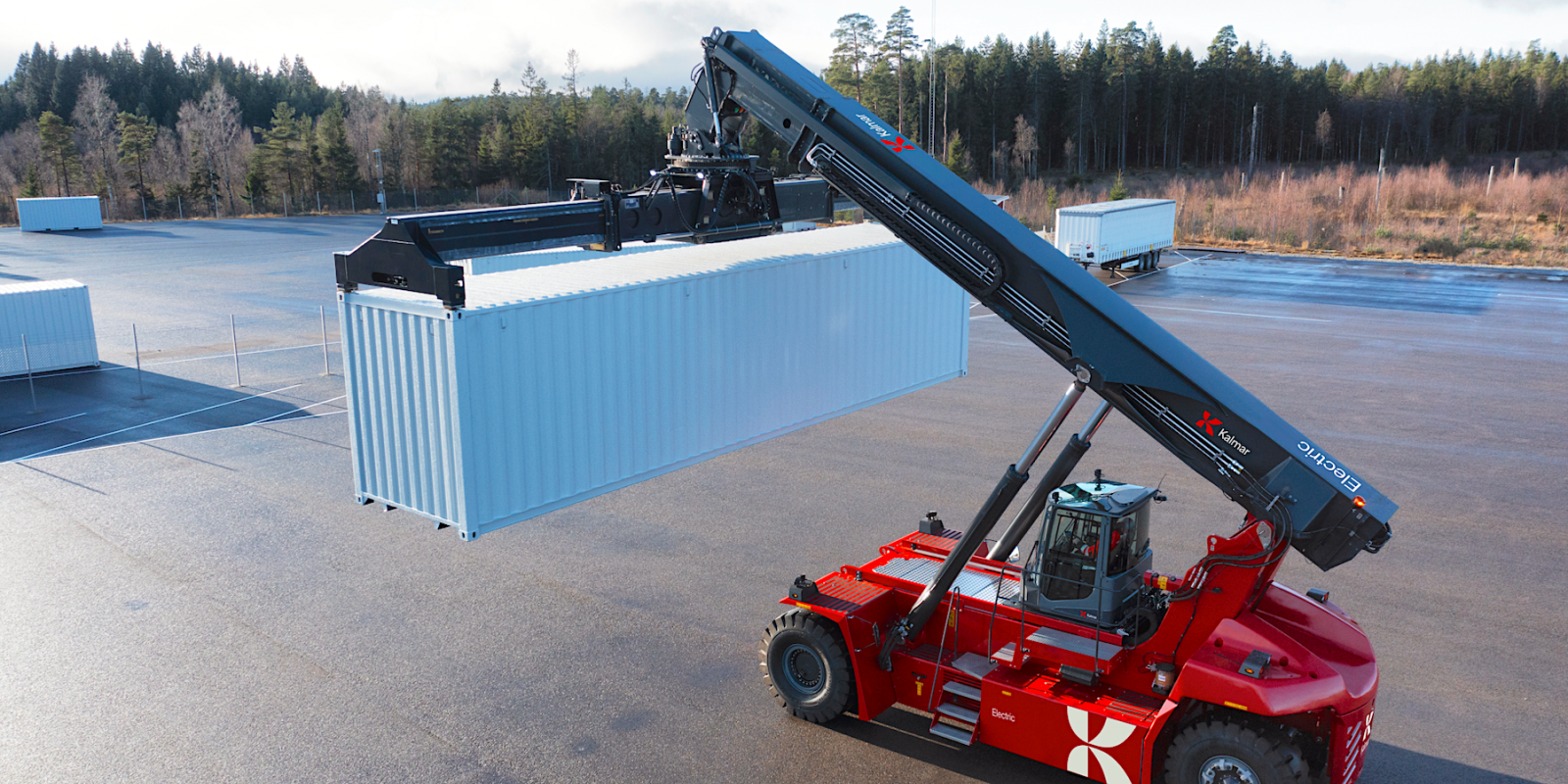
Kalmar is ramping up electric reach stacker production at its Shanghai facility and seeing real traction in Asia. The company built its 45-ton ERG450 electric model starting in 2023 to serve regional customers directly. Four fresh orders closed out Q2, validating the manufacturing bet.
Reach stackers handle intermodal containers and cargo at ports and logistics hubs. Kalmar's 45-ton capacity ERG450 strips out diesel engines in favor of battery power, cutting emissions and noise at facilities where operators work shoulder-to-shoulder with equipment. The electric drivetrain also lowers fuel and maintenance costs over the machine's lifespan.
Manufacturing in Shanghai matters. Local production cuts lead times, slashes shipping costs, and signals commitment to Asian customers who care about supply chain reliability. Kalmar, owned by Cargotec, builds cargo handling gear globally, but Asia remains the freight epicenter. Establishing local output lets the company compete harder against regional rivals and respond faster to upticks in port automation projects.
The Q2 order wins prove the addressable market exists. Ports across China, Singapore, and the broader region face pressure to electrify equipment as environmental regulations tighten. Battery technology has matured enough that heavy handlers like reach stackers can run full shifts on a single charge, making the economics work for operators managing multiple units.
Kalmar faces competition from Liebherr, Sany, and other manufacturers expanding electric cargo gear. The shift mirrors trends in mining and construction, where electric loaders and excavators gain ground as battery costs drop. Ports that already run electrified cranes and conveyor systems see electric reach stackers as the next logical step toward fleet-wide decarbonization.
The Shanghai plant fills a gap. Western equipment makers often lag in Asia because import tariffs and local preferences push buyers toward regional suppliers