# Porsche's 962: The Race Car That Conquered Le Mans as a Street Car
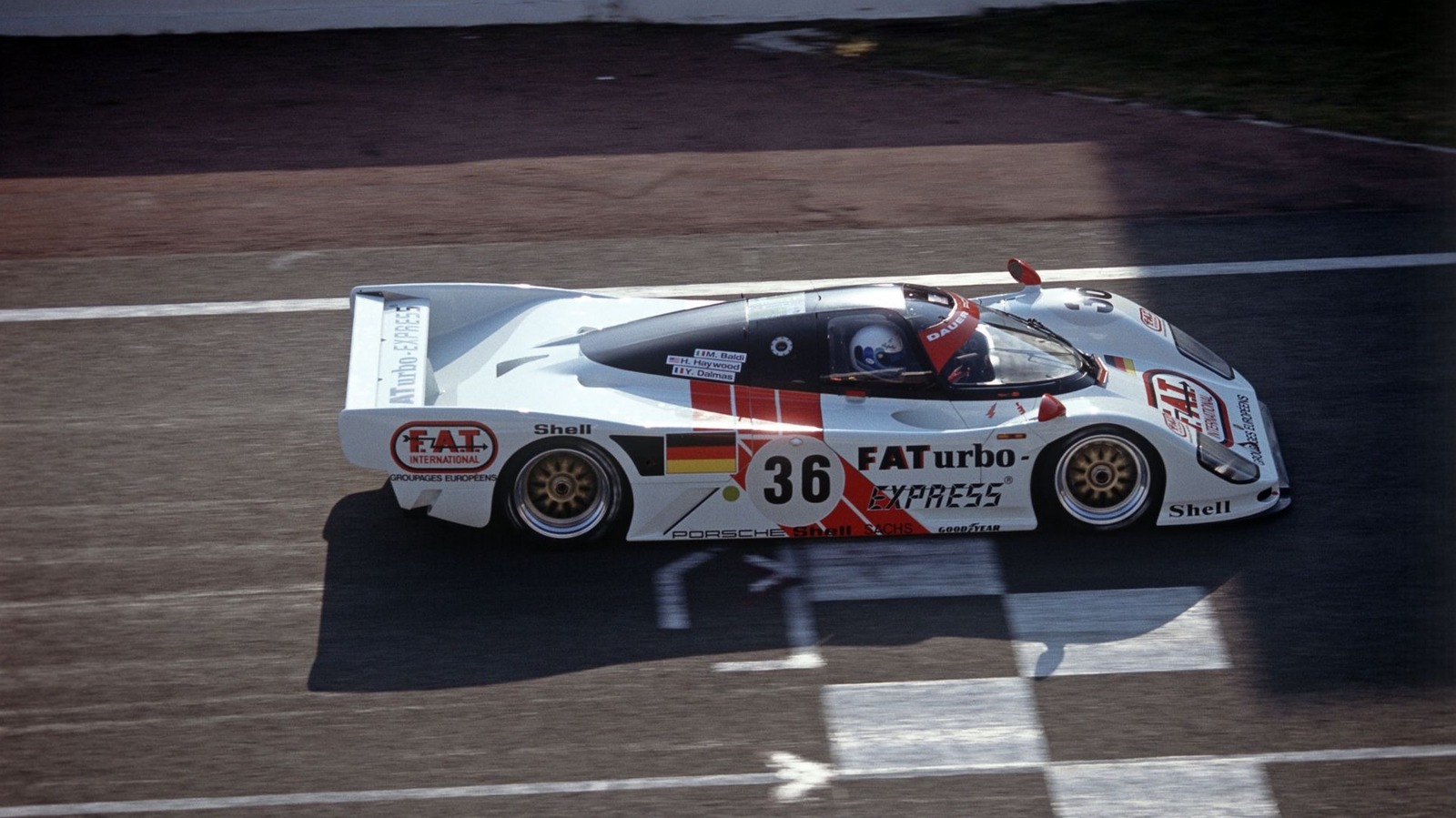
The Porsche 962 stands as one of racing's most audacious machines. Born as a prototype racer, this car achieved something nearly impossible: it competed at Le Mans as a street-legal variant, blurring the line between track and road in ways that modern regulations would never permit.
The 962 dominated IMSA racing throughout the 1980s and early 1990s, establishing itself alongside the 911 as an icon of Porsche's motorsport heritage. But the Dauer variant took this legacy further. By converting the race car into a street-legal machine, Porsche created a hybrid that retained the brutal performance of its racing DNA while meeting road standards. This was not a diluted supercar born from racing inspiration. This was actual race hardware adapted for asphalt.
The street version still packed the mid-mounted turbocharged flat-six engine that made the 962 legendary in competition. Drivers got the same raw feedback, the same visceral connection, the same unfiltered driving experience as a professional Le Mans competitor. No power steering, no ABS, no electronic assists to soften the experience.
The remarkable twist came when Porsche entered a 962 back into competition at Le Mans, where it competed alongside modern prototypes. A race car transformed into street transport transformed back into a race car. The achievement underscored how thoroughly engineered the 962 was. Its fundamental design could swap roles between road and track without compromise.
Today, the 962 remains instantly recognizable in automotive history. Its long hood, low profile, and purposeful stance defined an era when racing technology could translate directly to road cars. The engineering philosophy behind the 962 contrasts sharply with modern supercars, which rely on