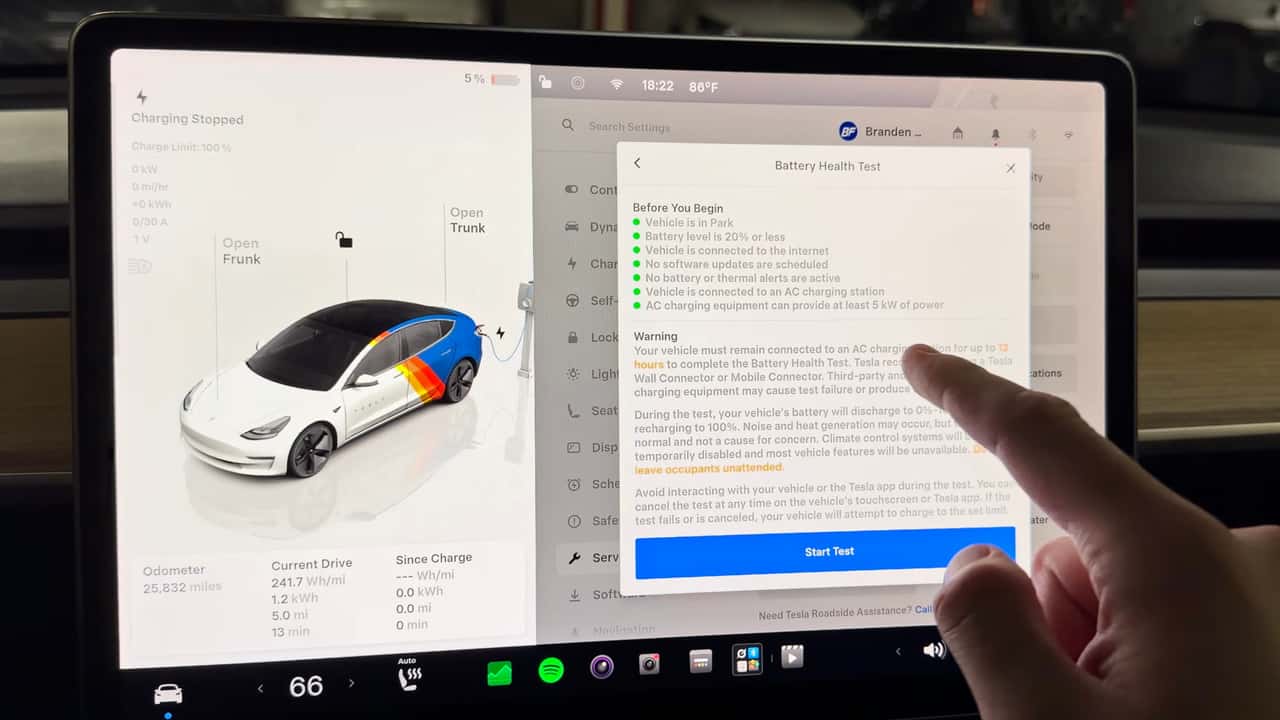
Tesla's LFP battery chemistry carries a reputation for durability, but real-world data from a 2023 Model 3 tells a more nuanced story. The vehicle, equipped with Tesla's lithium iron phosphate pack, showed 90% state of health at just 26,000 miles. While a 10% capacity loss over roughly two years of ownership isn't catastrophic, it underperforms the expectations many buyers hold for LFP technology.
LFP cells have earned their durability reputation in manufacturing and stationary storage applications, where they excel at cycle longevity and thermal stability. Tesla introduced LFP packs to the base Model 3 and Model Y lineup, marketing them as long-lasting alternatives to traditional NCA or NMC chemistries. The automaker claims LFP batteries can last the lifetime of the vehicle with minimal degradation.
This Model 3 owner's experience suggests the reality diverges from marketing claims. A 10% capacity fade at 26,000 miles extrapolates to roughly 45% degradation at 100,000 miles if the rate remains linear. Most EV manufacturers warrant batteries for 70-80% capacity retention at eight years or 100,000 miles. LFP should theoretically exceed that threshold, yet early-adopter data indicates it's performing closer to conventional lithium-ion packs than the chemistry's track record implies.
Several factors could explain the gap. Ambient temperature, charging habits, and depth-of-discharge cycles affect LFP degradation, sometimes more acutely than other chemistries. Owners charging to 100% frequently or operating in harsh climates report faster fade. Tesla's over-the-air software updates also influence battery management algorithms, which might not yet be optimized for LFP's specific characteristics.
The stakes matter. Tesla's cost