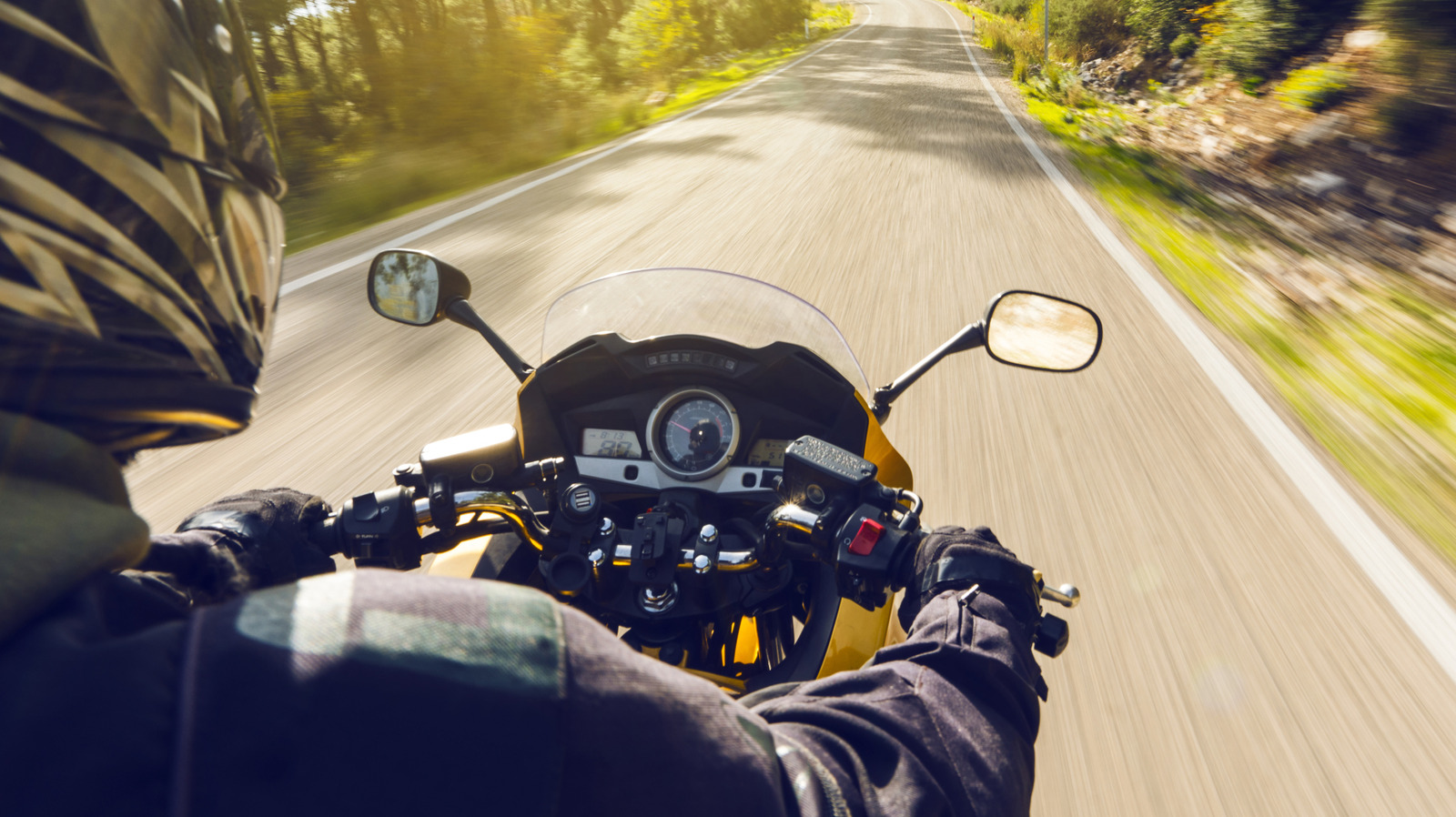
Motorcycles demand a fundamentally different braking technique than cars because riders control stopping power through two separate levers. The front brake lever, operated by the right hand, and the rear brake pedal, operated by the right foot, work together to slow the bike safely.
The 70/30 rule establishes the optimal brake distribution for most riding situations. The front brake generates approximately 70 percent of stopping power, while the rear brake contributes roughly 30 percent. This ratio reflects the physics of motorcycle braking. When a bike decelerates, weight transfers forward, loading the front tire and increasing its grip. The rear tire simultaneously experiences reduced contact pressure, limiting how much braking force it can apply without skidding.
Riders who rely too heavily on the rear brake risk locking the rear wheel, which destroys traction and can cause a lowside crash. Over-reliance on the front brake, conversely, can exceed the front tire's grip limit, causing the front end to wash out. Proper balance between both levers prevents these catastrophic failures.
The 70/30 distribution isn't rigidly fixed. Emergency braking, different road surfaces, and bike geometry create variations. Sport bikes with aggressive geometry and short wheelbases may push front brake bias higher. Cruisers with longer wheelbases and raked forks often require more rear brake input. Gravel and loose surfaces demand increased rear brake modulation to maintain stability.
Motorcycle training emphasizes progressive brake application and smooth lever coordination. Novice riders often squeeze the front brake too hard or grab it abruptly, unsettling the bike before stopping power fully develops. Advanced riders feather both brakes simultaneously, adjusting pressure as weight distribution shifts during deceleration.
Modern motorcycles increasingly incorporate ABS (anti-lock braking systems), which automatically modulates brake pressure to prevent wheel lockup