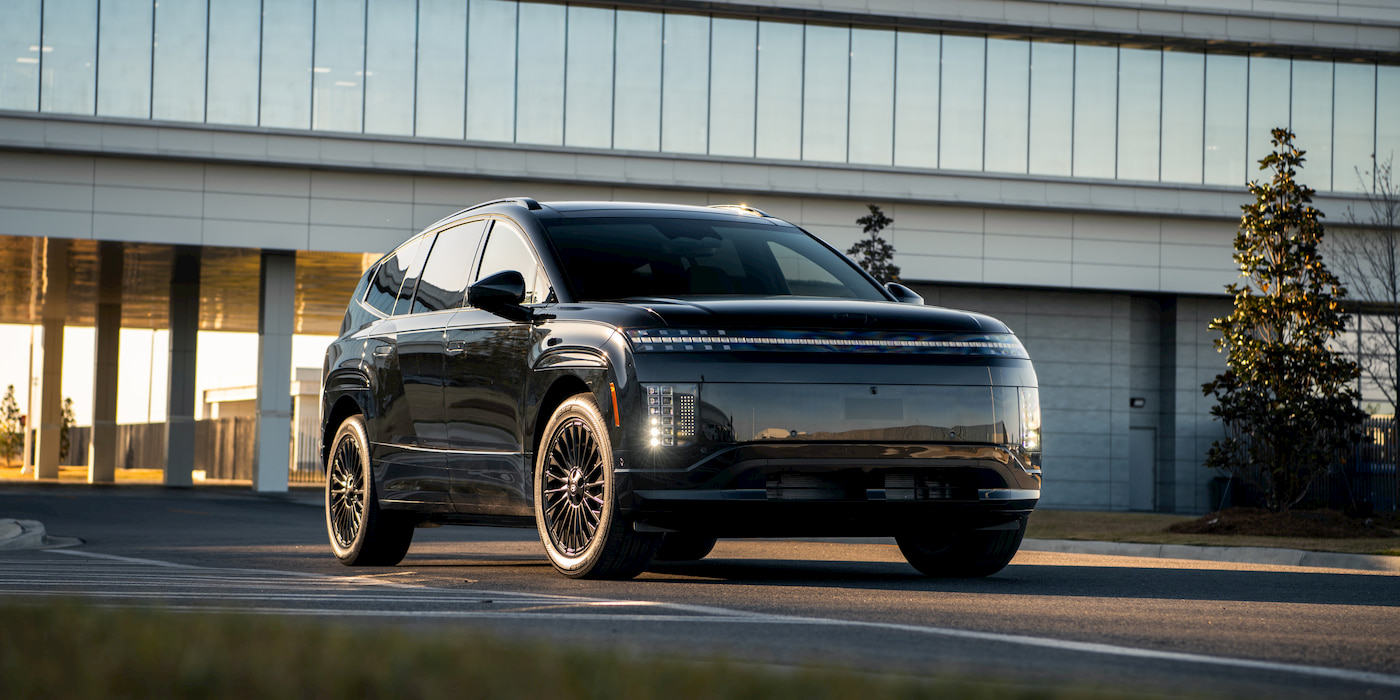
Hyundai's electric SUV lineup is capturing meaningful market share in the competitive EV segment. The IONIQ 5 has established itself as one of the best-selling electric vehicles globally outside Tesla's portfolio, delivering strong sales momentum that translates directly into customer loyalty and brand recognition.
Now the company extends that success into the three-row segment with the IONIQ 9, targeting families and buyers who need genuine seven-seat capacity. This positioning matters because the three-row EV market remains undersaturated compared to traditional gas SUVs. Tesla's Model X exists at the premium end, leaving room for a more accessible alternative.
Hyundai's strategy centers on value and practicality. The IONIQ 5 proved the formula works: aggressive pricing, solid 300-mile-plus range on base models, fast-charging capability via 800-volt architecture, and appealing design that doesn't scream "environmentally conscious compromise." The IONIQ 9 inherits these strengths while addressing a genuine market gap. Three-row electric vehicles represent the next battleground in EV adoption because suburban and rural buyers with larger families remain skeptical of two-row options.
The IONIQ 9 carries competitive specs. It offers seating for seven, estimated range approaching 300 miles on extended-range variants, and Hyundai's proven rapid charging speeds. The price positioning undercuts Model X substantially while offering comparable practicality.
What makes this particularly effective is Hyundai's manufacturing footprint. The company produces these vehicles across multiple plants globally, enabling supply flexibility that Tesla cannot match. This translates into shorter wait times and faster delivery, factors that matter enormously to buyers fatigued by EV pre-order queues.
The broader industry context shows traditional automakers finally executing credible EV strategies. Hyundai and its K