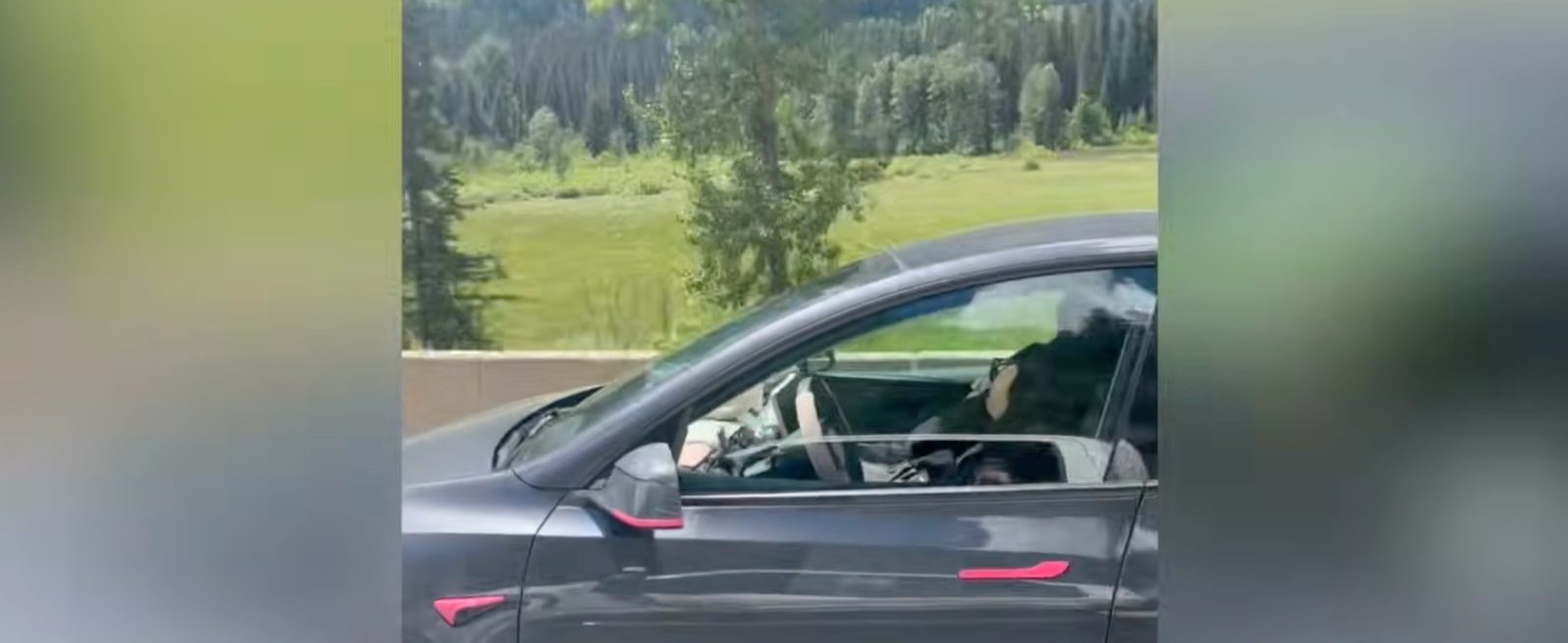
A Tesla driver was caught asleep at the wheel traveling 100 km/h on British Columbia's Trans-Canada Highway with two children in the vehicle. The incident raises a critical question about the effectiveness of Tesla's driver monitoring system, which exists precisely to prevent such dangerous situations.
The answer lies in a simple oversight. The driver wore large sunglasses that defeated Tesla's eye-tracking technology. The system relies on detecting whether the driver's eyes are open and focused on the road. Oversized sunglasses blocked the camera's line of sight to the driver's eyes, rendering the monitoring system ineffective.
This exposure reveals a real vulnerability in Tesla's safety architecture. Driver monitoring systems across the industry depend on facial recognition and eye-tracking cameras. They work well under normal conditions but falter when drivers wear accessories that obstruct the camera's view. Large sunglasses, some prescription glasses, and even certain hat brims can interfere with the system's ability to detect driver drowsiness or inattention.
Tesla's system is designed to provide escalating warnings if it detects inattentive driving. Visual alerts appear on the instrument cluster, followed by audio warnings and eventual vehicle slowdown if the driver remains unresponsive. But the system cannot warn a driver whose eyes it cannot see.
The incident underscores a broader challenge facing driver assistance technology. Manufacturers must balance effectiveness with user experience. Making monitoring systems more aggressive or adding redundant sensors increases cost and complexity. Yet loose systems create gaps that endanger occupants and other road users.
Tesla has not publicly commented on specific measures to address sunglasses-related failures. Other manufacturers including BMW and Mercedes use infrared sensors designed to penetrate sunglasses, though even these technologies show limitations with certain lens types.
This case demonstrates that advanced safety systems work best when paired with driver responsibility. Technology cannot replace attentiveness, but it should not fail at basic